Senate approves rewritten Inland Port Authority bill after heated debate over local control and mitigation
March 02, 2022 | 2022 Utah Legislature, Utah Legislature, Utah Legislative Branch, Utah
This article was created by AI summarizing key points discussed. AI makes mistakes, so for full details and context, please refer to the video of the full meeting. Please report any errors so we can fix them. Report an error »
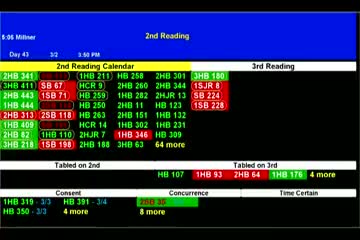
The Utah Senate on third reading passed third substitute House Bill 443, rewriting governance and fiscal arrangements for the Utah Inland Port Authority after a prolonged floor debate that exposed sharp urban–rural tensions and disagreements over local representation.
Senator Daniel Stevenson, the floor sponsor, told colleagues the substitute package reduced the authority’s board from 11 members to five and restored a portion of Salt Lake City’s property tax revenue with statutory conditions on how those funds may be spent. The measure also creates nonvoting advisory positions and narrows appointments toward business‑oriented board members, Stevenson said, arguing the change would make the authority more effective and attract economic development.
Senator Katy Kitchen of Salt Lake City pressed the sponsor on protections for the city, saying the original law’s direct city representation and a 10% affordable housing set‑aside were negotiated to protect residents closest to the port. She offered an amendment to replace a joint legislative appointment with an appointment by Salt Lake City’s mayor or the mayor’s designee; the amendment was debated and then defeated on the floor.
Supporters, including senators representing the region’s West Side, said the bill codifies mitigation commitments — including targeted mitigation, community impact support and a health‑risk assessment — and that the revised board would be better able to attract industry and create jobs. Opponents representing more rural counties warned the change concentrated control at the state level and risked sidelining broadly impacted communities that could host ‘spokes’ of port activity.
Senator Escamilla and others urged the chamber to accept the negotiated compromise, citing the inclusion of environmental remediation, mitigation commitments and economic guarantees. Senator Stevenson said the new board would be business‑focused with opportunities for advisory seats tied to Salt Lake City, and pledged ongoing efforts to seat local representation on the board.
After extended back‑and‑forth, the Senate approved the substitute and passed the bill by roll call (25 yeas, 1 nay, 3 absent). The bill will be returned to the House for further consideration.
The floor debate included multiple attempts to amend the appointment structure and sustained questions about how tax increment and mitigation dollars will be protected over time. Proponents said the package reconciles competing interests and unlocks stalled projects; critics said local democratic voice and long‑term safeguards required more concrete statutory guarantees.
The next procedural step is return to the House for consideration of the substituted language and any further concurrence actions.
Senator Daniel Stevenson, the floor sponsor, told colleagues the substitute package reduced the authority’s board from 11 members to five and restored a portion of Salt Lake City’s property tax revenue with statutory conditions on how those funds may be spent. The measure also creates nonvoting advisory positions and narrows appointments toward business‑oriented board members, Stevenson said, arguing the change would make the authority more effective and attract economic development.
Senator Katy Kitchen of Salt Lake City pressed the sponsor on protections for the city, saying the original law’s direct city representation and a 10% affordable housing set‑aside were negotiated to protect residents closest to the port. She offered an amendment to replace a joint legislative appointment with an appointment by Salt Lake City’s mayor or the mayor’s designee; the amendment was debated and then defeated on the floor.
Supporters, including senators representing the region’s West Side, said the bill codifies mitigation commitments — including targeted mitigation, community impact support and a health‑risk assessment — and that the revised board would be better able to attract industry and create jobs. Opponents representing more rural counties warned the change concentrated control at the state level and risked sidelining broadly impacted communities that could host ‘spokes’ of port activity.
Senator Escamilla and others urged the chamber to accept the negotiated compromise, citing the inclusion of environmental remediation, mitigation commitments and economic guarantees. Senator Stevenson said the new board would be business‑focused with opportunities for advisory seats tied to Salt Lake City, and pledged ongoing efforts to seat local representation on the board.
After extended back‑and‑forth, the Senate approved the substitute and passed the bill by roll call (25 yeas, 1 nay, 3 absent). The bill will be returned to the House for further consideration.
The floor debate included multiple attempts to amend the appointment structure and sustained questions about how tax increment and mitigation dollars will be protected over time. Proponents said the package reconciles competing interests and unlocks stalled projects; critics said local democratic voice and long‑term safeguards required more concrete statutory guarantees.
The next procedural step is return to the House for consideration of the substituted language and any further concurrence actions.
View the Full Meeting & All Its Details
This article offers just a summary. Unlock complete video, transcripts, and insights as a Founder Member.
✓
Watch full, unedited meeting videos
✓
Search every word spoken in unlimited transcripts
✓
AI summaries & real-time alerts (all government levels)
✓
Permanent access to expanding government content
30-day money-back guarantee
