Utah Senate advances broad package of bills on criminal code, juvenile justice, indigent defense and tribal health
February 04, 2022 | 2022 Utah Legislature, Utah Legislature, Utah Legislative Branch, Utah
This article was created by AI summarizing key points discussed. AI makes mistakes, so for full details and context, please refer to the video of the full meeting. Please report any errors so we can fix them. Report an error »
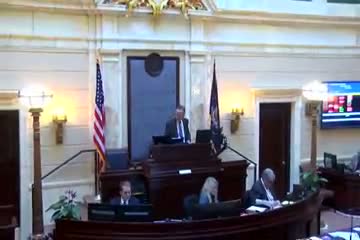
The Utah Senate moved a batch of bills through the floor on a Friday session that combined routine procedural business with several substantive policy votes. Lawmakers passed technical recodification of criminal statutes, changes to juvenile-court penalties, adjustments to indigent-defense grant authority and a measure creating a codified office for American Indian and Alaska Native health services, among other items.
Senate leaders placed the recalled House bill (second substitute House Bill 25) at the top of the third-reading calendar and then handled a sequence of third- and second-reading items. Sponsor presentations described some measures as technical clarifications and others as policy changes with fiscal implications or targeted reforms.
On juvenile justice, Senator Weiler told the Senate that the bill "would waive future fines and fees in juvenile court, and instead encourage the judges to use book reports, therapy hours, and or community service, as opposed to giving a 13 year old a $700 fine that they can't pay." He said several other states have taken similar steps and that support among stakeholders was mixed. The Senate recorded the vote and the clerk reported the measure had 26 yeas, 0 nays, and 3 absent; it will be sent to the House.
Senator Wyler characterized Senate Bill 108 as an "indigent defense cleanup bill" clarifying terms and giving the Indigent Defense Commission more discretion over grant spending. Senators recorded a unanimous roll call in favor (clerk reported 26 yeas, 0 nays, 3 absent) and the bill will be transmitted to the House.
The Senate also advanced a codification of services for tribal communities: Senator Iwamoto said the second substitute to Senate Bill 28 "creates within the Department of Health and Human Services the Office of American Indian Alaska Native Health and Family Services," calling the move largely structural and noting tribal support. He stated the measure does not include new funding, saying the governor's office had previously funded the health office and liaison positions. The clerk reported that SB28 passed the body with 22 yea votes, 3 nay votes and 4 absent.
Votes at a glance (selected items recorded on the floor):
- SB108 (Indigent Defense Amendments): passed; clerk reported 26 yea, 0 nay, 3 absent; sent to the House.
- SB120 (Juvenile Justice Amendments — waive future juvenile fines/fees): passed; clerk reported 26 yea, 0 nay, 3 absent; sent to the House.
- SB99 (Electronic Vehicle Registration): passed; clerk reported 26 yea, 0 nay, 3 absent; sent to the House.
- SB92 (Project-entity procurement and Open and Public Meetings Act adjustments; first substitute): passed; clerk reported 25 yea, 2 nay, 2 absent.
- SB28 (Office of American Indian and Alaska Native Health and Family Services, second substitute): passed; clerk reported 22 yea, 3 nay, 4 absent.
- SB81 (Affordable Housing Tax Amendments, third substitute): passed; clerk reported 28 yea, 0 nay, 1 absent; will be sent to the House.
- SB121 (Anesthesiologist Assistant Licensing Act): passed/advanced on third reading with recorded yeas and nays (clerk reported 23 yea, 3 nay, 3 absent when read a third time).
- Multiple other bills were circled, substituted or set for future floor action during the same session.
What this means: The package advanced both technical statutory housekeeping (cross-references and recodification) and policy changes that affect courts, public-health administration and workforce licensing. Several measures were described by sponsors as clarifications that do not require new appropriations; others carry fiscal notes or sunset provisions and may require budget adjustments during the appropriation process. The session concluded with a motion to adjourn until 11 a.m. Monday.
The clerk's roll-call tallies and sponsors' floor remarks recorded on the day's transcript are the basis for the outcomes and quotes in this roundup. The next procedural step for passed bills is transmittal to the House (where noted) or subsequent enrollment procedures.
Senate leaders placed the recalled House bill (second substitute House Bill 25) at the top of the third-reading calendar and then handled a sequence of third- and second-reading items. Sponsor presentations described some measures as technical clarifications and others as policy changes with fiscal implications or targeted reforms.
On juvenile justice, Senator Weiler told the Senate that the bill "would waive future fines and fees in juvenile court, and instead encourage the judges to use book reports, therapy hours, and or community service, as opposed to giving a 13 year old a $700 fine that they can't pay." He said several other states have taken similar steps and that support among stakeholders was mixed. The Senate recorded the vote and the clerk reported the measure had 26 yeas, 0 nays, and 3 absent; it will be sent to the House.
Senator Wyler characterized Senate Bill 108 as an "indigent defense cleanup bill" clarifying terms and giving the Indigent Defense Commission more discretion over grant spending. Senators recorded a unanimous roll call in favor (clerk reported 26 yeas, 0 nays, 3 absent) and the bill will be transmitted to the House.
The Senate also advanced a codification of services for tribal communities: Senator Iwamoto said the second substitute to Senate Bill 28 "creates within the Department of Health and Human Services the Office of American Indian Alaska Native Health and Family Services," calling the move largely structural and noting tribal support. He stated the measure does not include new funding, saying the governor's office had previously funded the health office and liaison positions. The clerk reported that SB28 passed the body with 22 yea votes, 3 nay votes and 4 absent.
Votes at a glance (selected items recorded on the floor):
- SB108 (Indigent Defense Amendments): passed; clerk reported 26 yea, 0 nay, 3 absent; sent to the House.
- SB120 (Juvenile Justice Amendments — waive future juvenile fines/fees): passed; clerk reported 26 yea, 0 nay, 3 absent; sent to the House.
- SB99 (Electronic Vehicle Registration): passed; clerk reported 26 yea, 0 nay, 3 absent; sent to the House.
- SB92 (Project-entity procurement and Open and Public Meetings Act adjustments; first substitute): passed; clerk reported 25 yea, 2 nay, 2 absent.
- SB28 (Office of American Indian and Alaska Native Health and Family Services, second substitute): passed; clerk reported 22 yea, 3 nay, 4 absent.
- SB81 (Affordable Housing Tax Amendments, third substitute): passed; clerk reported 28 yea, 0 nay, 1 absent; will be sent to the House.
- SB121 (Anesthesiologist Assistant Licensing Act): passed/advanced on third reading with recorded yeas and nays (clerk reported 23 yea, 3 nay, 3 absent when read a third time).
- Multiple other bills were circled, substituted or set for future floor action during the same session.
What this means: The package advanced both technical statutory housekeeping (cross-references and recodification) and policy changes that affect courts, public-health administration and workforce licensing. Several measures were described by sponsors as clarifications that do not require new appropriations; others carry fiscal notes or sunset provisions and may require budget adjustments during the appropriation process. The session concluded with a motion to adjourn until 11 a.m. Monday.
The clerk's roll-call tallies and sponsors' floor remarks recorded on the day's transcript are the basis for the outcomes and quotes in this roundup. The next procedural step for passed bills is transmittal to the House (where noted) or subsequent enrollment procedures.
Don't Miss a Word: See the Full Meeting!
Go beyond summaries. Unlock every video, transcript, and key insight with a Founder Membership.
✓
Get instant access to full meeting videos
✓
Search and clip any phrase from complete transcripts
✓
Receive AI-powered summaries & custom alerts
✓
Enjoy lifetime, unrestricted access to government data
30-day money-back guarantee
