State Fair Park conversion advances after Salt Lake City negotiation; authority status would allow bonding
February 27, 2023 | 2023 Utah Legislature, Utah Legislature, Utah Legislative Branch, Utah
This article was created by AI summarizing key points discussed. AI makes mistakes, so for full details and context, please refer to the video of the full meeting. Please report any errors so we can fix them. Report an error »
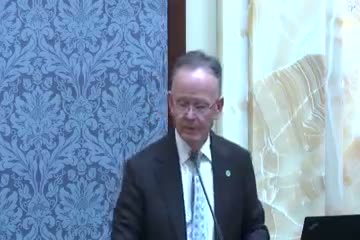
The Senate advanced a third substitute to Senate Bill 187 on Feb. 27 that would change the State Fair Park’s status and give it greater financial tools to pursue development.
Sponsor Sen. Bridal said negotiations with Salt Lake City produced an agreement: the city agreed not to impose impact fees on development around the park in exchange for retaining its portion of the transient room tax. The substitute also contemplates interlocal agreements for any acreage the State Fair Park purchases beyond three acres.
Sponsor’s case: The bill would move the Fair Park away from its current nonprofit structure into a state authority, a change that sponsors argued would allow the park to issue bonds and pursue larger development projects — including an anticipated White Ballpark project — that were difficult under the previous structure. "Moving into a state authority will allow, the Fair Park to bond and develop the White Ballpark and other areas in and around the State Fair Park property," the sponsor said on the Senate floor.
Support and concerns: Senator Escamilla and others supported the bill in floor remarks, describing it as a step toward self-sufficiency for the Fair Park and closer collaboration with Salt Lake City on a surrounding master plan. No substantive opposition emerged on the floor excerpted in the transcript; the sponsor proposed a technical amendment clarifying a Fair Park reference and the motion to substitute was adopted.
Outcome and next steps: The Senate adopted the substitution and moved to pass the bill; the transcript records the substitute and subsequent passage language but does not include a clear roll-call tally in the floor excerpt. The bill will be returned to the House or proceed as required for signatures and interchamber concurrence.
Implementation: Sponsors said the authority status is intended to grant bonding capacity and to facilitate master-plan development. The Senate also signaled willingness to work out interlocal terms with Salt Lake City and to hold harmless the city for the negotiated changes.
The bill’s proponents said developers and local stakeholders have worked on a master plan for the surrounding neighborhoods, and they framed the authority conversion as a necessary step for long-term financing and development.
Sponsor Sen. Bridal said negotiations with Salt Lake City produced an agreement: the city agreed not to impose impact fees on development around the park in exchange for retaining its portion of the transient room tax. The substitute also contemplates interlocal agreements for any acreage the State Fair Park purchases beyond three acres.
Sponsor’s case: The bill would move the Fair Park away from its current nonprofit structure into a state authority, a change that sponsors argued would allow the park to issue bonds and pursue larger development projects — including an anticipated White Ballpark project — that were difficult under the previous structure. "Moving into a state authority will allow, the Fair Park to bond and develop the White Ballpark and other areas in and around the State Fair Park property," the sponsor said on the Senate floor.
Support and concerns: Senator Escamilla and others supported the bill in floor remarks, describing it as a step toward self-sufficiency for the Fair Park and closer collaboration with Salt Lake City on a surrounding master plan. No substantive opposition emerged on the floor excerpted in the transcript; the sponsor proposed a technical amendment clarifying a Fair Park reference and the motion to substitute was adopted.
Outcome and next steps: The Senate adopted the substitution and moved to pass the bill; the transcript records the substitute and subsequent passage language but does not include a clear roll-call tally in the floor excerpt. The bill will be returned to the House or proceed as required for signatures and interchamber concurrence.
Implementation: Sponsors said the authority status is intended to grant bonding capacity and to facilitate master-plan development. The Senate also signaled willingness to work out interlocal terms with Salt Lake City and to hold harmless the city for the negotiated changes.
The bill’s proponents said developers and local stakeholders have worked on a master plan for the surrounding neighborhoods, and they framed the authority conversion as a necessary step for long-term financing and development.
Don't Miss a Word: See the Full Meeting!
Go beyond summaries. Unlock every video, transcript, and key insight with a Founder Membership.
✓
Get instant access to full meeting videos
✓
Search and clip any phrase from complete transcripts
✓
Receive AI-powered summaries & custom alerts
✓
Enjoy lifetime, unrestricted access to government data
30-day money-back guarantee
