Board committee backs 15‑year Gerald Avenue lease for hybrid safe‑parking and cabin site despite community concerns
December 07, 2023 | San Francisco County, California
This article was created by AI summarizing key points discussed. AI makes mistakes, so for full details and context, please refer to the video of the full meeting. Please report any errors so we can fix them. Report an error »
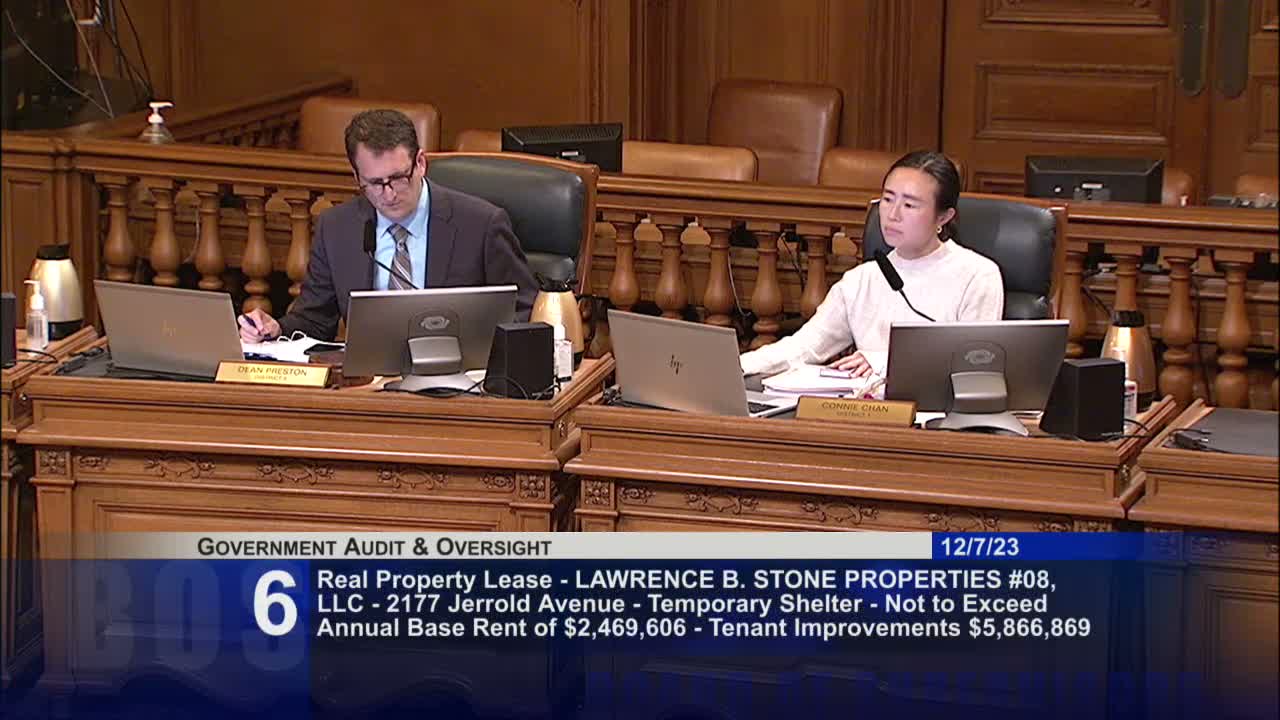
The Government Audit and Oversight Committee moved forward a resolution to lease 2177 Gerald Avenue for a hybrid temporary shelter program combining cabins and safe parking. HSH described community engagement, proposed services and costs and the program’s intended goal of stabilizing people experiencing unsheltered homelessness.
Deputy Director Emily Cohen said the site would be leased for an initial 15‑year term with two 5‑year options to extend, and the annual base rent is approximately $2.5 million beginning nine months after lease execution. HSH estimated one‑time tenant improvements of roughly $7.5 million; the city’s contribution was estimated at about $5.9 million with the landlord contributing an additional amount and an amortized payment plan incorporated into the lease.
HSH told the committee the initial program plan would include 60 cabins and 20 safe‑parking stalls, with 24/7 staffing, housing‑focused case management, on‑site behavioral health and medical support from DPH, restrooms, showers, Wi‑Fi, meal service and storage. Cohen said the city would prioritize placements from the immediate neighborhood to avoid creating an unintended magnet effect and expects the site could open in late 2024 if funding and construction proceed as planned.
The Budget and Legislative Analyst reviewed costs and estimated that, when amortized across the initial operating year, the program equates to roughly $90,000 per slot; HSH said combining lease and services yields an estimated cost of about $201 per guest per night in the configuration presented, and noted costs would decline if the site expanded beyond the initial capacity.
Supervisors asked about length of stay and outcomes; HSH said it currently does not impose a strict maximum length of stay but that typical stays run between about 90 days and six months and that exits to permanent housing depend on systemwide placement resources. Members also asked whether staff had considered acquisition versus leasing — HSH said the property was not available for sale and that real‑estate staff negotiated the lease; the lease contains an option to purchase if circumstances change.
A Market Zone stakeholder urged strong lighting, regular cleaning and ongoing stakeholder engagement. The committee voted to send the lease to the full Board with a positive recommendation.
What’s next: The Board will consider the lease; HSH will solicit a nonprofit operator, finalize program design and pursue tenant improvements and funding to open the site. The committee asked staff to include outcome measures and total per‑site cost comparisons when proceeding to service contracting.
Deputy Director Emily Cohen said the site would be leased for an initial 15‑year term with two 5‑year options to extend, and the annual base rent is approximately $2.5 million beginning nine months after lease execution. HSH estimated one‑time tenant improvements of roughly $7.5 million; the city’s contribution was estimated at about $5.9 million with the landlord contributing an additional amount and an amortized payment plan incorporated into the lease.
HSH told the committee the initial program plan would include 60 cabins and 20 safe‑parking stalls, with 24/7 staffing, housing‑focused case management, on‑site behavioral health and medical support from DPH, restrooms, showers, Wi‑Fi, meal service and storage. Cohen said the city would prioritize placements from the immediate neighborhood to avoid creating an unintended magnet effect and expects the site could open in late 2024 if funding and construction proceed as planned.
The Budget and Legislative Analyst reviewed costs and estimated that, when amortized across the initial operating year, the program equates to roughly $90,000 per slot; HSH said combining lease and services yields an estimated cost of about $201 per guest per night in the configuration presented, and noted costs would decline if the site expanded beyond the initial capacity.
Supervisors asked about length of stay and outcomes; HSH said it currently does not impose a strict maximum length of stay but that typical stays run between about 90 days and six months and that exits to permanent housing depend on systemwide placement resources. Members also asked whether staff had considered acquisition versus leasing — HSH said the property was not available for sale and that real‑estate staff negotiated the lease; the lease contains an option to purchase if circumstances change.
A Market Zone stakeholder urged strong lighting, regular cleaning and ongoing stakeholder engagement. The committee voted to send the lease to the full Board with a positive recommendation.
What’s next: The Board will consider the lease; HSH will solicit a nonprofit operator, finalize program design and pursue tenant improvements and funding to open the site. The committee asked staff to include outcome measures and total per‑site cost comparisons when proceeding to service contracting.
Don't Miss a Word: See the Full Meeting!
Go beyond summaries. Unlock every video, transcript, and key insight with a Founder Membership.
✓
Get instant access to full meeting videos
✓
Search and clip any phrase from complete transcripts
✓
Receive AI-powered summaries & custom alerts
✓
Enjoy lifetime, unrestricted access to government data
30-day money-back guarantee
