Committee continues complex housing‑production ordinance for further edits and rent‑control protections
October 16, 2023 | San Francisco County, California
This article was created by AI summarizing key points discussed. AI makes mistakes, so for full details and context, please refer to the video of the full meeting. Please report any errors so we can fix them. Report an error »
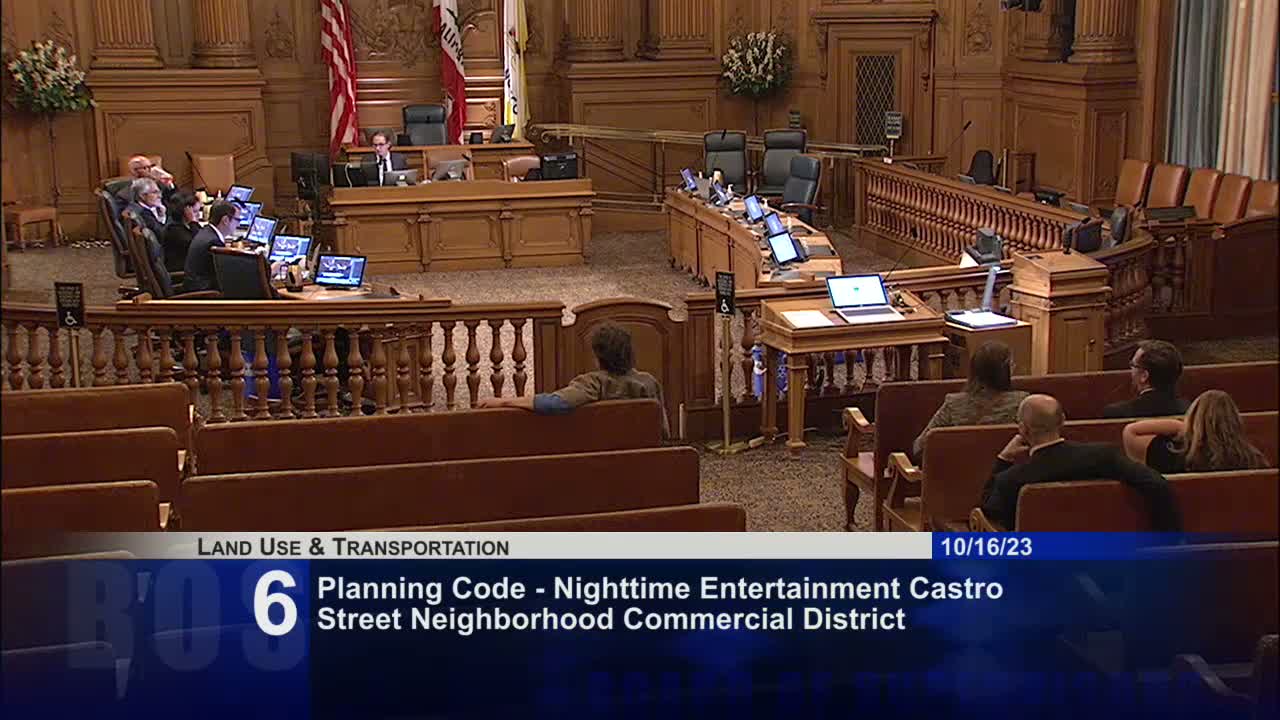
The Land Use and Transportation Committee on Oct. 16 took up a comprehensive ordinance intended to accelerate housing production across multiple zoning and procedural fronts but continued the item to Oct. 30 to allow additional amendments addressing rent‑control protections and other technical issues.
The ordinance would, in its current draft, exempt certain housing projects from the notice and review procedures of Planning Code section 311 and from some conditional‑use requirements of section 317 in areas outside priority equity geographies; remove conditional use requirements for multiple housing project types; adjust rear yard, setback, lot frontage, minimum lot size and residential open‑space rules in specified districts; expand ground‑floor uses; broaden eligibility for certain housing programs; and authorize the planning director to approve delegated density bonus projects. It also proposes conforming map and subdivision code changes and affirms CEQA and general plan findings.
Chair Melgar and several supervisors said the draft contains technical discrepancies that need two weeks of cleanup. Supervisors Mandelmann and Preston expressed particular interest in amendments to preserve protections against demolition of rent‑controlled units and to maintain safeguards for 'monster homes' in certain districts. Planning staff indicated willingness to limit streamlining of demolition in line with Supervisor Melgar’s previously adopted SUD (special use district) protections.
Public comment was extensive and sharply divided. Housing advocates and YIMBY supporters urged timely constraint reduction to meet housing‑element deadlines and avoid losing state funding; tenant advocates and long‑term rent‑controlled residents warned the bill, as drafted, could weaken rent‑control protections and urged more studies, tenant protections, and clarity. Several commenters urged the Board to ensure compliance with the housing element to avoid litigation or loss of transportation and affordable housing funding.
Given the outstanding policy and technical concerns, Chair Melgar moved and the committee voted unanimously to continue the ordinance to Oct. 30 so staff and supervisors can reconcile amendments and provide clarifications requested by community stakeholders.
The ordinance would, in its current draft, exempt certain housing projects from the notice and review procedures of Planning Code section 311 and from some conditional‑use requirements of section 317 in areas outside priority equity geographies; remove conditional use requirements for multiple housing project types; adjust rear yard, setback, lot frontage, minimum lot size and residential open‑space rules in specified districts; expand ground‑floor uses; broaden eligibility for certain housing programs; and authorize the planning director to approve delegated density bonus projects. It also proposes conforming map and subdivision code changes and affirms CEQA and general plan findings.
Chair Melgar and several supervisors said the draft contains technical discrepancies that need two weeks of cleanup. Supervisors Mandelmann and Preston expressed particular interest in amendments to preserve protections against demolition of rent‑controlled units and to maintain safeguards for 'monster homes' in certain districts. Planning staff indicated willingness to limit streamlining of demolition in line with Supervisor Melgar’s previously adopted SUD (special use district) protections.
Public comment was extensive and sharply divided. Housing advocates and YIMBY supporters urged timely constraint reduction to meet housing‑element deadlines and avoid losing state funding; tenant advocates and long‑term rent‑controlled residents warned the bill, as drafted, could weaken rent‑control protections and urged more studies, tenant protections, and clarity. Several commenters urged the Board to ensure compliance with the housing element to avoid litigation or loss of transportation and affordable housing funding.
Given the outstanding policy and technical concerns, Chair Melgar moved and the committee voted unanimously to continue the ordinance to Oct. 30 so staff and supervisors can reconcile amendments and provide clarifications requested by community stakeholders.
Don't Miss a Word: See the Full Meeting!
Go beyond summaries. Unlock every video, transcript, and key insight with a Founder Membership.
✓
Get instant access to full meeting videos
✓
Search and clip any phrase from complete transcripts
✓
Receive AI-powered summaries & custom alerts
✓
Enjoy lifetime, unrestricted access to government data
30-day money-back guarantee
