Rules Committee advances behested-payments ordinance after agreeing to further drafting
September 13, 2021 | San Francisco County, California
This article was created by AI summarizing key points discussed. AI makes mistakes, so for full details and context, please refer to the video of the full meeting. Please report any errors so we can fix them. Report an error »
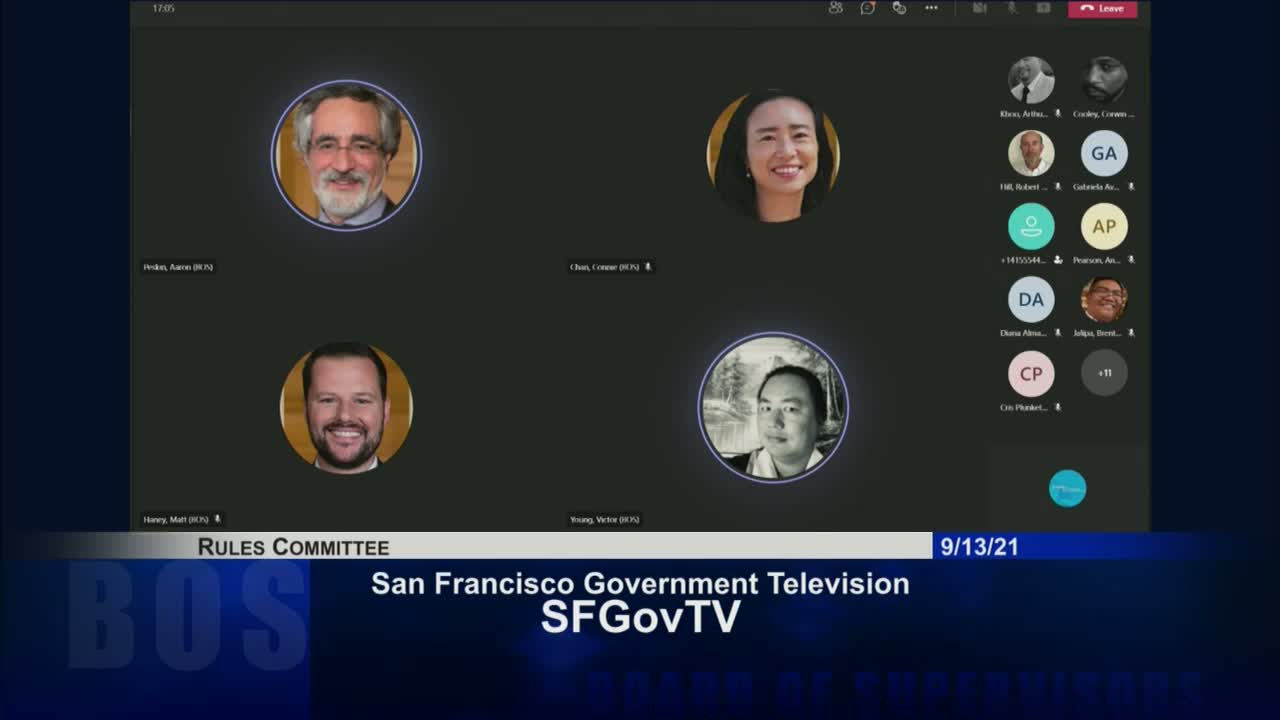
The San Francisco Board of Supervisors Rules Committee on Sept. 13, 2021 heard testimony on an ordinance that would broaden the Campaign and Government Conduct Code definition of "interested parties" and bar certain appointed department heads, commissioners and designated employees from soliciting behested payments.
Chair Aaron Peskin said the measure, sponsored by Supervisor Matt Haney, was introduced in the wake of allegations involving former Public Works director Mohammed Nuru and that the ordinance was intended to "protect the public dollar and restore the public trust." Patrick Ford of the San Francisco Ethics Commission told the committee the commission "unanimously support[s]" the ordinance and described behested payments as "when a government official asks somebody to make a payment to a third party." Ford tied the proposal to recent enforcement actions and settlements involving Recology.
Committee members focused discussion on how to close loopholes in the draft. Peskin pressed for expanding the definition of "interested party" to capture "soon-to-be-interested" contractors and for lengthening the current six-month post-decision reporting window so solicitations tied to a contracting process could be visible to the public. He also urged adding reporting obligations for department heads when they solicit donations from non‑interested parties and suggested that donees—nonprofits that receive behested payments—should be required to report receipts.
Sponsor Supervisor Matt Haney said he was open to changes and asked the deputy city attorney and ethics staff to help craft stronger language. Deputy City Attorney Anne Pearson told the committee staff were not prepared to approve amendments that day but could draft them for introduction next week; she said most amendments would not require a re-referral to the Ethics Commission, though some edits could trigger union notice or meet-and-confer obligations.
Public commenters—including neighborhood and labor representatives—expressed support for the ordinance while urging stronger reporting and tighter definitions. After the discussion, Chair Peskin moved to continue the ordinance for one week to the Sept. 20 Rules Committee meeting to give staff time to prepare the suggested amendments; the motion passed without objection.
Next steps: the committee directed city attorneys and ethics staff to draft potential amendments (including extending the reporting window and adding reporting duties for department heads and donees) for consideration at the Sept. 20 meeting.
Chair Aaron Peskin said the measure, sponsored by Supervisor Matt Haney, was introduced in the wake of allegations involving former Public Works director Mohammed Nuru and that the ordinance was intended to "protect the public dollar and restore the public trust." Patrick Ford of the San Francisco Ethics Commission told the committee the commission "unanimously support[s]" the ordinance and described behested payments as "when a government official asks somebody to make a payment to a third party." Ford tied the proposal to recent enforcement actions and settlements involving Recology.
Committee members focused discussion on how to close loopholes in the draft. Peskin pressed for expanding the definition of "interested party" to capture "soon-to-be-interested" contractors and for lengthening the current six-month post-decision reporting window so solicitations tied to a contracting process could be visible to the public. He also urged adding reporting obligations for department heads when they solicit donations from non‑interested parties and suggested that donees—nonprofits that receive behested payments—should be required to report receipts.
Sponsor Supervisor Matt Haney said he was open to changes and asked the deputy city attorney and ethics staff to help craft stronger language. Deputy City Attorney Anne Pearson told the committee staff were not prepared to approve amendments that day but could draft them for introduction next week; she said most amendments would not require a re-referral to the Ethics Commission, though some edits could trigger union notice or meet-and-confer obligations.
Public commenters—including neighborhood and labor representatives—expressed support for the ordinance while urging stronger reporting and tighter definitions. After the discussion, Chair Peskin moved to continue the ordinance for one week to the Sept. 20 Rules Committee meeting to give staff time to prepare the suggested amendments; the motion passed without objection.
Next steps: the committee directed city attorneys and ethics staff to draft potential amendments (including extending the reporting window and adding reporting duties for department heads and donees) for consideration at the Sept. 20 meeting.
Don't Miss a Word: See the Full Meeting!
Go beyond summaries. Unlock every video, transcript, and key insight with a Founder Membership.
✓
Get instant access to full meeting videos
✓
Search and clip any phrase from complete transcripts
✓
Receive AI-powered summaries & custom alerts
✓
Enjoy lifetime, unrestricted access to government data
30-day money-back guarantee
