Rules Committee Advances Amendments to Restructure Refuse Rate Setting; Flags Recology, 1932 Ordinance History
February 14, 2022 | San Francisco County, California
This article was created by AI summarizing key points discussed. AI makes mistakes, so for full details and context, please refer to the video of the full meeting. Please report any errors so we can fix them. Report an error »
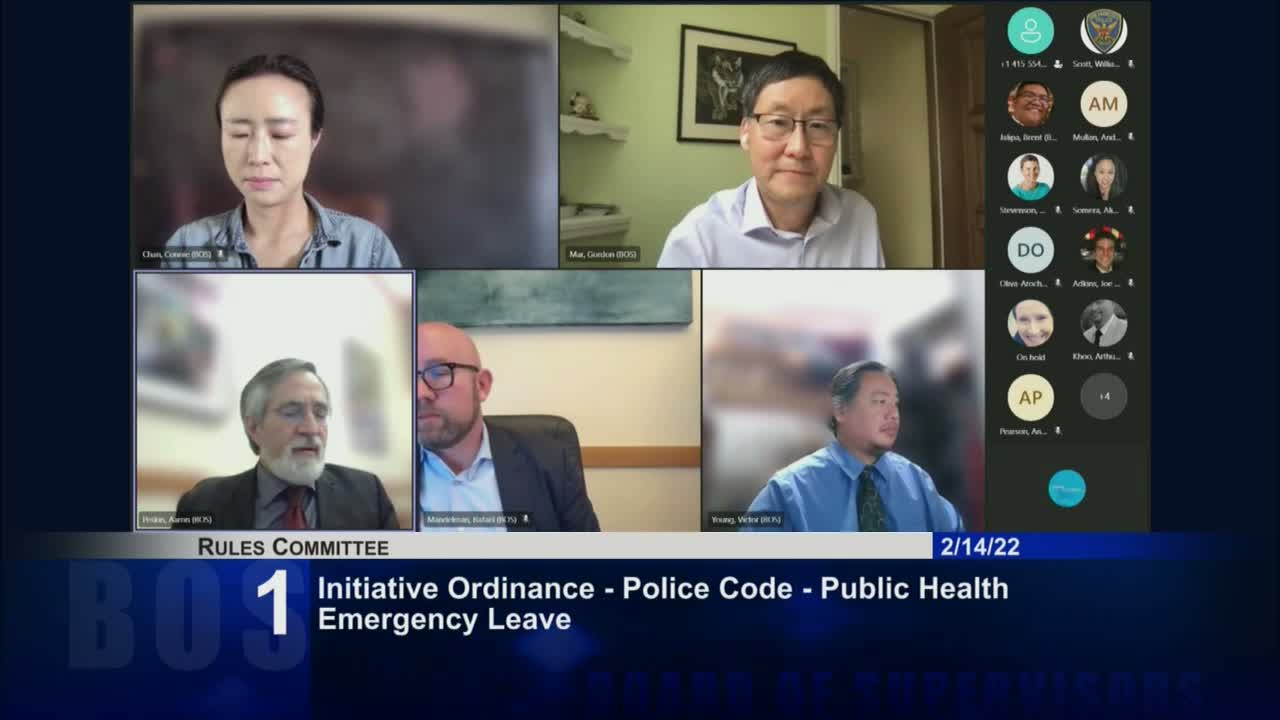
The Rules Committee on Feb. 14 took procedural action on four competing measures aimed at dismantling elements of the century‑old 1932 refuse collection and disposal ordinance and creating new oversight over refuse rate setting.
Chair Aaron Peskin framed items 2–5 as responses to a corruption scandal tied to Recology and said the working group—composed of city staff and a range of stakeholders—developed a draft ordinance (file number ending in 22052) that would make the Controller the refuse rate administrator. Natasha Meehaw of the Controller’s Office told the committee the current process is ad hoc, opaque and lacks ongoing monitoring; the proposed change would centralize rate‑setting expertise in the Controller’s office, have that office propose rates to the rate board, add a ratepayer representative, and require annual independent financial audits.
Peskin described specific amendments across the files: remove the term "residential" so cost‑effectiveness, rate stability and transparency would apply to both residential and commercial refuse services; clarify that "refuse" includes recyclables and compostables but not construction debris; allow the Controller to consider environmental and service standards when proposing rates; authorize the rate board to perform audits; and increase the Board of Supervisors’ amendment threshold from seven to eight supervisors for certain code sections.
Public commenters were split. John Bouchard of Teamsters Local 350 said the union supported the amendments and that more oversight would protect workers and ratepayers. Other callers cautioned that the process lacked sufficient public outreach and faulted the working‑group process. Chair Peskin also noted the Controller’s ongoing investigation into whether there were additional overcharges — including inquiries about the sale of 900 Seventh Street — and said the Controller was still collecting information from Recology.
Chair Peskin moved a multifaceted motion to amend files ending in 52 and 53, file the hearings on files 4 and 5, and continue items 2 and 3 (as amended) to the call of the chair; the committee recorded unanimous approval. The Chair said the items will almost certainly appear at a special Rules Committee meeting on Feb. 22 at 10 a.m. for further action.
The Controller estimated initial costs for a small team to administer rate setting at roughly $500,000 to $1,000,000 per year; Meehaw said the new team would be two to four people and would work with DPW and the Department of the Environment on proposals and ongoing monitoring.
Any final ordinance or charter change would require additional drafting, possible ballot placement, or legislative action and could affect how refuse contracts are awarded and how rate adjustments are reviewed going forward.
Chair Aaron Peskin framed items 2–5 as responses to a corruption scandal tied to Recology and said the working group—composed of city staff and a range of stakeholders—developed a draft ordinance (file number ending in 22052) that would make the Controller the refuse rate administrator. Natasha Meehaw of the Controller’s Office told the committee the current process is ad hoc, opaque and lacks ongoing monitoring; the proposed change would centralize rate‑setting expertise in the Controller’s office, have that office propose rates to the rate board, add a ratepayer representative, and require annual independent financial audits.
Peskin described specific amendments across the files: remove the term "residential" so cost‑effectiveness, rate stability and transparency would apply to both residential and commercial refuse services; clarify that "refuse" includes recyclables and compostables but not construction debris; allow the Controller to consider environmental and service standards when proposing rates; authorize the rate board to perform audits; and increase the Board of Supervisors’ amendment threshold from seven to eight supervisors for certain code sections.
Public commenters were split. John Bouchard of Teamsters Local 350 said the union supported the amendments and that more oversight would protect workers and ratepayers. Other callers cautioned that the process lacked sufficient public outreach and faulted the working‑group process. Chair Peskin also noted the Controller’s ongoing investigation into whether there were additional overcharges — including inquiries about the sale of 900 Seventh Street — and said the Controller was still collecting information from Recology.
Chair Peskin moved a multifaceted motion to amend files ending in 52 and 53, file the hearings on files 4 and 5, and continue items 2 and 3 (as amended) to the call of the chair; the committee recorded unanimous approval. The Chair said the items will almost certainly appear at a special Rules Committee meeting on Feb. 22 at 10 a.m. for further action.
The Controller estimated initial costs for a small team to administer rate setting at roughly $500,000 to $1,000,000 per year; Meehaw said the new team would be two to four people and would work with DPW and the Department of the Environment on proposals and ongoing monitoring.
Any final ordinance or charter change would require additional drafting, possible ballot placement, or legislative action and could affect how refuse contracts are awarded and how rate adjustments are reviewed going forward.
Don't Miss a Word: See the Full Meeting!
Go beyond summaries. Unlock every video, transcript, and key insight with a Founder Membership.
✓
Get instant access to full meeting videos
✓
Search and clip any phrase from complete transcripts
✓
Receive AI-powered summaries & custom alerts
✓
Enjoy lifetime, unrestricted access to government data
30-day money-back guarantee
