Supervisor Peskin’s rent‑control‑on‑upzonings proposal draws legal and fiscal scrutiny
June 29, 2022 | San Francisco County, California
This article was created by AI summarizing key points discussed. AI makes mistakes, so for full details and context, please refer to the video of the full meeting. Please report any errors so we can fix them. Report an error »
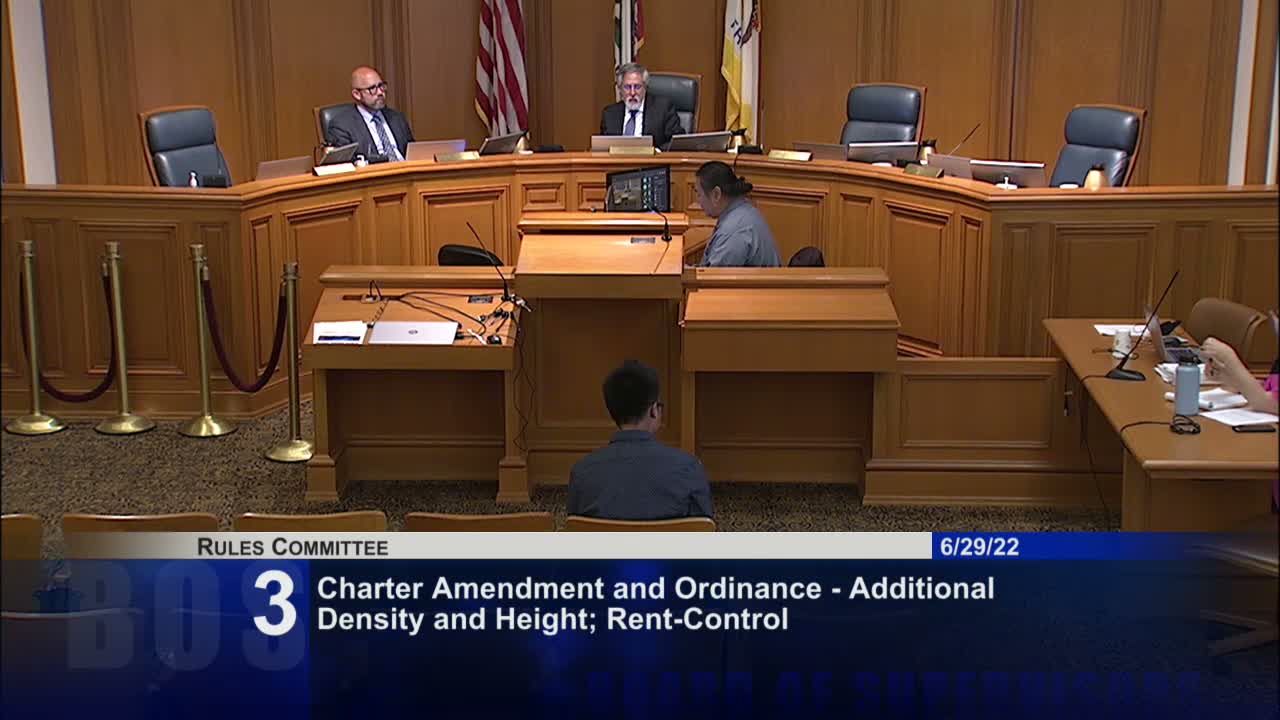
Chair Aaron Peskin introduced a charter amendment to set city policy that when the city amends the planning code to allow additional residential density or height (an upzoning), the new units created would be subject to the San Francisco rent stabilization ordinance (Chapter 37) by contract — using the Costa‑Hawkins exception that permits local waiver when public assistance is conferred.
Peskin framed the measure as a tenant‑protection tool to ensure that when the city expands development capacity (a public benefit), residents also receive rent stabilization that prevents displacement. He cited national examples and research he said supported the measure’s displacement‑reduction goals.
Deputy City Attorney Andrea Ruiz Esquivere and the Controller cautioned the committee about legal and fiscal questions. Ruiz Esquivere noted the draft exempts projects already receiving a density bonus (e.g., HOME SF projects) but is silent on inclusionary units under section 415, suggesting the Board may need amendments to clarify inclusionary and fully affordable projects’ treatment. The Controller’s Office warned the charter change could reduce property tax revenue and make some projects financially less feasible.
Public comment was sharply divided: tenant advocates and school board members urged the Committee to protect renters; developers and building‑trades speakers raised concerns about feasibility and unintended consequences. Committee members discussed a potential phased‑in “stabilization period” and a grace window for project financing; staff said technical language will be brought back.
After discussion, the committee continued the item to July 6 to allow for drafting technical amendments, including clarifying how the charter interacts with state housing law, inclusionary rules, and possible phase‑in periods for new projects.
Peskin framed the measure as a tenant‑protection tool to ensure that when the city expands development capacity (a public benefit), residents also receive rent stabilization that prevents displacement. He cited national examples and research he said supported the measure’s displacement‑reduction goals.
Deputy City Attorney Andrea Ruiz Esquivere and the Controller cautioned the committee about legal and fiscal questions. Ruiz Esquivere noted the draft exempts projects already receiving a density bonus (e.g., HOME SF projects) but is silent on inclusionary units under section 415, suggesting the Board may need amendments to clarify inclusionary and fully affordable projects’ treatment. The Controller’s Office warned the charter change could reduce property tax revenue and make some projects financially less feasible.
Public comment was sharply divided: tenant advocates and school board members urged the Committee to protect renters; developers and building‑trades speakers raised concerns about feasibility and unintended consequences. Committee members discussed a potential phased‑in “stabilization period” and a grace window for project financing; staff said technical language will be brought back.
After discussion, the committee continued the item to July 6 to allow for drafting technical amendments, including clarifying how the charter interacts with state housing law, inclusionary rules, and possible phase‑in periods for new projects.
View the Full Meeting & All Its Details
This article offers just a summary. Unlock complete video, transcripts, and insights as a Founder Member.
✓
Watch full, unedited meeting videos
✓
Search every word spoken in unlimited transcripts
✓
AI summaries & real-time alerts (all government levels)
✓
Permanent access to expanding government content
30-day money-back guarantee
