Rules Committee refers Chapter 12X contracting amendment to full Board after intense public opposition
February 13, 2023 | San Francisco County, California
This article was created by AI summarizing key points discussed. AI makes mistakes, so for full details and context, please refer to the video of the full meeting. Please report any errors so we can fix them. Report an error »
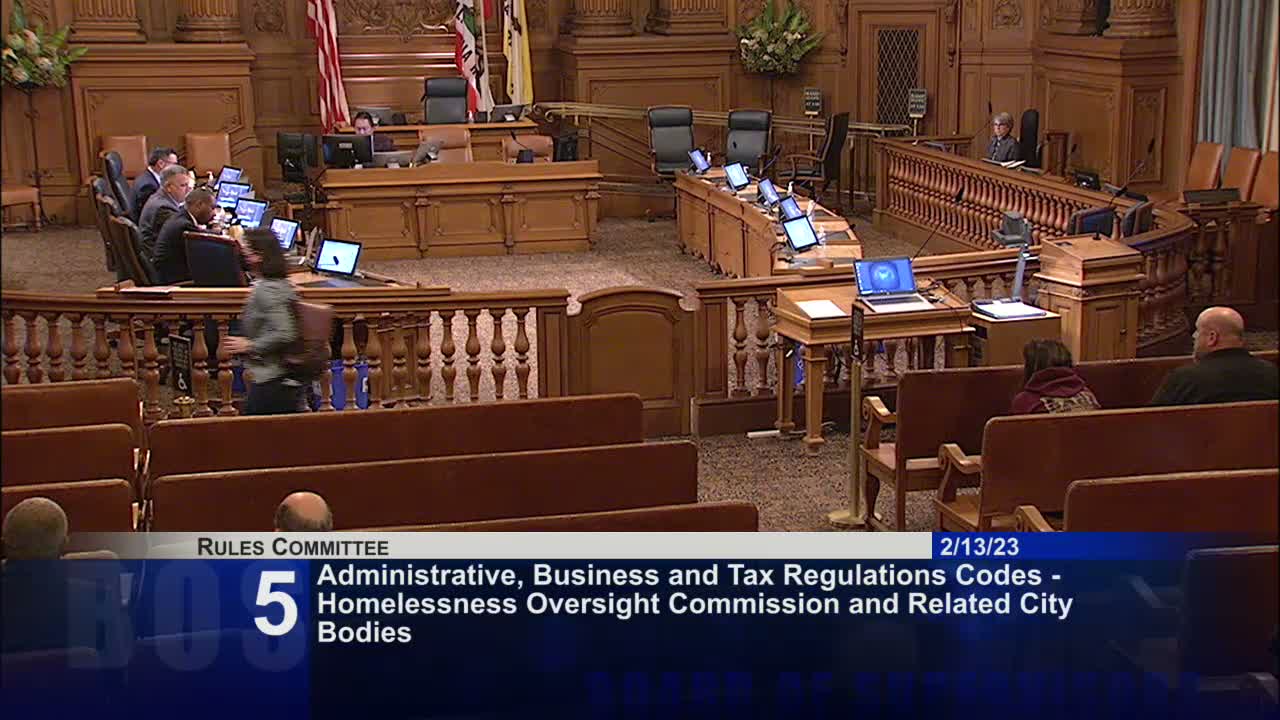
On Feb. 13 the Rules Committee referred to the full Board, without recommendation, an amendment to the Administrative Code that would exempt certain chapter‑6 construction and professional services contracts from Chapter 12X’s prohibition on contracting with firms headquartered in states with specified restrictive laws. Chair Supervisor Matt Dorsey made the motion to refer the matter; the committee approved it 2–1 (Safae/Aye; Walton/No; Dorsey/Aye).
Sponsor Supervisor Asha Safaei said the proposed carve‑out is aimed at ensuring that large, highly specialized infrastructure and airport projects can attract technically qualified bidders and be delivered on time and on budget. "This proposal does not change any aspect of local subcontracting requirements or local hire rules," Safaei said, adding that large contractors would still need to meet local LBE and 14B requirements.
Department representatives described tangible impacts. Ivy Fine of the Public Utilities Commission said the PUC has multiple upcoming contracts (several >$20 million) that could be constrained by Chapter 12X; Bruce Robertson (Public Works) and Judy Mosqueda (San Francisco International Airport) said specialized services often come from firms based in states restricted by 12X and that the prohibition can limit competition or force cost‑increasing subcontracting solutions.
A broad coalition of local contractors and equity organizations opposed the amendment in public comment. Speakers including Bruce Geron, representatives of the San Francisco Latino & Black Builders Association, Build Out California and the National Association of Minority Contractors urged more economic data and consultation. They said Chapter 12X’s equity goals help local LBEs and that removing the prohibition risks prioritizing out‑of‑state firms over local small businesses.
Vice Chair Shimon Walton said he could not support the amendment as written and urged further community engagement. Chair Dorsey and sponsor Safaei said they would meet with stakeholders in the two weeks before the full Board hearing. The committee’s referral without recommendation moves the debate to the full Board, where members will receive additional public input and department data.
Sponsor Supervisor Asha Safaei said the proposed carve‑out is aimed at ensuring that large, highly specialized infrastructure and airport projects can attract technically qualified bidders and be delivered on time and on budget. "This proposal does not change any aspect of local subcontracting requirements or local hire rules," Safaei said, adding that large contractors would still need to meet local LBE and 14B requirements.
Department representatives described tangible impacts. Ivy Fine of the Public Utilities Commission said the PUC has multiple upcoming contracts (several >$20 million) that could be constrained by Chapter 12X; Bruce Robertson (Public Works) and Judy Mosqueda (San Francisco International Airport) said specialized services often come from firms based in states restricted by 12X and that the prohibition can limit competition or force cost‑increasing subcontracting solutions.
A broad coalition of local contractors and equity organizations opposed the amendment in public comment. Speakers including Bruce Geron, representatives of the San Francisco Latino & Black Builders Association, Build Out California and the National Association of Minority Contractors urged more economic data and consultation. They said Chapter 12X’s equity goals help local LBEs and that removing the prohibition risks prioritizing out‑of‑state firms over local small businesses.
Vice Chair Shimon Walton said he could not support the amendment as written and urged further community engagement. Chair Dorsey and sponsor Safaei said they would meet with stakeholders in the two weeks before the full Board hearing. The committee’s referral without recommendation moves the debate to the full Board, where members will receive additional public input and department data.
Don't Miss a Word: See the Full Meeting!
Go beyond summaries. Unlock every video, transcript, and key insight with a Founder Membership.
✓
Get instant access to full meeting videos
✓
Search and clip any phrase from complete transcripts
✓
Receive AI-powered summaries & custom alerts
✓
Enjoy lifetime, unrestricted access to government data
30-day money-back guarantee
