Committee hears mayor’s CAAP proposal to link substance-use treatment to aid eligibility; supervisors question 'reasonable suspicion' and capacity
November 13, 2023 | San Francisco County, California
This article was created by AI summarizing key points discussed. AI makes mistakes, so for full details and context, please refer to the video of the full meeting. Please report any errors so we can fix them. Report an error »
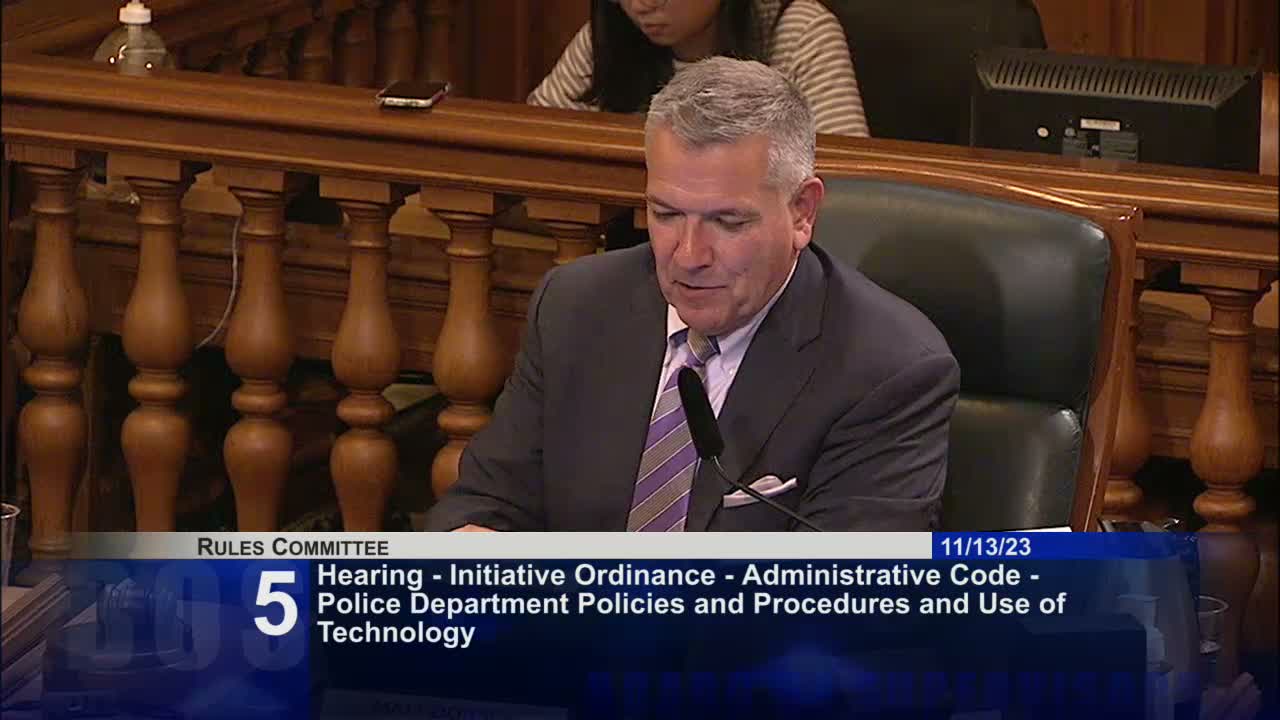
A mayor-sponsored initiative would allow the City to condition County Adult Assistance Program (CAAP) benefits for single adults on participation in substance-use disorder assessment and treatment when staff have "reasonable suspicion" a person is dependent on illegal drugs. The HSA and mayor’s office emphasized the measure is intended to connect people to care, not to demand universal testing or immediate sobriety, and that benefits would not be discontinued if treatment capacity does not exist.
Andres Powers framed the measure as a tool to get people into care amid an overdose crisis; he and Human Services Agency Executive Director Trent Rohrer said the ordinance relies on state welfare code language that permits counties to require assessments on reasonable suspicion. Rohrer described a two-step process: an initial screening (part of existing employability assessments) followed by a clinical assessment by a clinician to determine if a disabling substance-use disorder exists and what treatment is appropriate. He noted implementation would be delayed until Jan. 2025 to allow planning.
Supervisors pressed HSA and the controller on how "reasonable suspicion" is defined, who performs assessments, training needs, treatment capacity and fiscal impacts. The controller's office said administrative costs are possible but difficult to quantify without more implementation detail. Public commenters raised civil-rights and housing-stability concerns; proponents and the chair framed the measure as potentially life-saving in the context of fentanyl-related deaths in the city.
Andres Powers framed the measure as a tool to get people into care amid an overdose crisis; he and Human Services Agency Executive Director Trent Rohrer said the ordinance relies on state welfare code language that permits counties to require assessments on reasonable suspicion. Rohrer described a two-step process: an initial screening (part of existing employability assessments) followed by a clinical assessment by a clinician to determine if a disabling substance-use disorder exists and what treatment is appropriate. He noted implementation would be delayed until Jan. 2025 to allow planning.
Supervisors pressed HSA and the controller on how "reasonable suspicion" is defined, who performs assessments, training needs, treatment capacity and fiscal impacts. The controller's office said administrative costs are possible but difficult to quantify without more implementation detail. Public commenters raised civil-rights and housing-stability concerns; proponents and the chair framed the measure as potentially life-saving in the context of fentanyl-related deaths in the city.
Don't Miss a Word: See the Full Meeting!
Go beyond summaries. Unlock every video, transcript, and key insight with a Founder Membership.
✓
Get instant access to full meeting videos
✓
Search and clip any phrase from complete transcripts
✓
Receive AI-powered summaries & custom alerts
✓
Enjoy lifetime, unrestricted access to government data
30-day money-back guarantee
