Departments outline overdose‑prevention policies; supervisors press for metrics, detox capacity and supervised consumption sites
February 24, 2022 | San Francisco County, California
This article was created by AI summarizing key points discussed. AI makes mistakes, so for full details and context, please refer to the video of the full meeting. Please report any errors so we can fix them. Report an error »
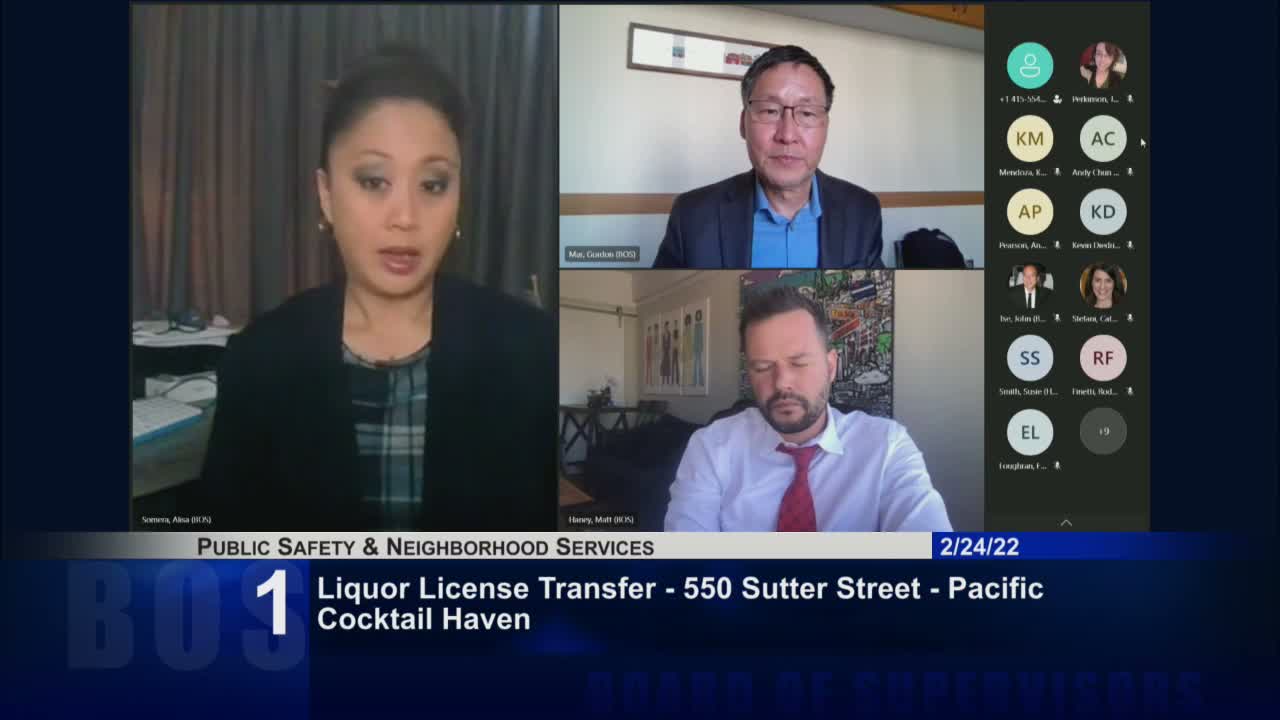
San Francisco city departments on Thursday described steps to implement a 2021 overdose‑prevention law that requires annual reports, outlining plans for training, naloxone distribution and standardized reporting — but supervisors and community callers pressed for firmer metrics, more detox capacity and swift action on supervised consumption sites.
Supervisor Matt Haney, who sponsored last year’s legislation, told the committee the overdose epidemic has accelerated: “Over the last 2 years, in each of the last 2 years, close to 700 people have died in our city from drug overdose,” and he reported that 46 people died of overdoses in January 2022. Haney said the law was intended to make departments and grantees plan, train and hasten access to naloxone and treatment.
Eileen Loughran of the Department of Public Health said DPH is developing an online e‑learning module on overdose recognition and response for city staff and initially for city employees, with completion targeted for July 2022, and has created a web page listing syringe access, naloxone distribution and training resources. DPH also described a naloxone clearinghouse to centralize naloxone management and reporting for DPH programs and contracted providers.
Dylan Schneider of the Department of Homelessness and Supportive Housing said HSH finalized its first overdose‑prevention policy in December 2021, plans to integrate policy requirements into provider contracts, and is piloting interventions in permanent supportive housing such as naloxone dispensers and BRAVE buttons; HSH will require designatedstaff to complete training within 90 days of availability. Susie Smith of the Human Services Agency described intake assessments that include behavioral‑health screening, earlier naloxone provision at shelter‑in‑place hotels and plans to track training completion and naloxone use across providers.
Officials said the naloxone clearinghouse collects self‑reported data tied to refill requests so departments can better measure naloxone distribution and reversals; HSH said providers submit critical‑incident reports when deaths occur in contracted housing, and the departments plan to standardize overdose reporting across program areas.
Supervisors pressed departments on accountability and metrics. Supervisor Catherine Stephanie asked how the city will document outcomes for a reported $71,400,000 spent on overdose prevention last fiscal year and whether departments are tracking referrals into treatment beyond counting reversals. She raised concerns that bias by uniformed responders can impede help in the field. Departments said training emphasizes calling 911 and that multidisciplinary outreach teams and partnerships are expanding; they acknowledged more work is needed to make assessments, checklists and provider supports actionable.
During public comment, callers representing the San Francisco AIDS Foundation, the HIV Advocacy Network, GLIDE and the Safer Inside Coalition urged the city to pursue supervised consumption/safe consumption sites, expand naloxone dispensers and vending approaches, and provide stronger on‑the‑ground implementation support to housing providers. A caller with the HIV Advocacy Network recounted burying a partner who died after using methamphetamine cut with fentanyl and said a safe consumption site could have saved their life.
After presentations and public comment the committee voted 3–0 to forward the overdose‑prevention reports to the full Board with a positive recommendation. Departments said they would return with more standardized metrics and reporting in the next annual update.
Supervisor Matt Haney, who sponsored last year’s legislation, told the committee the overdose epidemic has accelerated: “Over the last 2 years, in each of the last 2 years, close to 700 people have died in our city from drug overdose,” and he reported that 46 people died of overdoses in January 2022. Haney said the law was intended to make departments and grantees plan, train and hasten access to naloxone and treatment.
Eileen Loughran of the Department of Public Health said DPH is developing an online e‑learning module on overdose recognition and response for city staff and initially for city employees, with completion targeted for July 2022, and has created a web page listing syringe access, naloxone distribution and training resources. DPH also described a naloxone clearinghouse to centralize naloxone management and reporting for DPH programs and contracted providers.
Dylan Schneider of the Department of Homelessness and Supportive Housing said HSH finalized its first overdose‑prevention policy in December 2021, plans to integrate policy requirements into provider contracts, and is piloting interventions in permanent supportive housing such as naloxone dispensers and BRAVE buttons; HSH will require designatedstaff to complete training within 90 days of availability. Susie Smith of the Human Services Agency described intake assessments that include behavioral‑health screening, earlier naloxone provision at shelter‑in‑place hotels and plans to track training completion and naloxone use across providers.
Officials said the naloxone clearinghouse collects self‑reported data tied to refill requests so departments can better measure naloxone distribution and reversals; HSH said providers submit critical‑incident reports when deaths occur in contracted housing, and the departments plan to standardize overdose reporting across program areas.
Supervisors pressed departments on accountability and metrics. Supervisor Catherine Stephanie asked how the city will document outcomes for a reported $71,400,000 spent on overdose prevention last fiscal year and whether departments are tracking referrals into treatment beyond counting reversals. She raised concerns that bias by uniformed responders can impede help in the field. Departments said training emphasizes calling 911 and that multidisciplinary outreach teams and partnerships are expanding; they acknowledged more work is needed to make assessments, checklists and provider supports actionable.
During public comment, callers representing the San Francisco AIDS Foundation, the HIV Advocacy Network, GLIDE and the Safer Inside Coalition urged the city to pursue supervised consumption/safe consumption sites, expand naloxone dispensers and vending approaches, and provide stronger on‑the‑ground implementation support to housing providers. A caller with the HIV Advocacy Network recounted burying a partner who died after using methamphetamine cut with fentanyl and said a safe consumption site could have saved their life.
After presentations and public comment the committee voted 3–0 to forward the overdose‑prevention reports to the full Board with a positive recommendation. Departments said they would return with more standardized metrics and reporting in the next annual update.
View the Full Meeting & All Its Details
This article offers just a summary. Unlock complete video, transcripts, and insights as a Founder Member.
✓
Watch full, unedited meeting videos
✓
Search every word spoken in unlimited transcripts
✓
AI summaries & real-time alerts (all government levels)
✓
Permanent access to expanding government content
30-day money-back guarantee
