BLA update and DPH testimony: San Francisco faces ongoing shortage of locked subacute and psychiatric beds; housing conservatorship pilot produced small numbers
March 24, 2022 | San Francisco County, California
This article was created by AI summarizing key points discussed. AI makes mistakes, so for full details and context, please refer to the video of the full meeting. Please report any errors so we can fix them. Report an error »
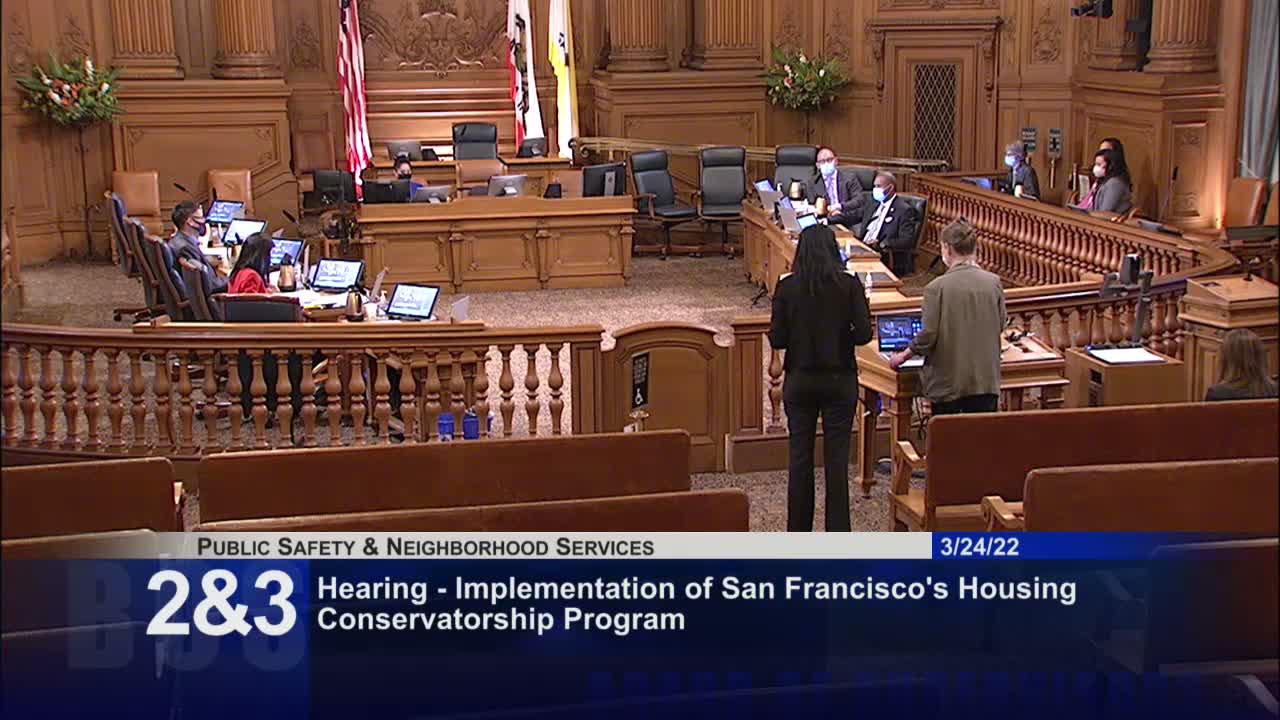
The committee heard an update from the Budget and Legislative Analyst (BLA) and presentations from the Department of Public Health and the Office of the Public Conservator on March 24 about LPS conservatorships, bed capacity, and the housing conservatorship pilot.
Severn Campbell of the Budget Analyst's Office presented data showing a long‑term decline in in‑county subacute and psychiatric bed capacity (from higher counts in 2012–13 to about 280 beds in 2020–21), a modest rise in conservatorship caseload since fiscal year 2018–19 but remaining below earlier levels, and significant increases in wait times for locked subacute placements. The BLA identified 408 new beds the city is planning to acquire or contract for and noted that roughly 137 of those may be appropriate for conservatorship placements, with only about 41 that are locked subacute/psychiatric skilled‑nursing beds. The BLA recommended DPH report back within the fiscal year with a status update on bed acquisitions, occupancy, wait times, and barriers to acquiring beds, and suggested an MOU between the Public Conservator and DPH for information sharing.
DPH officials (including Dr. Angelica Almeida and other staff) described active efforts to identify and open beds, a new "beds and facilities" team tasked with siting and acquiring up to 400 new beds, use of real‑time monitoring tools (FindTreatmentSF), and staffing expansions for care coordination (hiring for case management positions and a budget proposal for additional full‑time staff). DPH confirmed some short‑term progress—22 locked subacute placements filled recently with eight pending—but said building locked subacute facilities is expensive and that many psychiatric SNF and long‑term care beds remain out of county, requiring contracting while the city pursues in‑county board‑and‑care options.
Officials also reviewed the housing conservatorship pilot implemented under state law changes (SB 1045 and later SB 40). DPH and the Public Conservator said the pilot is highly constrained by statutory requirements and documentation burdens: in fiscal 2021 three petitions were filed, two were granted, 25 people received notices that they were on the pathway to housing conservatorship, and most who were notified accepted voluntary services with measurable reductions in crisis contacts. Presenters cautioned that the pilot’s threshold (eight 5150 detentions in a 12‑month period) and added procedural steps have limited the number of people who can be conservatorship candidates.
Supervisors pressed for more urgency and asked DPH to pursue both in‑county capacity and regional partnerships to expand placement options. Public commenters—social workers, family members and advocates—described the human impact of lack of beds, fragmented hospital data systems, and competition across counties for limited placements. The committee voted to file the hearings and requested follow‑up reporting; supervisors signaled they will request DPH updates and more detailed bed‑acquisition timelines.
Severn Campbell of the Budget Analyst's Office presented data showing a long‑term decline in in‑county subacute and psychiatric bed capacity (from higher counts in 2012–13 to about 280 beds in 2020–21), a modest rise in conservatorship caseload since fiscal year 2018–19 but remaining below earlier levels, and significant increases in wait times for locked subacute placements. The BLA identified 408 new beds the city is planning to acquire or contract for and noted that roughly 137 of those may be appropriate for conservatorship placements, with only about 41 that are locked subacute/psychiatric skilled‑nursing beds. The BLA recommended DPH report back within the fiscal year with a status update on bed acquisitions, occupancy, wait times, and barriers to acquiring beds, and suggested an MOU between the Public Conservator and DPH for information sharing.
DPH officials (including Dr. Angelica Almeida and other staff) described active efforts to identify and open beds, a new "beds and facilities" team tasked with siting and acquiring up to 400 new beds, use of real‑time monitoring tools (FindTreatmentSF), and staffing expansions for care coordination (hiring for case management positions and a budget proposal for additional full‑time staff). DPH confirmed some short‑term progress—22 locked subacute placements filled recently with eight pending—but said building locked subacute facilities is expensive and that many psychiatric SNF and long‑term care beds remain out of county, requiring contracting while the city pursues in‑county board‑and‑care options.
Officials also reviewed the housing conservatorship pilot implemented under state law changes (SB 1045 and later SB 40). DPH and the Public Conservator said the pilot is highly constrained by statutory requirements and documentation burdens: in fiscal 2021 three petitions were filed, two were granted, 25 people received notices that they were on the pathway to housing conservatorship, and most who were notified accepted voluntary services with measurable reductions in crisis contacts. Presenters cautioned that the pilot’s threshold (eight 5150 detentions in a 12‑month period) and added procedural steps have limited the number of people who can be conservatorship candidates.
Supervisors pressed for more urgency and asked DPH to pursue both in‑county capacity and regional partnerships to expand placement options. Public commenters—social workers, family members and advocates—described the human impact of lack of beds, fragmented hospital data systems, and competition across counties for limited placements. The committee voted to file the hearings and requested follow‑up reporting; supervisors signaled they will request DPH updates and more detailed bed‑acquisition timelines.
Don't Miss a Word: See the Full Meeting!
Go beyond summaries. Unlock every video, transcript, and key insight with a Founder Membership.
✓
Get instant access to full meeting videos
✓
Search and clip any phrase from complete transcripts
✓
Receive AI-powered summaries & custom alerts
✓
Enjoy lifetime, unrestricted access to government data
30-day money-back guarantee
