SFPD staffing study shows wide shortfall; department lays out recruitment and retention steps
April 14, 2022 | San Francisco County, California
This article was created by AI summarizing key points discussed. AI makes mistakes, so for full details and context, please refer to the video of the full meeting. Please report any errors so we can fix them. Report an error »
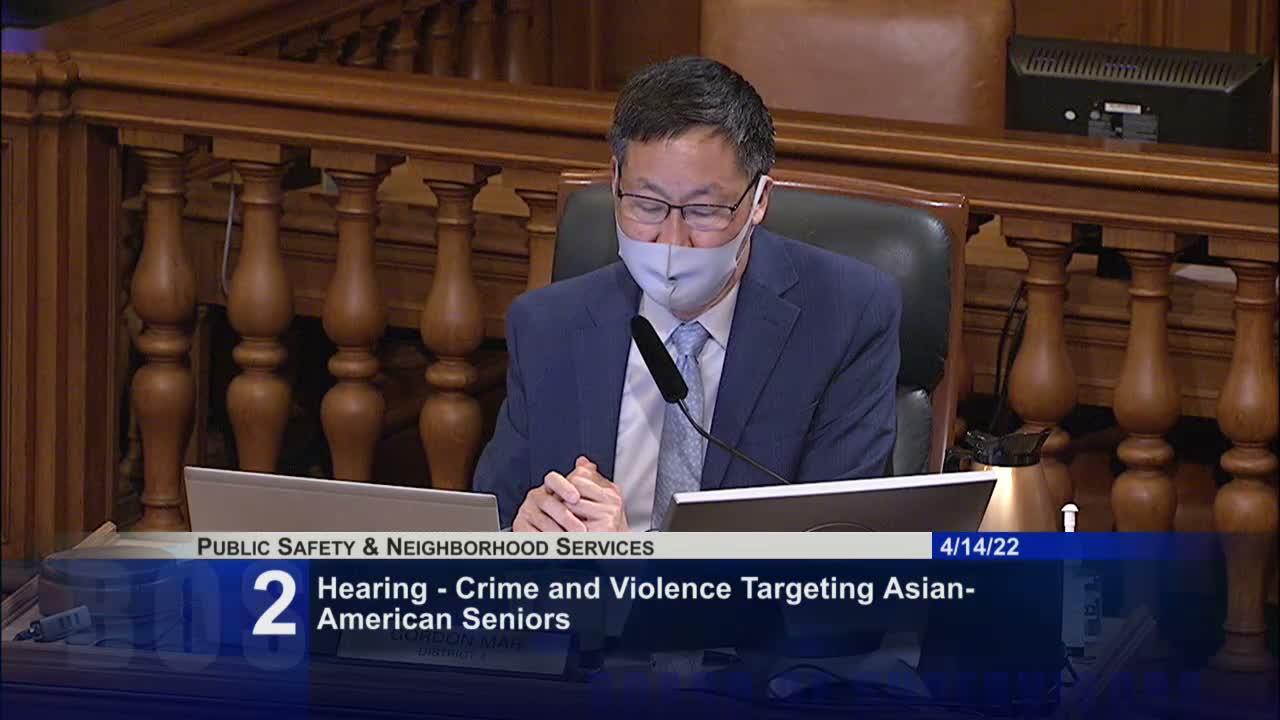
The San Francisco Police Department presented its Proposition E‑mandated staffing analysis to the Public Safety and Neighborhood Services Committee on April 14 and said the city faces a significant and growing shortage of sworn officers and civilian professional staff.
SFPD analyst Celeste Berg told the committee the department's workload‑based analysis — using calls for service and a target that 30% of officer time be devoted to community engagement and proactive policing — recommends a department size of 2,182 sworn members and 554 professional staff. Those figures closely align with Matrix Consulting Group's 2020 analysis (Matrix recommended 2,176 sworn), but SFPD said the gap between current and recommended staffing has widened because city sworn counts have declined.
The department said that citywide full‑duty sworn staffing has fallen from about 1,868 to 1,612 over roughly three years (a ~14% decline) and has dropped sharply in the past six months. The agency reported non‑training separations (retirements and resignations) rose about 80% between FY19 and FY22; retirements explain a large part of separations because many officers are retirement‑eligible in the next few years.
SFPD operational presenters said the majority of the deficit is in Field Operations (sector patrol) and that specialized station assignments such as foot beats, homeless outreach and housing officers have been curtailed as officers are prioritized to respond to urgent calls. The department noted that the police officer rank deployed at the stations is now below 1,000 and that, as of April 4, the Field Operations Bureau had declined to roughly 1,185 across ranks compared with a 1,263 baseline used in September 2021.
On causes and responses, SFPD said it conducts exit interviews that cite pay parity, long commutes and recruitment incentives elsewhere as reasons officers leave; the department proposed recruitment and retention measures including hiring a recruiting firm, increasing initial pay steps (eliminating early salary steps to raise starting pay), signing bonuses for recruits and laterals, waiving the written test fee (~$55), targeted professional development, and a retention unit to analyze and support at‑risk staff. SFPD said some measures will require budget support and that the department is working with the Controller's Office on a year‑long workload analysis to identify priority C call types that could be candidates for transfer to other city agencies (for example homelessness and some mental‑health calls).
Supervisors asked for scenario planning and clarifications on net hires vs. losses, lateral bonus comparisons with neighboring agencies, and whether the academy can be scaled; SFPD said it has capacity to train roughly 100–120 recruits per fiscal year but has seen applications fall (from ~3,000 in 2018 to ~1,100 in 2021) and academy attrition. Committee members and a large block of public commenters — including hotel, business and neighborhood stakeholders — urged the Board and mayor to invest in recruitment, retention and competitive incentives to restore staffing levels over multiple years.
The committee filed the hearing for follow‑up and directed continued discussion into the budget process.
SFPD analyst Celeste Berg told the committee the department's workload‑based analysis — using calls for service and a target that 30% of officer time be devoted to community engagement and proactive policing — recommends a department size of 2,182 sworn members and 554 professional staff. Those figures closely align with Matrix Consulting Group's 2020 analysis (Matrix recommended 2,176 sworn), but SFPD said the gap between current and recommended staffing has widened because city sworn counts have declined.
The department said that citywide full‑duty sworn staffing has fallen from about 1,868 to 1,612 over roughly three years (a ~14% decline) and has dropped sharply in the past six months. The agency reported non‑training separations (retirements and resignations) rose about 80% between FY19 and FY22; retirements explain a large part of separations because many officers are retirement‑eligible in the next few years.
SFPD operational presenters said the majority of the deficit is in Field Operations (sector patrol) and that specialized station assignments such as foot beats, homeless outreach and housing officers have been curtailed as officers are prioritized to respond to urgent calls. The department noted that the police officer rank deployed at the stations is now below 1,000 and that, as of April 4, the Field Operations Bureau had declined to roughly 1,185 across ranks compared with a 1,263 baseline used in September 2021.
On causes and responses, SFPD said it conducts exit interviews that cite pay parity, long commutes and recruitment incentives elsewhere as reasons officers leave; the department proposed recruitment and retention measures including hiring a recruiting firm, increasing initial pay steps (eliminating early salary steps to raise starting pay), signing bonuses for recruits and laterals, waiving the written test fee (~$55), targeted professional development, and a retention unit to analyze and support at‑risk staff. SFPD said some measures will require budget support and that the department is working with the Controller's Office on a year‑long workload analysis to identify priority C call types that could be candidates for transfer to other city agencies (for example homelessness and some mental‑health calls).
Supervisors asked for scenario planning and clarifications on net hires vs. losses, lateral bonus comparisons with neighboring agencies, and whether the academy can be scaled; SFPD said it has capacity to train roughly 100–120 recruits per fiscal year but has seen applications fall (from ~3,000 in 2018 to ~1,100 in 2021) and academy attrition. Committee members and a large block of public commenters — including hotel, business and neighborhood stakeholders — urged the Board and mayor to invest in recruitment, retention and competitive incentives to restore staffing levels over multiple years.
The committee filed the hearing for follow‑up and directed continued discussion into the budget process.
Don't Miss a Word: See the Full Meeting!
Go beyond summaries. Unlock every video, transcript, and key insight with a Founder Membership.
✓
Get instant access to full meeting videos
✓
Search and clip any phrase from complete transcripts
✓
Receive AI-powered summaries & custom alerts
✓
Enjoy lifetime, unrestricted access to government data
30-day money-back guarantee
