Rules Committee sends amended Homeward Bound ordinance to full Board after clarifying eligibility and protections
March 18, 2024 | San Francisco County, California
This article was created by AI summarizing key points discussed. AI makes mistakes, so for full details and context, please refer to the video of the full meeting. Please report any errors so we can fix them. Report an error »
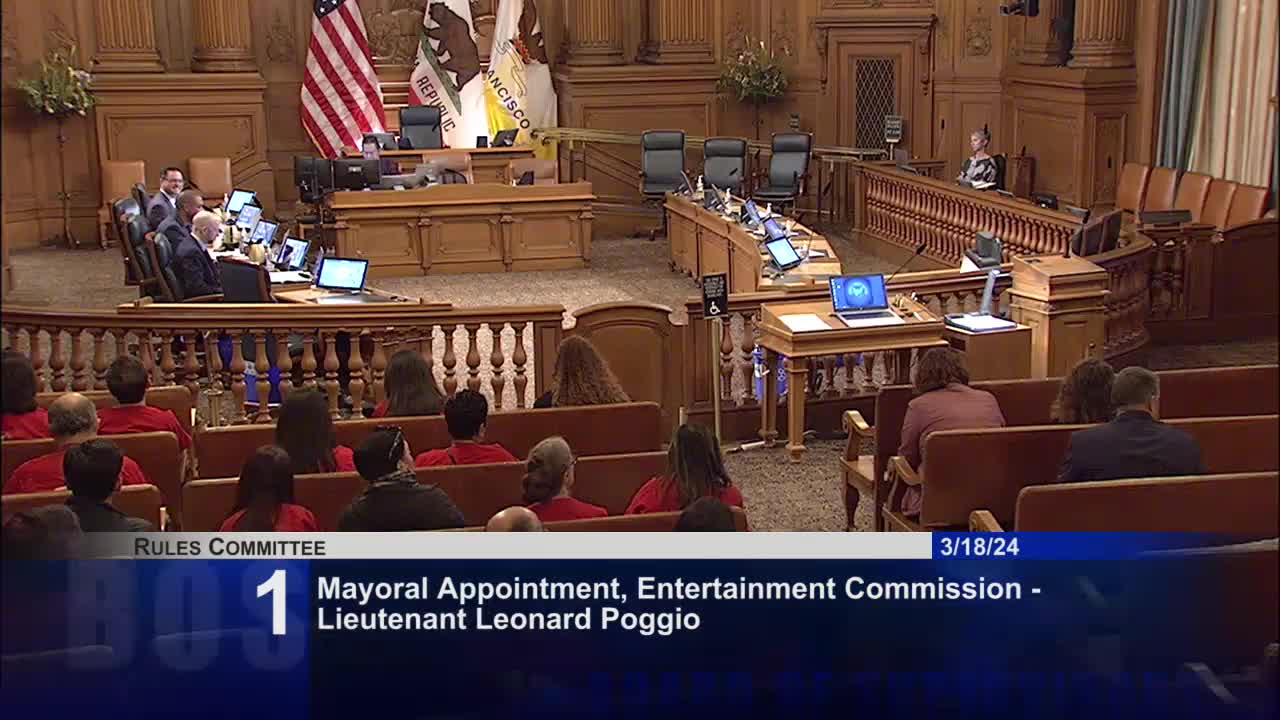
The Rules Committee on March 18 voted to send an ordinance to the full Board that would codify and make permanent a Homeward Bound relocation assistance program administered jointly by the Department of Homelessness and Supportive Housing (HSH) and the Human Services Agency (HSA).
Deputy Director Emily Cohen (HSH) told the committee that San Francisco has helped more than 11,000 households since 2005 reunify with family or support networks outside the city through relocation assistance programs and that the city’s current programs vary in cost and design: HSH’s problem-solving program averages about $365 per person for reunification assistance while the HSA CAP-linked assistance averages roughly $481 per person. Cohen said the city served about 339 people in FY22 through HSH’s problem-solving approach and that the combined relocation programs have been ramping up after relaunch efforts.
Supervisors focused on program eligibility, reporting and outreach. Supervisor Engadio asked about a provision that would bar repeat use for five years; Cohen said program rules were still being finalized and noted the problem-solving program currently permits assistance once per year. Supervisors and staff agreed the five-year restriction risked creating a ‘‘revolving door’’ and could prevent people who relapse from receiving help; Supervisor Safai proposed and the committee adopted an amendment to shorten the re-eligibility period from five years to two years with a waiver option for executive directors on a case-by-case basis.
Public comment produced both support and concern. A number of speakers endorsed the program’s goal to help people reunify with family and access support networks. Several frontline tenants and advocates, including a permanent supportive housing tenant who identified as ‘Jordan,’ urged that permanent supportive housing tenants be excluded from eligibility, warned of coercive outcomes and demanded stronger safeguards and community consultation. Supervisor Safai emphasized for the record that participation in the program is voluntary and requires a willing contact at the destination; he said staff would not transport people to unknown or unsupportive placements.
The committee then voted to send the amended ordinance to the full Board as a committee report with a positive recommendation. The record shows the committee expects further work on operations, rules and a publicly accessible data dashboard to track relocation outcomes.
Deputy Director Emily Cohen (HSH) told the committee that San Francisco has helped more than 11,000 households since 2005 reunify with family or support networks outside the city through relocation assistance programs and that the city’s current programs vary in cost and design: HSH’s problem-solving program averages about $365 per person for reunification assistance while the HSA CAP-linked assistance averages roughly $481 per person. Cohen said the city served about 339 people in FY22 through HSH’s problem-solving approach and that the combined relocation programs have been ramping up after relaunch efforts.
Supervisors focused on program eligibility, reporting and outreach. Supervisor Engadio asked about a provision that would bar repeat use for five years; Cohen said program rules were still being finalized and noted the problem-solving program currently permits assistance once per year. Supervisors and staff agreed the five-year restriction risked creating a ‘‘revolving door’’ and could prevent people who relapse from receiving help; Supervisor Safai proposed and the committee adopted an amendment to shorten the re-eligibility period from five years to two years with a waiver option for executive directors on a case-by-case basis.
Public comment produced both support and concern. A number of speakers endorsed the program’s goal to help people reunify with family and access support networks. Several frontline tenants and advocates, including a permanent supportive housing tenant who identified as ‘Jordan,’ urged that permanent supportive housing tenants be excluded from eligibility, warned of coercive outcomes and demanded stronger safeguards and community consultation. Supervisor Safai emphasized for the record that participation in the program is voluntary and requires a willing contact at the destination; he said staff would not transport people to unknown or unsupportive placements.
The committee then voted to send the amended ordinance to the full Board as a committee report with a positive recommendation. The record shows the committee expects further work on operations, rules and a publicly accessible data dashboard to track relocation outcomes.
Don't Miss a Word: See the Full Meeting!
Go beyond summaries. Unlock every video, transcript, and key insight with a Founder Membership.
✓
Get instant access to full meeting videos
✓
Search and clip any phrase from complete transcripts
✓
Receive AI-powered summaries & custom alerts
✓
Enjoy lifetime, unrestricted access to government data
30-day money-back guarantee
