Officials present San Francisco Mental Health Services Act annual update; committee forwards resolution
November 10, 2022 | San Francisco County, California
This article was created by AI summarizing key points discussed. AI makes mistakes, so for full details and context, please refer to the video of the full meeting. Please report any errors so we can fix them. Report an error »
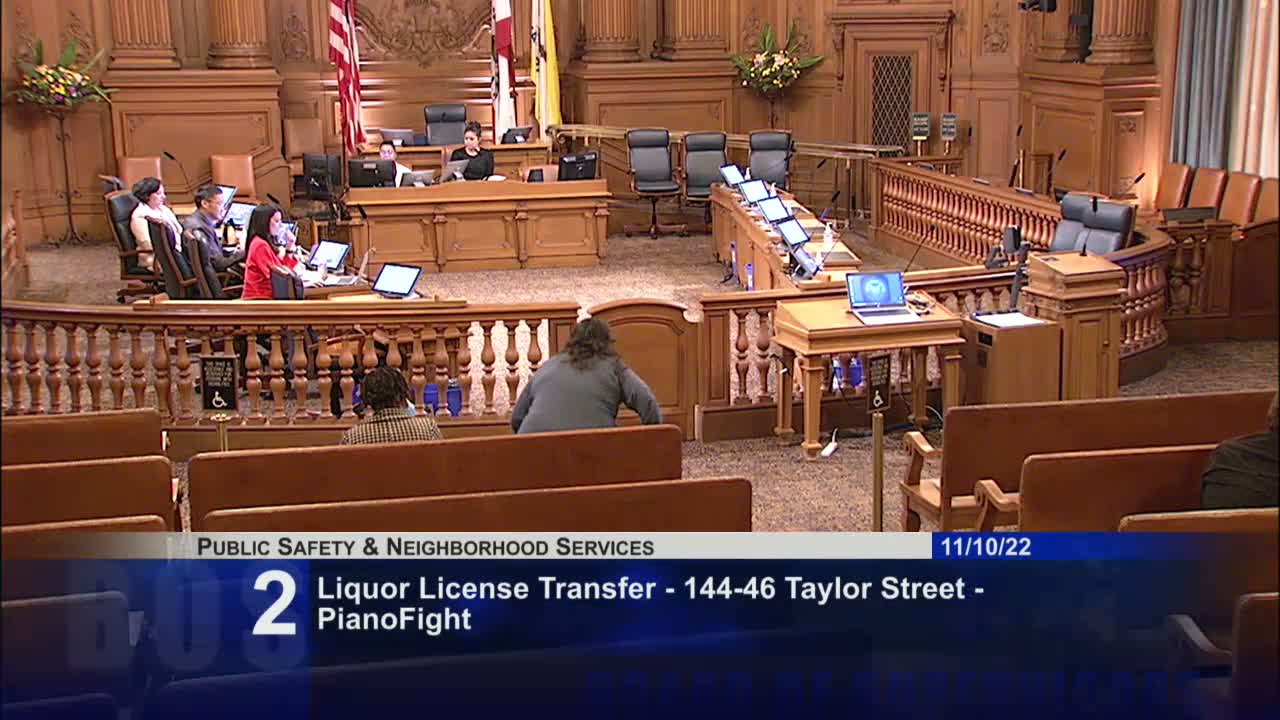
The Public Safety and Neighborhood Services Committee received the Department of Public Health/Behavioral Health Services’ annual update on the Mental Health Services Act (MHSA) on Nov. 10 and voted 3‑0 to send a resolution and committee report to the full Board.
Tracy Helton, identified as acting deputy director for justice, equity, diversion, inclusion and acting director for MHSA, summarized the state‑funded MHSA program, noting it was enacted in 2005 as a dedicated revenue source (a 1% tax on incomes above $1 million) to fund innovative mental‑health services and to fill gaps in local public‑behavioral‑health systems. Helton said San Francisco had 83 MHSA‑funded programs in 2021–22, including full‑service partnership programs, population‑focused services, peer programs and capital projects; staff reported more than 200 supportive‑housing units funded through MHSA programs.
Helton highlighted a recently approved innovation project targeted to Black/African American communities that was authorized for $5,400,000 to test culturally congruent outreach and peer‑led practices, and she emphasized MHSA’s emphasis on peer specialists and workforce development. She said peer services in San Francisco are largely provided through contracts with community agencies because current civil‑service classifications make direct city hiring for some peer roles difficult; the department supports two certificate programs—one through a community provider identified in the presentation as 'Grama' and another through San Francisco City College—to standardize training and professionalize the peer workforce.
When asked about total MHSA funding, a staff speaker identified as Jessica Brown said, “I believe last year it was 39,000,000.” Another on‑panel budget speaker noted revenues are volatile because they are tied to tax receipts and that the city expected a possible roughly 10% dip in the coming year; staff said the department has been setting aside reserves to protect programs that serve vulnerable populations. Supervisors pressed on peer employment, certification, and whether MHSA dollars can be used directly for substance‑use‑disorder treatment; staff clarified the law generally restricts MHSA funds from paying directly for standalone substance‑use treatment unless it is part of an individual’s larger mental‑health diagnosis.
After questions, Chair Gordon Marr moved to forward the resolution to the full Board with a positive recommendation and to file the hearing; Vice Chair Catherine Stephanie and Member Myrna Malgar voted aye and the motions passed 3‑0.
What’s next: The MHSA annual update will be posted for public comment and transmitted to the state as required under MHSA rules; the committee’s positive recommendation will accompany the update to the Board for final action.
Tracy Helton, identified as acting deputy director for justice, equity, diversion, inclusion and acting director for MHSA, summarized the state‑funded MHSA program, noting it was enacted in 2005 as a dedicated revenue source (a 1% tax on incomes above $1 million) to fund innovative mental‑health services and to fill gaps in local public‑behavioral‑health systems. Helton said San Francisco had 83 MHSA‑funded programs in 2021–22, including full‑service partnership programs, population‑focused services, peer programs and capital projects; staff reported more than 200 supportive‑housing units funded through MHSA programs.
Helton highlighted a recently approved innovation project targeted to Black/African American communities that was authorized for $5,400,000 to test culturally congruent outreach and peer‑led practices, and she emphasized MHSA’s emphasis on peer specialists and workforce development. She said peer services in San Francisco are largely provided through contracts with community agencies because current civil‑service classifications make direct city hiring for some peer roles difficult; the department supports two certificate programs—one through a community provider identified in the presentation as 'Grama' and another through San Francisco City College—to standardize training and professionalize the peer workforce.
When asked about total MHSA funding, a staff speaker identified as Jessica Brown said, “I believe last year it was 39,000,000.” Another on‑panel budget speaker noted revenues are volatile because they are tied to tax receipts and that the city expected a possible roughly 10% dip in the coming year; staff said the department has been setting aside reserves to protect programs that serve vulnerable populations. Supervisors pressed on peer employment, certification, and whether MHSA dollars can be used directly for substance‑use‑disorder treatment; staff clarified the law generally restricts MHSA funds from paying directly for standalone substance‑use treatment unless it is part of an individual’s larger mental‑health diagnosis.
After questions, Chair Gordon Marr moved to forward the resolution to the full Board with a positive recommendation and to file the hearing; Vice Chair Catherine Stephanie and Member Myrna Malgar voted aye and the motions passed 3‑0.
What’s next: The MHSA annual update will be posted for public comment and transmitted to the state as required under MHSA rules; the committee’s positive recommendation will accompany the update to the Board for final action.
Don't Miss a Word: See the Full Meeting!
Go beyond summaries. Unlock every video, transcript, and key insight with a Founder Membership.
✓
Get instant access to full meeting videos
✓
Search and clip any phrase from complete transcripts
✓
Receive AI-powered summaries & custom alerts
✓
Enjoy lifetime, unrestricted access to government data
30-day money-back guarantee
