Committee sends Japantown CHESS cultural‑heritage and housing strategy to full Board with positive recommendation
March 23, 2023 | San Francisco County, California
This article was created by AI summarizing key points discussed. AI makes mistakes, so for full details and context, please refer to the video of the full meeting. Please report any errors so we can fix them. Report an error »
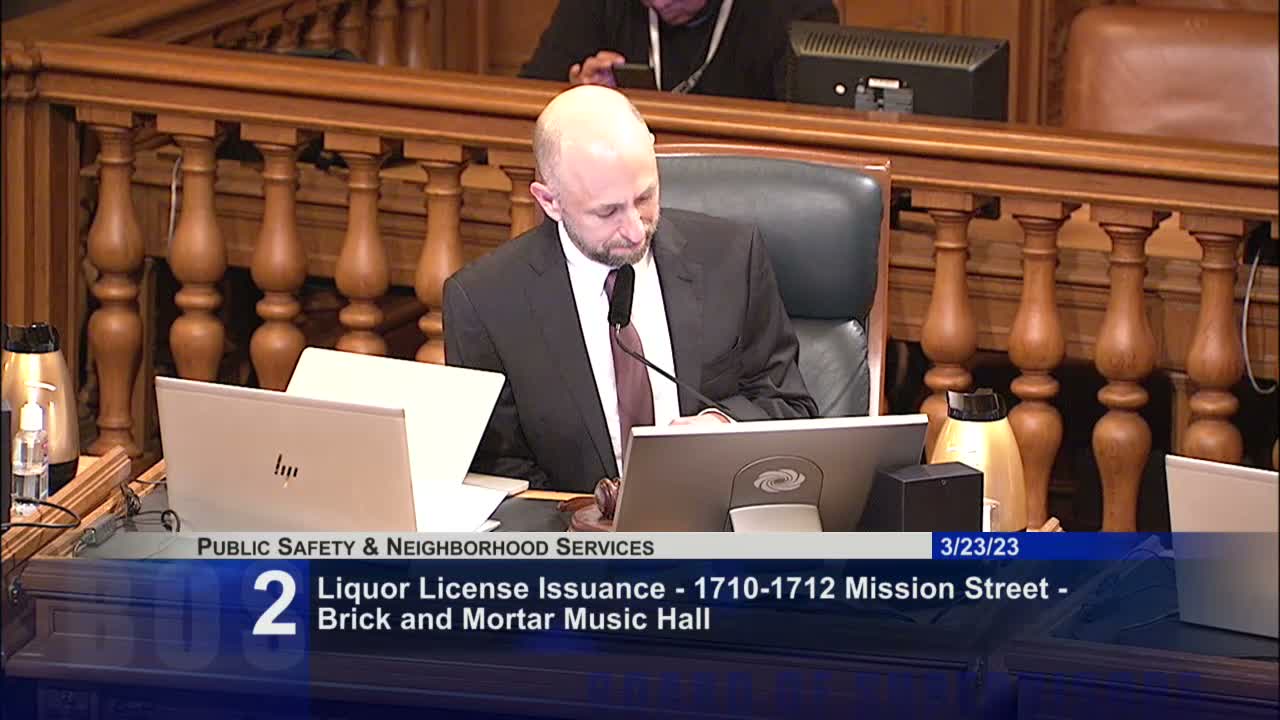
The Public Safety and Neighborhood Services Committee on March 23 voted to recommend that the Board of Supervisors adopt the Japantown Cultural Heritage District's CHESS (Cultural History, Housing, and Economic Sustainability Strategy) report.
Kira Geithman and Grace June Lee of the Mayor's Office of Housing and Community Development told the committee the Cultural Districts program, established in 2018, is designed as a formal partnership between community and city. The CHESS document, coauthored by community members and city staff, lays out 25 strategies and six focus areas for cultural history, housing, and economic sustainability; the presenters described it as a "community‑authored roadmap" to preserve heritage and stabilize the neighborhood.
Susie Kagami, manager of the Japantown Cultural District, said the CHESS represents 13 years of community engagement and noted specific priorities including preservation of buildings and legacy businesses, succession planning for institutions more than 50 years old, securing housing to enable return of Japanese and Japanese‑American families, and renovation of public assets such as Peace Plaza and the Pagoda (a renovation is planned for 2024, presenters said). Kagami called the report "the voice of our community."
More than a dozen community members and cultural district representatives testified in favor. Speakers included Mario Demira (Soma Filipinas), Laurie Yamauchi (co‑author and editor of the CHESS), Alice Kawahatsu (Japantown Task Force board), Rosalind Tonai (National Japanese American Historical Society), Lucy Fisher (Friends of the Japanese Tea Garden), Melissa Bailey Nihei (Japantown Task Force staff), and others. Public commenters emphasized the CHESS report's historical context — citing World War II incarceration and mid‑century urban renewal — and urged the committee to forward the report to the full Board with a recommendation to adopt and implement the strategies.
Acting Chair Joel Engadio characterized the resolution as a blueprint for sustaining Japantown and noted that only three Japantowns remain in the United States; member Safae/Safaie moved to recommend the resolution to the Board of Supervisors. The clerk recorded unanimous support from committee members and the item was sent to the full Board with a positive recommendation. The committee adjourned following the vote.
The CHESS report was presented to the committee as a community plan co‑developed with city departments; the committee's recommendation sends the report to the Board for final consideration and possible formal adoption.
Kira Geithman and Grace June Lee of the Mayor's Office of Housing and Community Development told the committee the Cultural Districts program, established in 2018, is designed as a formal partnership between community and city. The CHESS document, coauthored by community members and city staff, lays out 25 strategies and six focus areas for cultural history, housing, and economic sustainability; the presenters described it as a "community‑authored roadmap" to preserve heritage and stabilize the neighborhood.
Susie Kagami, manager of the Japantown Cultural District, said the CHESS represents 13 years of community engagement and noted specific priorities including preservation of buildings and legacy businesses, succession planning for institutions more than 50 years old, securing housing to enable return of Japanese and Japanese‑American families, and renovation of public assets such as Peace Plaza and the Pagoda (a renovation is planned for 2024, presenters said). Kagami called the report "the voice of our community."
More than a dozen community members and cultural district representatives testified in favor. Speakers included Mario Demira (Soma Filipinas), Laurie Yamauchi (co‑author and editor of the CHESS), Alice Kawahatsu (Japantown Task Force board), Rosalind Tonai (National Japanese American Historical Society), Lucy Fisher (Friends of the Japanese Tea Garden), Melissa Bailey Nihei (Japantown Task Force staff), and others. Public commenters emphasized the CHESS report's historical context — citing World War II incarceration and mid‑century urban renewal — and urged the committee to forward the report to the full Board with a recommendation to adopt and implement the strategies.
Acting Chair Joel Engadio characterized the resolution as a blueprint for sustaining Japantown and noted that only three Japantowns remain in the United States; member Safae/Safaie moved to recommend the resolution to the Board of Supervisors. The clerk recorded unanimous support from committee members and the item was sent to the full Board with a positive recommendation. The committee adjourned following the vote.
The CHESS report was presented to the committee as a community plan co‑developed with city departments; the committee's recommendation sends the report to the Board for final consideration and possible formal adoption.
Don't Miss a Word: See the Full Meeting!
Go beyond summaries. Unlock every video, transcript, and key insight with a Founder Membership.
✓
Get instant access to full meeting videos
✓
Search and clip any phrase from complete transcripts
✓
Receive AI-powered summaries & custom alerts
✓
Enjoy lifetime, unrestricted access to government data
30-day money-back guarantee
