Supervisors hear police, DA and community partners on violence targeting AAPI seniors and other vulnerable groups
February 08, 2024 | San Francisco County, California
This article was created by AI summarizing key points discussed. AI makes mistakes, so for full details and context, please refer to the video of the full meeting. Please report any errors so we can fix them. Report an error »
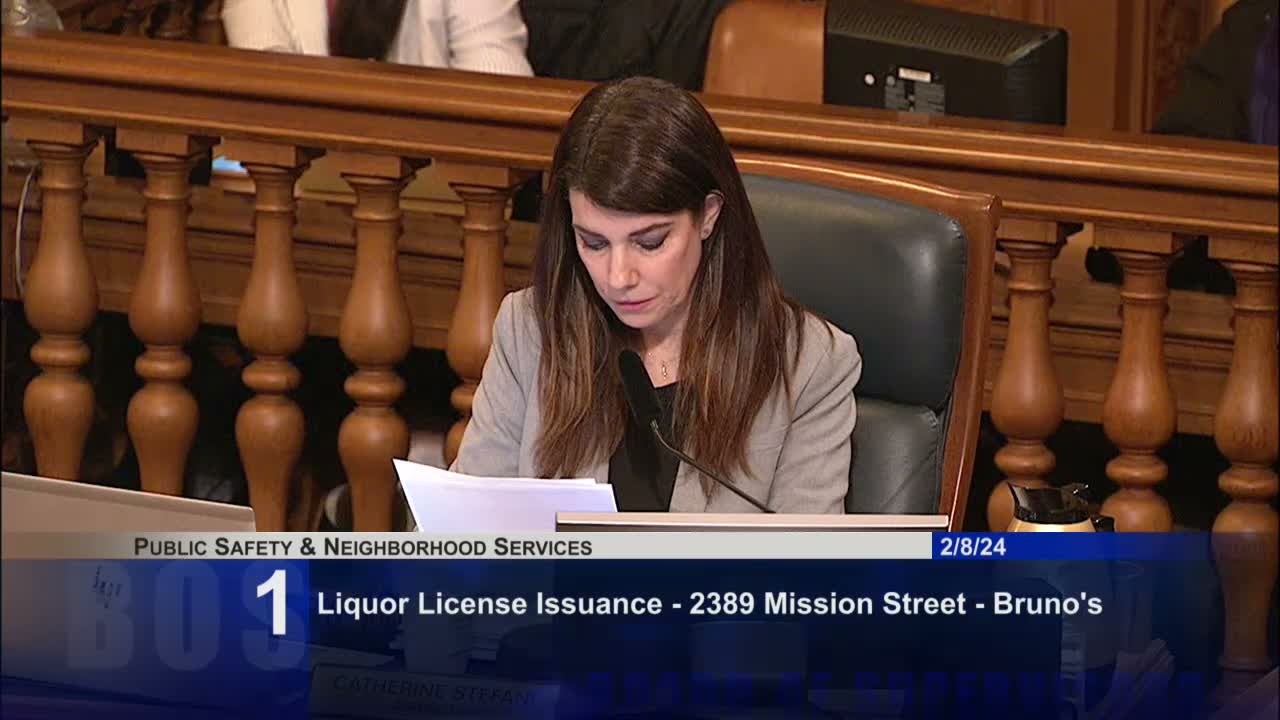
San Francisco elected and city officials, law‑enforcement leaders and community groups told the Public Safety and Neighborhood Services Committee on Feb. 8 that reducing violence targeting Asian American and Pacific Islander seniors and other vulnerable residents requires coordinated policing, culturally competent victim services and sustained community prevention efforts.
Supervisor Connie Chan, who carried the item introduced in 2021, framed the hearing as a multi‑year response to a rise in anti‑Asian violence during the pandemic and called for a comprehensive approach that pairs enforcement with community‑level prevention. "We know that law enforcement is part of the equation… but it is only part of the equation," Chan said in opening remarks.
SFPD acting Commander Aaron Perra and Sergeant Jamie Hien (hate‑crimes coordinator) explained the legal threshold for hate‑crime enhancements and distinguished between constitutionally protected "hate incidents" and criminal hate crimes that require proof of biased motivation. Sergeant Hien emphasized the difficulty of proving motivation: "Bigotry must be the central motivation for [a hate crime]," she said, and described surveillance, pattern analysis and targeted plainclothes investigations used to apprehend prolific offenders in 2021 and 2023.
Nancy Tung of the District Attorney’s Office described the DA’s 2022 audit of prior hate‑crime charging decisions and reported that of 235 cases analyzed across units, 157 had some action and 149 were newly filed; for 2023 the DA reported 21 hate‑crime presentations to the office with 12 cases filed. Tung also summarized victim‑services capacity (bilingual advocates and outreach) and noted legal remedies such as restitution and state victim compensation but warned that civil judgments do not guarantee payment by defendants.
Community groups organized as the Coalition for Community Safety and Justice (CCSJ) — including Chinese Progressive Association, Chinatown Community Development Center, Community Youth Center (CYC) and Chinese for Affirmative Action — described prevention and survivor services: safety escorts for seniors, multilingual outreach, restorative‑justice training, victim support funds and town‑hall forums to connect residents to agencies. Annie Chung and coalition partners said community programs help reach monolingual seniors and inform reporting and recovery.
Public commenters broadly urged a two‑pronged response: maintain focused investigations that can dismantle prolific offenders while expanding language access, culturally competent victim services, and long‑term prevention programs. Commenters and presenters repeatedly flagged the need for better data, sustained funding for community organizations, and coordination across agencies.
Committee action: Supervisor Chan moved to continue item 2 to the call of the chair so the city can monitor progress and return with updates; the motion passed unanimously in committee (3 ayes). The committee also asked staff to include reports and impact materials in the legislative file and signaled interest in continued follow‑up on staffing, language access and funding for community partners.
What’s next: The committee plans ongoing monitoring and additional hearings or briefings; the committee record and presenters’ materials will be filed for the legislative record and used for follow‑up on funding and implementation.
Supervisor Connie Chan, who carried the item introduced in 2021, framed the hearing as a multi‑year response to a rise in anti‑Asian violence during the pandemic and called for a comprehensive approach that pairs enforcement with community‑level prevention. "We know that law enforcement is part of the equation… but it is only part of the equation," Chan said in opening remarks.
SFPD acting Commander Aaron Perra and Sergeant Jamie Hien (hate‑crimes coordinator) explained the legal threshold for hate‑crime enhancements and distinguished between constitutionally protected "hate incidents" and criminal hate crimes that require proof of biased motivation. Sergeant Hien emphasized the difficulty of proving motivation: "Bigotry must be the central motivation for [a hate crime]," she said, and described surveillance, pattern analysis and targeted plainclothes investigations used to apprehend prolific offenders in 2021 and 2023.
Nancy Tung of the District Attorney’s Office described the DA’s 2022 audit of prior hate‑crime charging decisions and reported that of 235 cases analyzed across units, 157 had some action and 149 were newly filed; for 2023 the DA reported 21 hate‑crime presentations to the office with 12 cases filed. Tung also summarized victim‑services capacity (bilingual advocates and outreach) and noted legal remedies such as restitution and state victim compensation but warned that civil judgments do not guarantee payment by defendants.
Community groups organized as the Coalition for Community Safety and Justice (CCSJ) — including Chinese Progressive Association, Chinatown Community Development Center, Community Youth Center (CYC) and Chinese for Affirmative Action — described prevention and survivor services: safety escorts for seniors, multilingual outreach, restorative‑justice training, victim support funds and town‑hall forums to connect residents to agencies. Annie Chung and coalition partners said community programs help reach monolingual seniors and inform reporting and recovery.
Public commenters broadly urged a two‑pronged response: maintain focused investigations that can dismantle prolific offenders while expanding language access, culturally competent victim services, and long‑term prevention programs. Commenters and presenters repeatedly flagged the need for better data, sustained funding for community organizations, and coordination across agencies.
Committee action: Supervisor Chan moved to continue item 2 to the call of the chair so the city can monitor progress and return with updates; the motion passed unanimously in committee (3 ayes). The committee also asked staff to include reports and impact materials in the legislative file and signaled interest in continued follow‑up on staffing, language access and funding for community partners.
What’s next: The committee plans ongoing monitoring and additional hearings or briefings; the committee record and presenters’ materials will be filed for the legislative record and used for follow‑up on funding and implementation.
Don't Miss a Word: See the Full Meeting!
Go beyond summaries. Unlock every video, transcript, and key insight with a Founder Membership.
✓
Get instant access to full meeting videos
✓
Search and clip any phrase from complete transcripts
✓
Receive AI-powered summaries & custom alerts
✓
Enjoy lifetime, unrestricted access to government data
30-day money-back guarantee
