City officials, survivors’ agencies urge stronger coordination and housing for human‑trafficking survivors
February 08, 2024 | San Francisco County, California
This article was created by AI summarizing key points discussed. AI makes mistakes, so for full details and context, please refer to the video of the full meeting. Please report any errors so we can fix them. Report an error »
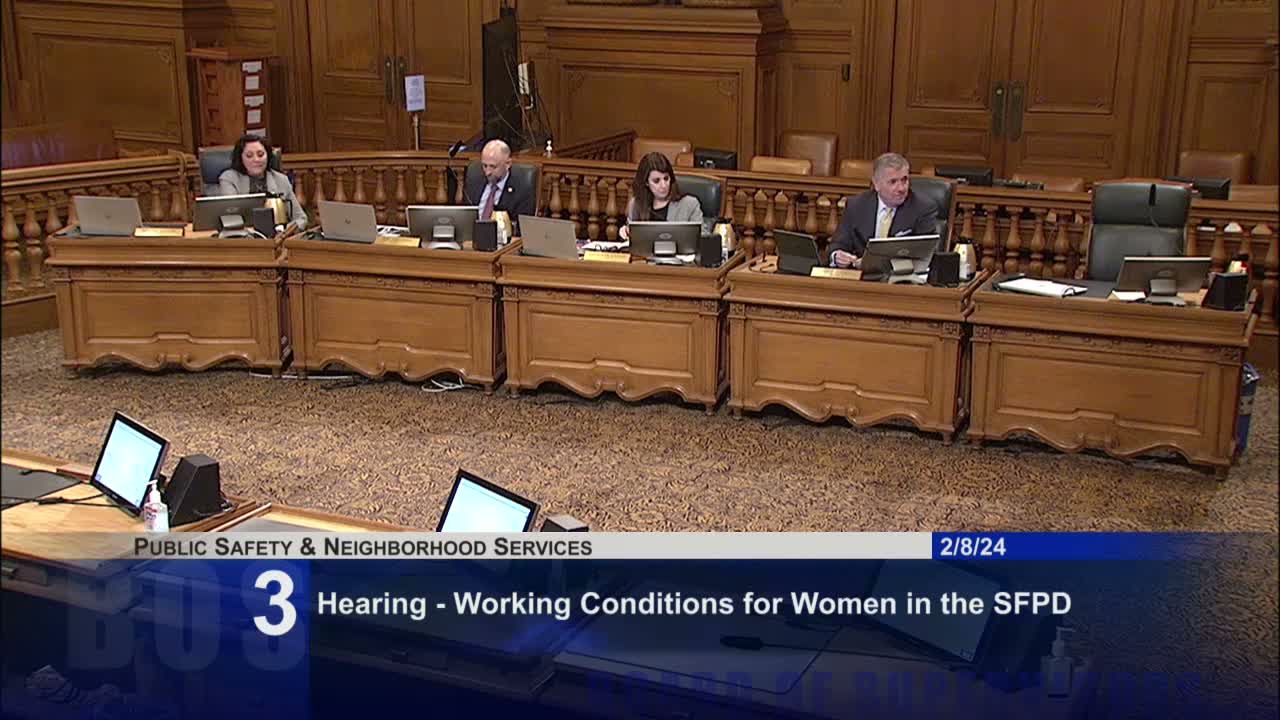
The Department on the Status of Women presented the 2021 human‑trafficking report to the Public Safety and Neighborhood Services Committee on Feb. 8 and urged the Board to strengthen coordinated response, invest in community‑based capacity building and address gaps in housing and long‑term services for survivors.
Director Kimberly Ellis summarized the report’s methodology and key findings: the department’s 2021 analysis used the federal definition of human trafficking and aggregated data from public and nonprofit service providers; it found that a majority of identified survivors are women, with most cases reported as sex trafficking, and that capacity building for community‑based organizations is essential to identify and serve survivors.
Toni Eby, CEO of San Francisco Safe House, described the provider perspective: Safe House reported growing demand, long wait lists for housing slots and insufficient permanent housing for survivors and survivors with children. Eby said a recent acquisition (101 Gulf Street) will add transitional units (about 19–22 units, including two‑bed units to accommodate women with children) but urged sustained city support for services and long‑term housing.
Representatives of the San Francisco Collaborative Against Human Trafficking described regional coordination efforts, hotline operation and training for professionals. State pilot funding and county partnerships were raised as avenues to expand placements for minors and at‑risk youth; one presenter noted specific state pilot programs for youth at risk of commercial sexual exploitation.
Public commenters urged stronger data collection, more long‑term and survivor‑centered housing options, and cybercrime capacity to address online recruitment and exploitation. Committee members discussed regional funding comparisons and requested the department provide additional analysis of county program spending and coordination opportunities.
Committee action: the committee voted to file the hearing record and asked the Department on the Status of Women to continue efforts to reorganize the task force, pursue regional and federal funding, and coordinate with CBOs and other counties to expand capacity and survivor housing.
Director Kimberly Ellis summarized the report’s methodology and key findings: the department’s 2021 analysis used the federal definition of human trafficking and aggregated data from public and nonprofit service providers; it found that a majority of identified survivors are women, with most cases reported as sex trafficking, and that capacity building for community‑based organizations is essential to identify and serve survivors.
Toni Eby, CEO of San Francisco Safe House, described the provider perspective: Safe House reported growing demand, long wait lists for housing slots and insufficient permanent housing for survivors and survivors with children. Eby said a recent acquisition (101 Gulf Street) will add transitional units (about 19–22 units, including two‑bed units to accommodate women with children) but urged sustained city support for services and long‑term housing.
Representatives of the San Francisco Collaborative Against Human Trafficking described regional coordination efforts, hotline operation and training for professionals. State pilot funding and county partnerships were raised as avenues to expand placements for minors and at‑risk youth; one presenter noted specific state pilot programs for youth at risk of commercial sexual exploitation.
Public commenters urged stronger data collection, more long‑term and survivor‑centered housing options, and cybercrime capacity to address online recruitment and exploitation. Committee members discussed regional funding comparisons and requested the department provide additional analysis of county program spending and coordination opportunities.
Committee action: the committee voted to file the hearing record and asked the Department on the Status of Women to continue efforts to reorganize the task force, pursue regional and federal funding, and coordinate with CBOs and other counties to expand capacity and survivor housing.
View the Full Meeting & All Its Details
This article offers just a summary. Unlock complete video, transcripts, and insights as a Founder Member.
✓
Watch full, unedited meeting videos
✓
Search every word spoken in unlimited transcripts
✓
AI summaries & real-time alerts (all government levels)
✓
Permanent access to expanding government content
30-day money-back guarantee
