Supervisors press SFPD, DA and SHARP on gaps in survivor follow‑up; Ronan to propose moving SHARP to Office of Victim & Witness Rights
May 09, 2024 | San Francisco County, California
This article was created by AI summarizing key points discussed. AI makes mistakes, so for full details and context, please refer to the video of the full meeting. Please report any errors so we can fix them. Report an error »
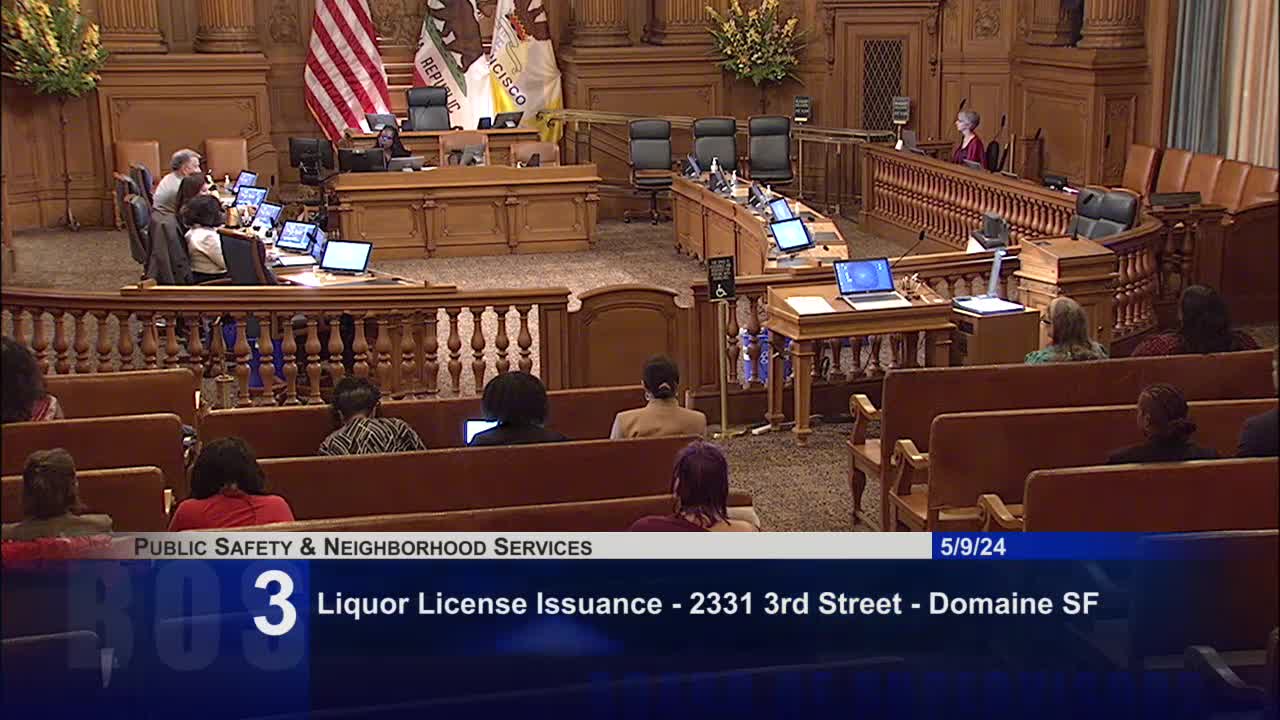
The Public Safety and Neighborhood Services Committee held an extended hearing May 9 to examine how San Francisco agencies respond when survivors come forward with sexual assault and harassment allegations. The session brought testimony from the San Francisco Police Department’s Special Victims Unit (SVU), the district attorney’s office, SHARP (the Office of Sexual Harassment and Assault Response & Prevention), and many survivors and community organizations.
Supervisor Shamann Walton? [note: name not in transcript as speaker; primary sponsor Supervisor Ronan introduced the hearing], said the review aimed to assess processes since a 2018 hearing that prompted creation of SHARP. Supervisor Catherine Stephanie chaired the meeting; Supervisor Ronan led the hearing and announced she will introduce legislation to move SHARP from the Human Rights Commission to a new voter‑approved Office of Victim and Witness Rights with more prescriptive confidentiality and reporting rules.
SFPD presentation: Captain Alexa O’Brien of SVU described the unit’s mission and caseload. Captain O’Brien reported SVU receives roughly 8,700 reports per year across a spectrum that includes forcible rape and other sexual offenses. She said the unit now has about 32 investigators (down from roughly 70 in prior years) and that their average turnaround time for forensic evidence processing is about 39 days. On evidence, she said that, of 154 kits processed in the prior year, 61 produced a DNA profile entered into CODIS and 20 of those returned a CODIS match; 93 did not yield a DNA profile. O’Brien emphasized trauma‑informed interviewing and closer collaboration with community partners and victim advocates.
SHARP briefing: Director Davis (SHARP) and staff described the office’s dual prevention and response mandate, its limited staffing (two core staff members named in testimony), and the difficulty SHARP has had disaggregating and reporting complaint data while maintaining survivor confidentiality. SHARP reported 72 direct complaints and 187 broadly community‑informed reports; of the 72 direct complaints, SHARP described 33 as ongoing investigations. Staff urged clearer, legislated processes (standing inter‑agency meetings, quarterly reporting and stronger institutional requirements) and increased staff capacity to carry out the office’s original mandate to both support survivors and hold city departments accountable.
District Attorney’s Office: Monifa Willis, chief of staff, described DA victim‑service and prosecutorial coordination. Willis said the DA’s filing rate for cases increased to 78% in 2023 from 31% in 2020 and described steps to improve victim services: advocates who respond within 24 hours via the CASA unit, kit‑tracking outreach for victims, embedded community advocates at CBOs, and school‑based Healthy Relationships workshops.
Public comment: More than a dozen survivors, advocates and community organizations urged stronger support and follow‑through, citing SHARP’s outreach and prevention work while also describing unresolved cases and the emotional costs survivors face when reporting. Speakers pressed for better rehousing coordination for survivors, stronger confidentiality protections, clearer referral and tracking processes, and consistent quarterly reporting from SHARP to ensure department‑level follow‑through on recommendations.
Outcome and next steps: Supervisor Ronan thanked participating departments, said SHARP should retain its survivor‑centered services, and announced planned legislation to transfer SHARP into a dedicated Office of Victim and Witness Rights with expanded confidentiality language and clearer reporting and oversight provisions. The committee voted to hear and file the item (voice vote 3‑0), and supervisors indicated they would use the hearing to refine legislative language and consider staffing and reporting improvements.
Supervisor Shamann Walton? [note: name not in transcript as speaker; primary sponsor Supervisor Ronan introduced the hearing], said the review aimed to assess processes since a 2018 hearing that prompted creation of SHARP. Supervisor Catherine Stephanie chaired the meeting; Supervisor Ronan led the hearing and announced she will introduce legislation to move SHARP from the Human Rights Commission to a new voter‑approved Office of Victim and Witness Rights with more prescriptive confidentiality and reporting rules.
SFPD presentation: Captain Alexa O’Brien of SVU described the unit’s mission and caseload. Captain O’Brien reported SVU receives roughly 8,700 reports per year across a spectrum that includes forcible rape and other sexual offenses. She said the unit now has about 32 investigators (down from roughly 70 in prior years) and that their average turnaround time for forensic evidence processing is about 39 days. On evidence, she said that, of 154 kits processed in the prior year, 61 produced a DNA profile entered into CODIS and 20 of those returned a CODIS match; 93 did not yield a DNA profile. O’Brien emphasized trauma‑informed interviewing and closer collaboration with community partners and victim advocates.
SHARP briefing: Director Davis (SHARP) and staff described the office’s dual prevention and response mandate, its limited staffing (two core staff members named in testimony), and the difficulty SHARP has had disaggregating and reporting complaint data while maintaining survivor confidentiality. SHARP reported 72 direct complaints and 187 broadly community‑informed reports; of the 72 direct complaints, SHARP described 33 as ongoing investigations. Staff urged clearer, legislated processes (standing inter‑agency meetings, quarterly reporting and stronger institutional requirements) and increased staff capacity to carry out the office’s original mandate to both support survivors and hold city departments accountable.
District Attorney’s Office: Monifa Willis, chief of staff, described DA victim‑service and prosecutorial coordination. Willis said the DA’s filing rate for cases increased to 78% in 2023 from 31% in 2020 and described steps to improve victim services: advocates who respond within 24 hours via the CASA unit, kit‑tracking outreach for victims, embedded community advocates at CBOs, and school‑based Healthy Relationships workshops.
Public comment: More than a dozen survivors, advocates and community organizations urged stronger support and follow‑through, citing SHARP’s outreach and prevention work while also describing unresolved cases and the emotional costs survivors face when reporting. Speakers pressed for better rehousing coordination for survivors, stronger confidentiality protections, clearer referral and tracking processes, and consistent quarterly reporting from SHARP to ensure department‑level follow‑through on recommendations.
Outcome and next steps: Supervisor Ronan thanked participating departments, said SHARP should retain its survivor‑centered services, and announced planned legislation to transfer SHARP into a dedicated Office of Victim and Witness Rights with expanded confidentiality language and clearer reporting and oversight provisions. The committee voted to hear and file the item (voice vote 3‑0), and supervisors indicated they would use the hearing to refine legislative language and consider staffing and reporting improvements.
Don't Miss a Word: See the Full Meeting!
Go beyond summaries. Unlock every video, transcript, and key insight with a Founder Membership.
✓
Get instant access to full meeting videos
✓
Search and clip any phrase from complete transcripts
✓
Receive AI-powered summaries & custom alerts
✓
Enjoy lifetime, unrestricted access to government data
30-day money-back guarantee
