City economists, BOMA and OEWD outline downtown office vacancy, lost revenue and recovery steps
February 07, 2022 | San Francisco County, California
This article was created by AI summarizing key points discussed. AI makes mistakes, so for full details and context, please refer to the video of the full meeting. Please report any errors so we can fix them. Report an error »
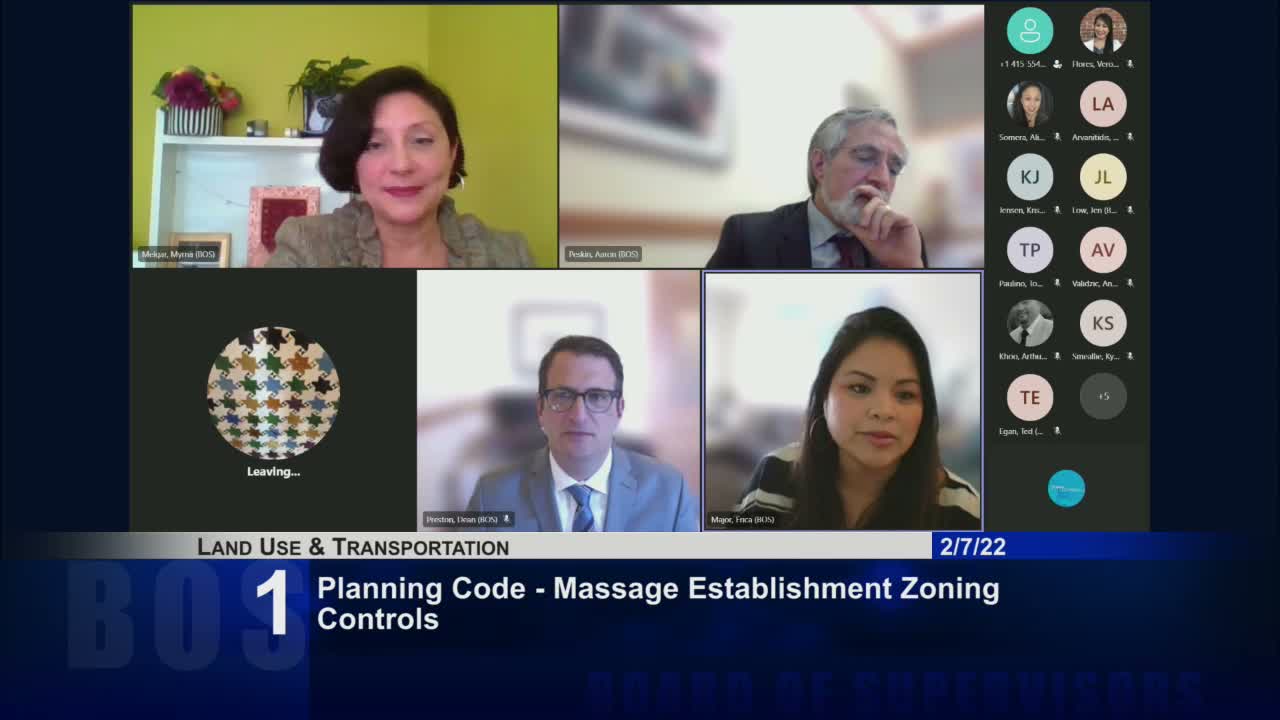
San Francisco’s Land Use and Transportation Committee on Feb. 7 held a hearing on the economic impact of vacant downtown office buildings after the pandemic. Sponsor Supervisor Safae opened the hearing and said the committee would hear from the city economist, private building representatives and the Office of Economic and Workforce Development on vacancy, lost revenue and recovery options.
City Economist Ted Egan presented broker data through the end of 2021 showing vacancy rates remain highly elevated: many broker series reported vacancy above 20%, and some smaller submarkets show vacancy in the 30–40% range. He said leasing activity remained low, sublease inventory had begun to be absorbed, and rents showed a significant drop early in the pandemic but relatively little further change through 2021. Egan noted downtown sales tax receipts remained down about 25% in some areas compared with 2019 and said San Francisco lags peer metros in weekly office attendance.
John Bryant, CEO of BOMA San Francisco, said BOMA represents roughly 225 downtown buildings (about 68 million square feet) and estimated the sector supports more than 41,000 downtown jobs. He reported occupancy fell to about 18–20% after Omicron (it had peaked near 28%) and said members reported safety and crime concerns, competition from other markets, and uncertainty about employer return dates as major barriers to recovery. Bryant described building mitigation measures—higher MERV filters, enhanced cleaning and tenant coordination—and said some rents show decreases of roughly 10–15%.
Laurel Arvanitidis of the Office of Economic and Workforce Development described city actions to support downtown recovery, including the Small Business Recovery Act (expedited permits for principally permitted uses), SF Wednesdays activations and a $2.5 million state‑funded SFLive concert series. OEWD said it is soliciting a consultant to conduct an economic analysis and survey to inform activation and attracting new ground‑floor businesses.
Public commenters urged a focus on frontline workers and permitting delays: one caller pressed for ventilation and retraining for displaced janitors; Alex Landsberg (Research and Advocacy Director, Electrical Construction Industry) said thousands of union tradespeople lost work and pointed to permitting slowdowns for tenant improvements; Rudy Gonzalez (SF Building & Construction Trades Council) said hearings should include workers and frontline staff who depend on downtown demand.
After discussion the committee agreed to continue the item to the call of the chair for follow‑up and additional data; the motion to continue passed on recorded ayes from Peskin, Preston and Melgar.
City Economist Ted Egan presented broker data through the end of 2021 showing vacancy rates remain highly elevated: many broker series reported vacancy above 20%, and some smaller submarkets show vacancy in the 30–40% range. He said leasing activity remained low, sublease inventory had begun to be absorbed, and rents showed a significant drop early in the pandemic but relatively little further change through 2021. Egan noted downtown sales tax receipts remained down about 25% in some areas compared with 2019 and said San Francisco lags peer metros in weekly office attendance.
John Bryant, CEO of BOMA San Francisco, said BOMA represents roughly 225 downtown buildings (about 68 million square feet) and estimated the sector supports more than 41,000 downtown jobs. He reported occupancy fell to about 18–20% after Omicron (it had peaked near 28%) and said members reported safety and crime concerns, competition from other markets, and uncertainty about employer return dates as major barriers to recovery. Bryant described building mitigation measures—higher MERV filters, enhanced cleaning and tenant coordination—and said some rents show decreases of roughly 10–15%.
Laurel Arvanitidis of the Office of Economic and Workforce Development described city actions to support downtown recovery, including the Small Business Recovery Act (expedited permits for principally permitted uses), SF Wednesdays activations and a $2.5 million state‑funded SFLive concert series. OEWD said it is soliciting a consultant to conduct an economic analysis and survey to inform activation and attracting new ground‑floor businesses.
Public commenters urged a focus on frontline workers and permitting delays: one caller pressed for ventilation and retraining for displaced janitors; Alex Landsberg (Research and Advocacy Director, Electrical Construction Industry) said thousands of union tradespeople lost work and pointed to permitting slowdowns for tenant improvements; Rudy Gonzalez (SF Building & Construction Trades Council) said hearings should include workers and frontline staff who depend on downtown demand.
After discussion the committee agreed to continue the item to the call of the chair for follow‑up and additional data; the motion to continue passed on recorded ayes from Peskin, Preston and Melgar.
View the Full Meeting & All Its Details
This article offers just a summary. Unlock complete video, transcripts, and insights as a Founder Member.
✓
Watch full, unedited meeting videos
✓
Search every word spoken in unlimited transcripts
✓
AI summaries & real-time alerts (all government levels)
✓
Permanent access to expanding government content
30-day money-back guarantee
