Supervisors press mayor’s office on affordability as committee continues auto‑oriented upzoning to July 11
June 13, 2022 | San Francisco County, California
This article was created by AI summarizing key points discussed. AI makes mistakes, so for full details and context, please refer to the video of the full meeting. Please report any errors so we can fix them. Report an error »
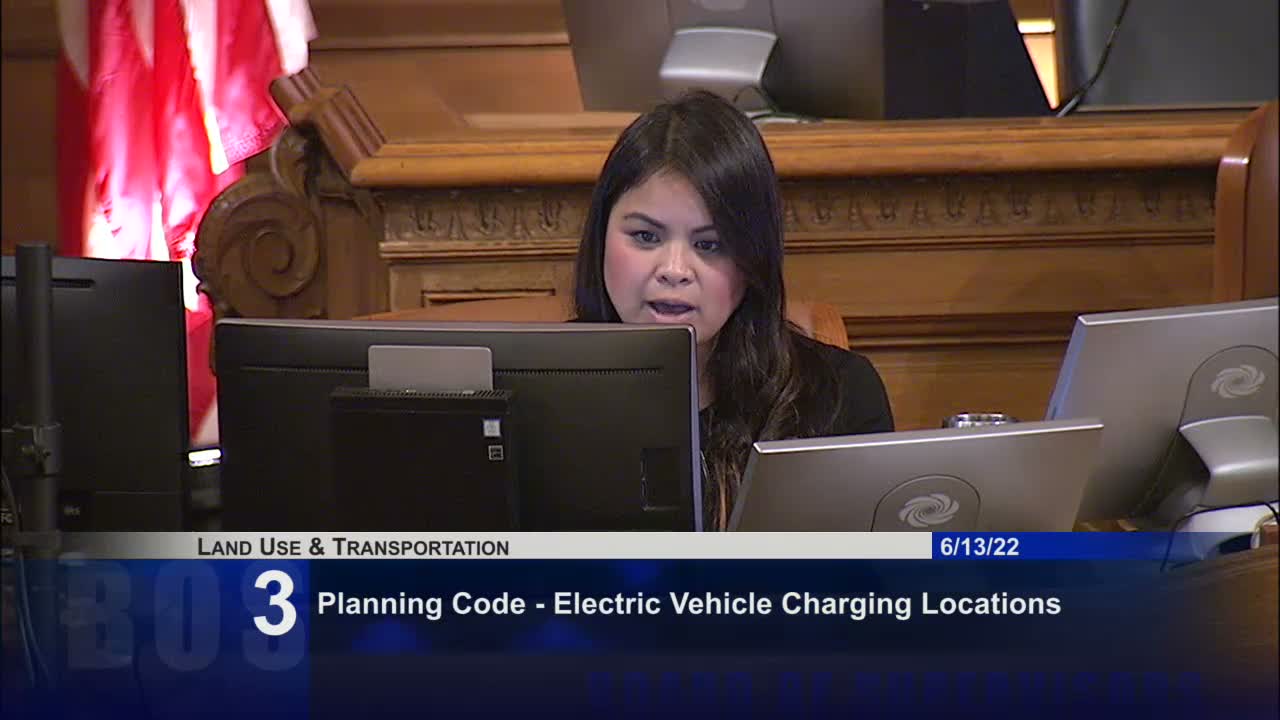
The committee considered an ordinance from the Mayor’s Office to increase residential density on lots with auto‑oriented uses and to remove conditional‑use requirements where housing is permitted but no residential use currently exists. Veronica Flores of the Planning Department explained the ordinance has been revised since the planning commission hearing and that some changes had been presented at a previous committee session in March.
Supervisor Dean Preston led a sustained line of questioning about why increased density in many locations was not paired with higher on‑site affordability requirements or a feasibility study. Planning staff said the ordinance was narrowly targeted at a subset of parcels (staff provided a conservative estimate of 131 RH parcels and 627 nonresidential parcels, for a total of roughly 758 candidate lots) and that an analysis of inclusionary rates was not part of this draft. Several supervisors said they wanted mayoral staff present to explain policy choices and to provide analysis showing whether higher affordability requirements would be feasible alongside density increases.
Public commenters voiced mixed views: housing advocates and many residents urged converting auto‑oriented lots to housing to address the city’s housing shortage, while labor and community groups warned that removing conditional‑use review without protections could displace blue‑collar jobs and asked for stronger equity and job‑retention measures or exploring 100% affordable development options.
After debate the committee adopted previously circulated technical amendments addressing historic‑district exceptions and then the chair moved to continue the ordinance to July 11 so the mayor’s office and planning could answer outstanding questions. The motion to continue passed with three ayes.
What happens next: The committee expects the mayor’s office to appear with planning staff to provide feasibility analysis and proposed affordability measures before the July 11 continuation.
Supervisor Dean Preston led a sustained line of questioning about why increased density in many locations was not paired with higher on‑site affordability requirements or a feasibility study. Planning staff said the ordinance was narrowly targeted at a subset of parcels (staff provided a conservative estimate of 131 RH parcels and 627 nonresidential parcels, for a total of roughly 758 candidate lots) and that an analysis of inclusionary rates was not part of this draft. Several supervisors said they wanted mayoral staff present to explain policy choices and to provide analysis showing whether higher affordability requirements would be feasible alongside density increases.
Public commenters voiced mixed views: housing advocates and many residents urged converting auto‑oriented lots to housing to address the city’s housing shortage, while labor and community groups warned that removing conditional‑use review without protections could displace blue‑collar jobs and asked for stronger equity and job‑retention measures or exploring 100% affordable development options.
After debate the committee adopted previously circulated technical amendments addressing historic‑district exceptions and then the chair moved to continue the ordinance to July 11 so the mayor’s office and planning could answer outstanding questions. The motion to continue passed with three ayes.
What happens next: The committee expects the mayor’s office to appear with planning staff to provide feasibility analysis and proposed affordability measures before the July 11 continuation.
Don't Miss a Word: See the Full Meeting!
Go beyond summaries. Unlock every video, transcript, and key insight with a Founder Membership.
✓
Get instant access to full meeting videos
✓
Search and clip any phrase from complete transcripts
✓
Receive AI-powered summaries & custom alerts
✓
Enjoy lifetime, unrestricted access to government data
30-day money-back guarantee
