Supervisors hear broad implementation briefings on LGBTQ+ Cultural Heritage Strategy
July 25, 2022 | San Francisco County, California
This article was created by AI summarizing key points discussed. AI makes mistakes, so for full details and context, please refer to the video of the full meeting. Please report any errors so we can fix them. Report an error »
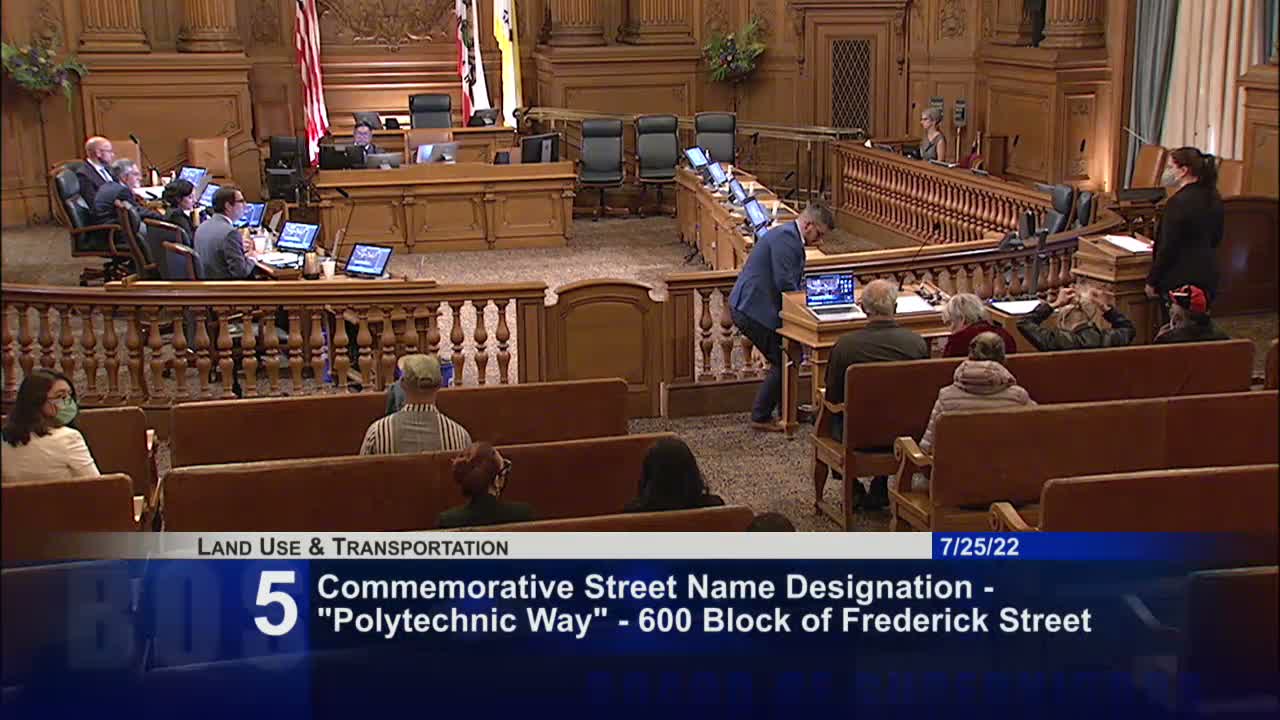
The Land Use and Transportation Committee heard a full‑day hearing on the city’s LGBTQ+ Cultural Heritage Strategy, a community‑produced set of recommendations first authorized by the Board of Supervisors in 2016.
Planning Department staff Frances McMillan summarized the working‑group process (2017–2020), outreach including a 2017 survey that received nearly 1,500 responses, and a set of recommendations grouped under culture, well‑being, and opportunity pillars. Working‑group chairs and volunteers urged stronger implementation, new funding and staff, and recommended programmatic steps such as an advocacy group to support proactive preservation of LGBTQ historic sites.
Multiple agencies provided status reports and gaps. Pau Crego of the Office of Trans Initiatives highlighted programs addressing housing, workforce, SOGI data coordination and a TranshomSF effort and a trans guaranteed‑income pilot; the Planning Department described a multi‑year citywide cultural resources survey and noted landmarking work in progress for sites tied to LGBTQ history. The Arts Commission described grant programs, a guaranteed‑income pilot for artists and the Artist Power Center platform; the Human Services Agency and Department of Disability and Aging Services described targeted services for transgender and LGBTQ older adults. MOHCD and OEWD reported investments in cultural districts, workforce and small‑business support; cultural district leaders (Castro, Leather, Transgender districts) described local grantmaking, placemaking and concerns about nightlife venues and preservation amid development pressure.
Andrew Schafer of the GLBT Historical Society updated the committee on a campaign to create a full‑scale LGBTQ history museum, noting major private pledges and state funding secured in prior years and urging continued city investment.
Supervisor Rafael Mandelmann, who sponsored the hearing, moved that the committee hear the testimony and file the item; the committee approved the motion.
Planning Department staff Frances McMillan summarized the working‑group process (2017–2020), outreach including a 2017 survey that received nearly 1,500 responses, and a set of recommendations grouped under culture, well‑being, and opportunity pillars. Working‑group chairs and volunteers urged stronger implementation, new funding and staff, and recommended programmatic steps such as an advocacy group to support proactive preservation of LGBTQ historic sites.
Multiple agencies provided status reports and gaps. Pau Crego of the Office of Trans Initiatives highlighted programs addressing housing, workforce, SOGI data coordination and a TranshomSF effort and a trans guaranteed‑income pilot; the Planning Department described a multi‑year citywide cultural resources survey and noted landmarking work in progress for sites tied to LGBTQ history. The Arts Commission described grant programs, a guaranteed‑income pilot for artists and the Artist Power Center platform; the Human Services Agency and Department of Disability and Aging Services described targeted services for transgender and LGBTQ older adults. MOHCD and OEWD reported investments in cultural districts, workforce and small‑business support; cultural district leaders (Castro, Leather, Transgender districts) described local grantmaking, placemaking and concerns about nightlife venues and preservation amid development pressure.
Andrew Schafer of the GLBT Historical Society updated the committee on a campaign to create a full‑scale LGBTQ history museum, noting major private pledges and state funding secured in prior years and urging continued city investment.
Supervisor Rafael Mandelmann, who sponsored the hearing, moved that the committee hear the testimony and file the item; the committee approved the motion.
View the Full Meeting & All Its Details
This article offers just a summary. Unlock complete video, transcripts, and insights as a Founder Member.
✓
Watch full, unedited meeting videos
✓
Search every word spoken in unlimited transcripts
✓
AI summaries & real-time alerts (all government levels)
✓
Permanent access to expanding government content
30-day money-back guarantee
