Experts tell supervisors Bay’s summer algal bloom was driven by light and calm conditions; nutrient reduction options could cost billions
October 17, 2022 | San Francisco County, California
This article was created by AI summarizing key points discussed. AI makes mistakes, so for full details and context, please refer to the video of the full meeting. Please report any errors so we can fix them. Report an error »
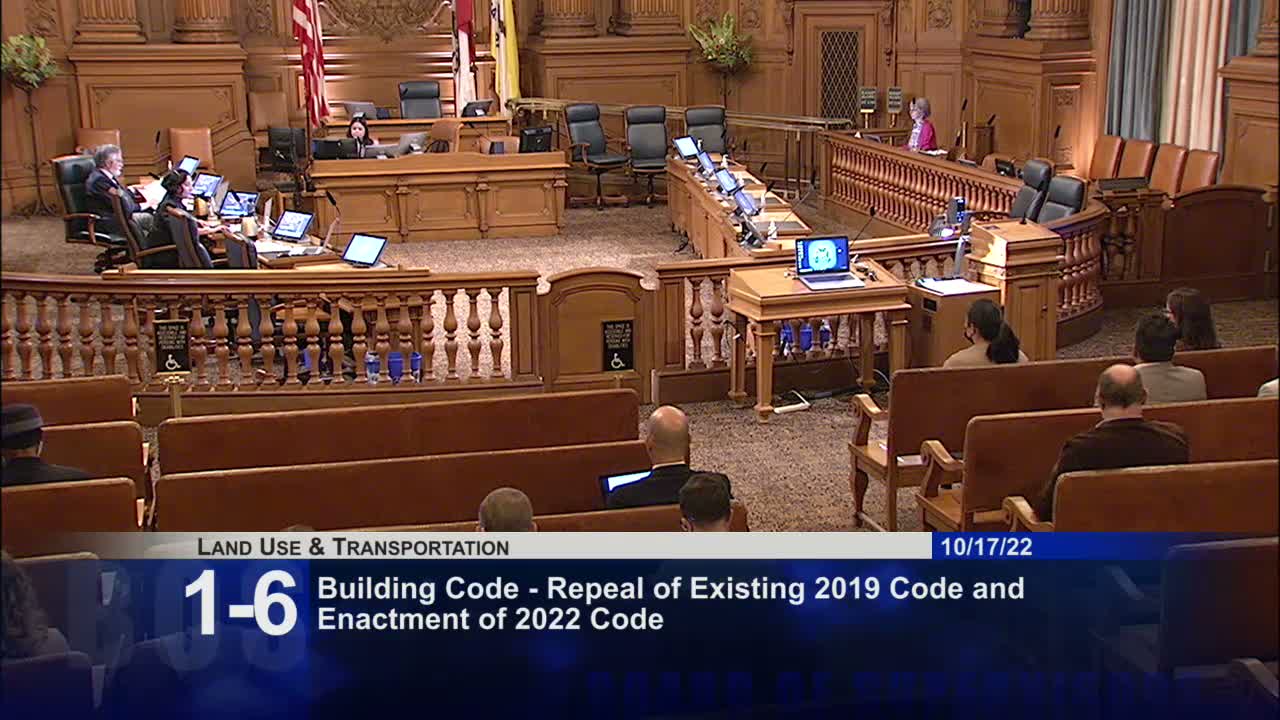
San Francisco and regional regulators and scientists told the Board of Supervisors’ Land Use & Transportation Committee Oct. 17 that the large red‑tinted algal bloom that spread across San Francisco Bay in late July–September 2022 was driven by a combination of unusually low suspended sediment (low turbidity), an unusually sunny period and calm winds that allowed a flagellated organism (heterosigma akashiwo) to proliferate. The bloom produced very high phytoplankton biomass, depressed dissolved oxygen and coincided with extensive fish mortality.
"We had a major harmful algal bloom event in August 2022 centered in South Bay and Lower South Bay," Dr. David Sen of the San Francisco Estuary Institute told the committee, noting peak biomass and dissolved oxygen as low as 1–2 milligrams per liter in places and "extensive fish mortality." He said heterosigma is on SFEI’s watch list and that the current field and satellite monitoring assets allowed intensive sampling and rapid learning during the event.
Tom Mumley of the San Francisco Bay Regional Water Quality Control Board said the agency has funded and coordinated a decade of regional nutrient science and issued watershed permits in 2014 and 2019 that emphasized monitoring and planning. "This recent harmful algal bloom is a shocker," Mumley said, and the event has moved the region from conversations about potential load caps to more urgent consideration of load reductions.
Environmental advocates said San Francisco’s treated wastewater is a major contributor to nitrogen loading. "On any given day, about a 100,000 pounds of nitrogen is discharged into San Francisco Bay," Ian Wren of Baykeeper said, and he urged the PUC to accelerate recycling, nutrient recovery and nature‑based solutions.
Regional wastewater representatives and SFPUC staff stressed the complexity and cost of full‑system nutrient removal. BACWA’s Lauren Fono and a regional optimization study estimate a region‑wide price tag in the billions for large reductions (a bottom‑line regional scenario cited in testimony was roughly $12.4 billion). SFPUC staff told the committee that side‑stream treatment might remove roughly 15–20% of nitrogen for an estimated $75–100 million, while full‑stream removal at Southeast could approach $1.5 billion (2022 dollars), and the utility already has several multi‑hundred‑million and multibillion‑dollar capital projects under way.
Panelists discussed a three‑tiered approach: emergency/seasonal response options to reduce loads rapidly if a bloom begins; medium‑term optimizations that may be feasible without new major capital; and long‑term capital upgrades tied to science that shows the levels of reduction needed. Regulators and wastewater agencies also urged coordinated federal and state funding to avoid large rate impacts on local customers.
What happens next: the committee filed the hearing record to guide local policy discussions; presenters and supervisors said they will continue collaborative work among SFPUC, the Regional Water Board, BACWA, SFEI and advocacy groups to develop response plans and funding strategies.
"We had a major harmful algal bloom event in August 2022 centered in South Bay and Lower South Bay," Dr. David Sen of the San Francisco Estuary Institute told the committee, noting peak biomass and dissolved oxygen as low as 1–2 milligrams per liter in places and "extensive fish mortality." He said heterosigma is on SFEI’s watch list and that the current field and satellite monitoring assets allowed intensive sampling and rapid learning during the event.
Tom Mumley of the San Francisco Bay Regional Water Quality Control Board said the agency has funded and coordinated a decade of regional nutrient science and issued watershed permits in 2014 and 2019 that emphasized monitoring and planning. "This recent harmful algal bloom is a shocker," Mumley said, and the event has moved the region from conversations about potential load caps to more urgent consideration of load reductions.
Environmental advocates said San Francisco’s treated wastewater is a major contributor to nitrogen loading. "On any given day, about a 100,000 pounds of nitrogen is discharged into San Francisco Bay," Ian Wren of Baykeeper said, and he urged the PUC to accelerate recycling, nutrient recovery and nature‑based solutions.
Regional wastewater representatives and SFPUC staff stressed the complexity and cost of full‑system nutrient removal. BACWA’s Lauren Fono and a regional optimization study estimate a region‑wide price tag in the billions for large reductions (a bottom‑line regional scenario cited in testimony was roughly $12.4 billion). SFPUC staff told the committee that side‑stream treatment might remove roughly 15–20% of nitrogen for an estimated $75–100 million, while full‑stream removal at Southeast could approach $1.5 billion (2022 dollars), and the utility already has several multi‑hundred‑million and multibillion‑dollar capital projects under way.
Panelists discussed a three‑tiered approach: emergency/seasonal response options to reduce loads rapidly if a bloom begins; medium‑term optimizations that may be feasible without new major capital; and long‑term capital upgrades tied to science that shows the levels of reduction needed. Regulators and wastewater agencies also urged coordinated federal and state funding to avoid large rate impacts on local customers.
What happens next: the committee filed the hearing record to guide local policy discussions; presenters and supervisors said they will continue collaborative work among SFPUC, the Regional Water Board, BACWA, SFEI and advocacy groups to develop response plans and funding strategies.
Don't Miss a Word: See the Full Meeting!
Go beyond summaries. Unlock every video, transcript, and key insight with a Founder Membership.
✓
Get instant access to full meeting videos
✓
Search and clip any phrase from complete transcripts
✓
Receive AI-powered summaries & custom alerts
✓
Enjoy lifetime, unrestricted access to government data
30-day money-back guarantee
