Supervisors press MOHCD on BMR resale rules after owners say new "affordable price" leaves them trapped
May 08, 2023 | San Francisco County, California
This article was created by AI summarizing key points discussed. AI makes mistakes, so for full details and context, please refer to the video of the full meeting. Please report any errors so we can fix them. Report an error »
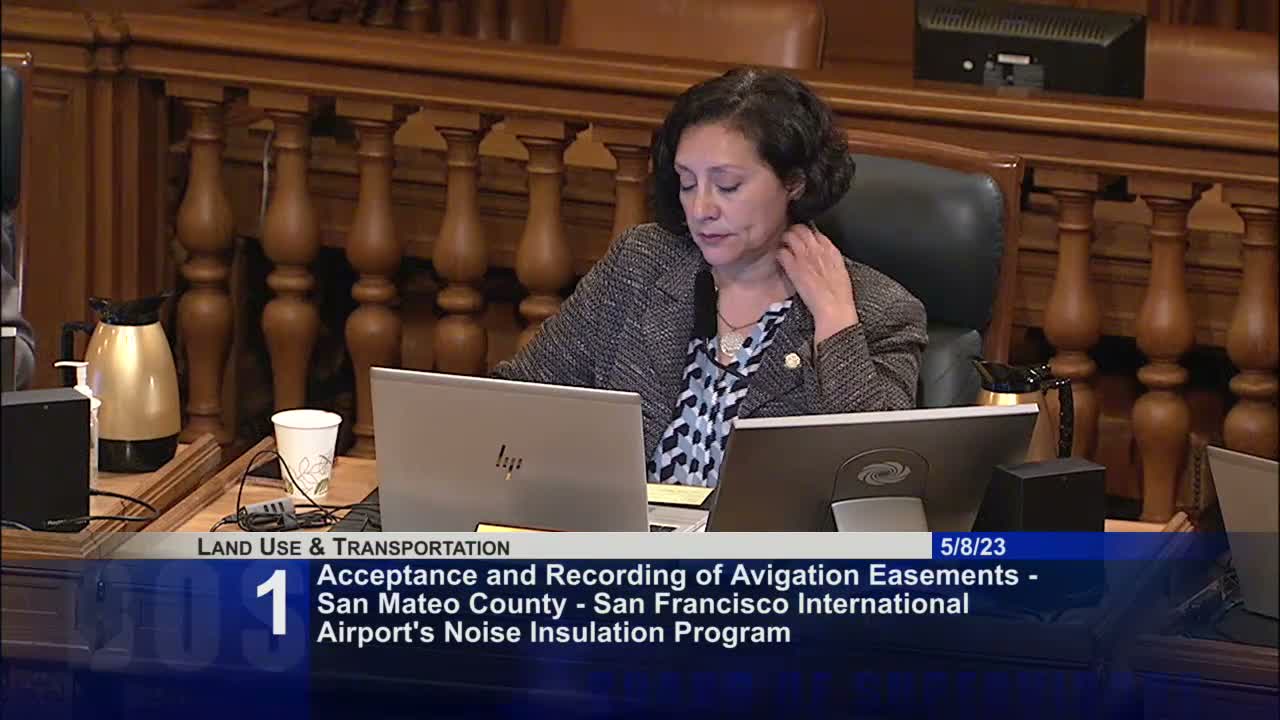
Chair Melgar convened a May 8 hearing before the Land Use and Transportation Committee to examine how recent policy changes and current market conditions affect sellers of below-market-rate (BMR) homeownership units.
Sheila Nicolaopoulos, director of policy and legislative affairs at the Mayor's Office of Housing and Community Development (MOHCD), and Maria Benjamin, MOHCD deputy director for BMR programs, described three distinct BMR ownership programs, resale pricing formulas and recent sales data. MOHCD officials said market conditions have reduced buyer applications for resales (from an average of 26 applications per listing in 2019 to about five this year) and that the agency is proposing programmatic and outreach changes, including a revised manual, marketing efforts, a preferred realtor list and possible code amendments to allow shifting some units to higher AMI brackets under planning code authority.
Ted Egan, the controller's office chief economist, told the committee that San Francisco has seen relatively weak housing demand since the pandemic, with condominium prices roughly flat compared with substantial national gains, and he attributed much of the softness to the effects of remote work.
Supervisors pressed MOHCD on several specifics: whether down-payment assistance programs for BMR buyers continue (MOHCD said the assistance remains available for qualifying buyers), how rehabilitation loans for sellers work, why some older units can have a "maximum resale price" above the affordable price, and what legal or planning-code limits constrain in-year adjustments. MOHCD said some changes require legislation or code amendment and that the agency plans community engagement this summer and a public draft in the fall.
Several public speakers described personal hardship. Amy Jansouk said she and her husband bought a BMR unit in 2018 and later learned MOHCD assigned a maximum baseline price of $538,000 and an "affordable resale price" of $386,000; she said the affordable resale price was not explained at purchase and that the differential left the family unable to sell without large losses. Her husband, Simon Jansouk, said the household would lose principal and down-payment equity if forced to sell at the advertised affordable price and urged the city to help owners in similar situations.
Realtor Jennifer Rossdale said the BMR resale process already imposes delays (six to eight months) that translate into substantial costs for sellers and that the post-purchase introduction of the "affordable price" rule and the removal of down-payment assistance for sales above that price have reduced buyer interest.
After public comment the committee voted to file the hearing for the record and directed staff to pursue follow-up work with the deputy city attorney. The motion to file passed unanimously (Supervisor Aaron Peskin, Supervisor Dean Preston, Chair Melgar voting aye). The committee did not adopt immediate legislative changes at the meeting; supervisors said they would continue discussions about remedies for owners who purchased before the disclosure.
What happens next: Chair Melgar said she will work with the deputy city attorney and MOHCD staff to explore legislative and programmatic fixes; MOHCD plans additional community engagement and a draft manual for public comment later in the year.
Sheila Nicolaopoulos, director of policy and legislative affairs at the Mayor's Office of Housing and Community Development (MOHCD), and Maria Benjamin, MOHCD deputy director for BMR programs, described three distinct BMR ownership programs, resale pricing formulas and recent sales data. MOHCD officials said market conditions have reduced buyer applications for resales (from an average of 26 applications per listing in 2019 to about five this year) and that the agency is proposing programmatic and outreach changes, including a revised manual, marketing efforts, a preferred realtor list and possible code amendments to allow shifting some units to higher AMI brackets under planning code authority.
Ted Egan, the controller's office chief economist, told the committee that San Francisco has seen relatively weak housing demand since the pandemic, with condominium prices roughly flat compared with substantial national gains, and he attributed much of the softness to the effects of remote work.
Supervisors pressed MOHCD on several specifics: whether down-payment assistance programs for BMR buyers continue (MOHCD said the assistance remains available for qualifying buyers), how rehabilitation loans for sellers work, why some older units can have a "maximum resale price" above the affordable price, and what legal or planning-code limits constrain in-year adjustments. MOHCD said some changes require legislation or code amendment and that the agency plans community engagement this summer and a public draft in the fall.
Several public speakers described personal hardship. Amy Jansouk said she and her husband bought a BMR unit in 2018 and later learned MOHCD assigned a maximum baseline price of $538,000 and an "affordable resale price" of $386,000; she said the affordable resale price was not explained at purchase and that the differential left the family unable to sell without large losses. Her husband, Simon Jansouk, said the household would lose principal and down-payment equity if forced to sell at the advertised affordable price and urged the city to help owners in similar situations.
Realtor Jennifer Rossdale said the BMR resale process already imposes delays (six to eight months) that translate into substantial costs for sellers and that the post-purchase introduction of the "affordable price" rule and the removal of down-payment assistance for sales above that price have reduced buyer interest.
After public comment the committee voted to file the hearing for the record and directed staff to pursue follow-up work with the deputy city attorney. The motion to file passed unanimously (Supervisor Aaron Peskin, Supervisor Dean Preston, Chair Melgar voting aye). The committee did not adopt immediate legislative changes at the meeting; supervisors said they would continue discussions about remedies for owners who purchased before the disclosure.
What happens next: Chair Melgar said she will work with the deputy city attorney and MOHCD staff to explore legislative and programmatic fixes; MOHCD plans additional community engagement and a draft manual for public comment later in the year.
View the Full Meeting & All Its Details
This article offers just a summary. Unlock complete video, transcripts, and insights as a Founder Member.
✓
Watch full, unedited meeting videos
✓
Search every word spoken in unlimited transcripts
✓
AI summaries & real-time alerts (all government levels)
✓
Permanent access to expanding government content
30-day money-back guarantee
