Committee amends and continues sweeping housing‑production code package after hours of testimony
October 02, 2023 | San Francisco County, California
This article was created by AI summarizing key points discussed. AI makes mistakes, so for full details and context, please refer to the video of the full meeting. Please report any errors so we can fix them. Report an error »
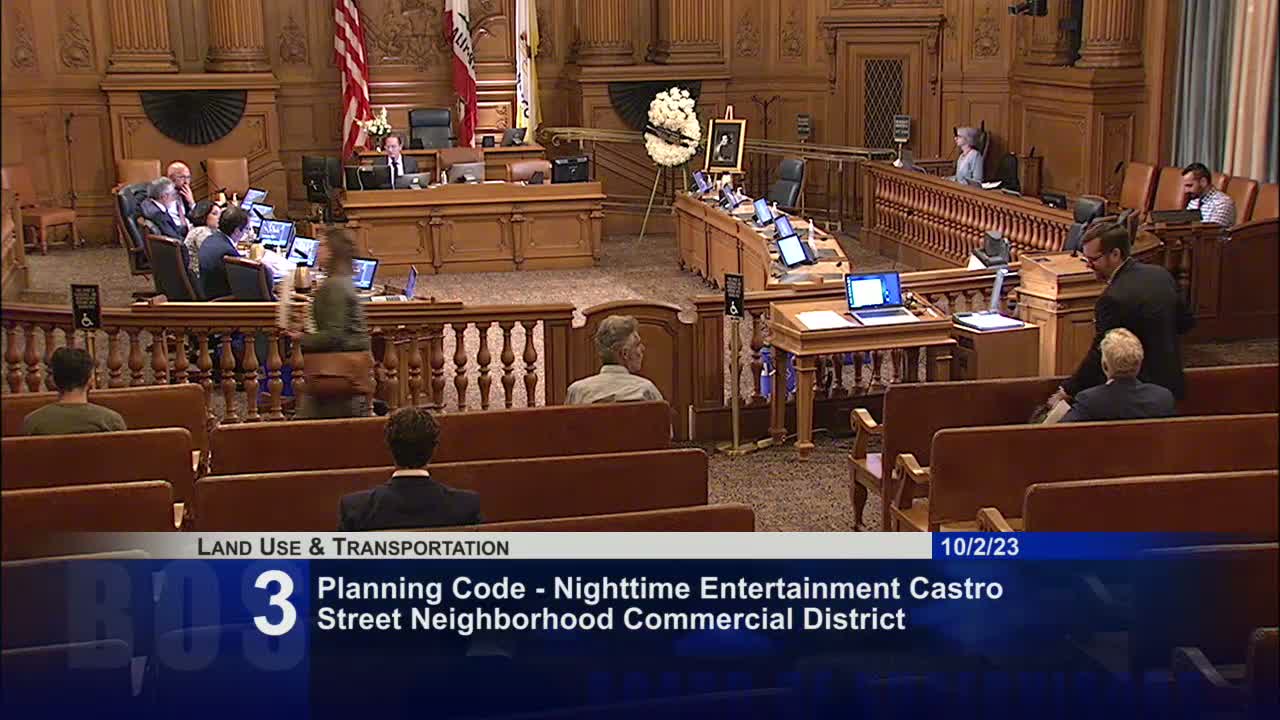
The Land Use and Transportation Committee spent much of its Oct. 2 meeting debating a broad mayoral planning‑code package intended to implement parts of the city's housing element by streamlining review for many housing projects, expanding ministerial approvals, and changing conditional‑use and notice requirements in defined areas.
Sponsors and staff said the changes aim to accelerate housing production and preserve San Francisco’s eligibility for state housing‑element grants. Chair Mirna Melgar framed her amendments as efforts to balance tenant protections and streamlined approvals: "I think we are doing our jobs . . . to legislate and come up with things that make sense for our city and negotiate," she said.
Opponents — community groups, tenant organizations, preservation advocates and some housing‑justice coalitions — warned the ordinance would remove a layer of public oversight and could enable displacement through demolitions or renovictions. The Anti‑Displacement Coalition and the REP Coalition urged rejection or wholesale rewriting; Molly Goldberg, director of the San Francisco Anti‑Displacement Coalition, said, "We are very concerned about the displacement impacts of this legislation." The planning director and mayor’s staff defended the package as necessary to meet RHNA obligations and avoid state penalties.
A central point of contention was whether the ordinance allows demolition or removal of rent‑controlled units without sufficient notice and discretionary review. Staff noted the legislation would allow demolition of up to two units under some circumstances but that replacement and legal safeguards (including state provisions such as SB 330) could apply; supervisors asked staff to consider tightening thresholds (for example reducing a two‑unit threshold to one unit) and to produce maps showing how the proposed priority‑equity geography special use district (PEG SUD) overlays existing rent‑control protections.
The committee accepted a set of mayoral and sponsor amendments into the record and Chair Melgar’s own changes, then voted to continue the item to Oct. 16 for further drafting, possible planning‑commission referral on narrow points and additional community engagement. The acceptance of amendments and the continuance were both approved with no recorded opposition. The committee directed staff to circulate a consolidated ordinance that color‑codes department and committee edits and to provide clearer maps and analyses of the PEG SUD overlap with existing special districts and protections.
Next steps: staff will return with a consolidated, annotated ordinance and additional amendments addressing demolition thresholds, notification (3‑11) and historic/resource protections when the item returns to committee on Oct. 16.
Sponsors and staff said the changes aim to accelerate housing production and preserve San Francisco’s eligibility for state housing‑element grants. Chair Mirna Melgar framed her amendments as efforts to balance tenant protections and streamlined approvals: "I think we are doing our jobs . . . to legislate and come up with things that make sense for our city and negotiate," she said.
Opponents — community groups, tenant organizations, preservation advocates and some housing‑justice coalitions — warned the ordinance would remove a layer of public oversight and could enable displacement through demolitions or renovictions. The Anti‑Displacement Coalition and the REP Coalition urged rejection or wholesale rewriting; Molly Goldberg, director of the San Francisco Anti‑Displacement Coalition, said, "We are very concerned about the displacement impacts of this legislation." The planning director and mayor’s staff defended the package as necessary to meet RHNA obligations and avoid state penalties.
A central point of contention was whether the ordinance allows demolition or removal of rent‑controlled units without sufficient notice and discretionary review. Staff noted the legislation would allow demolition of up to two units under some circumstances but that replacement and legal safeguards (including state provisions such as SB 330) could apply; supervisors asked staff to consider tightening thresholds (for example reducing a two‑unit threshold to one unit) and to produce maps showing how the proposed priority‑equity geography special use district (PEG SUD) overlays existing rent‑control protections.
The committee accepted a set of mayoral and sponsor amendments into the record and Chair Melgar’s own changes, then voted to continue the item to Oct. 16 for further drafting, possible planning‑commission referral on narrow points and additional community engagement. The acceptance of amendments and the continuance were both approved with no recorded opposition. The committee directed staff to circulate a consolidated ordinance that color‑codes department and committee edits and to provide clearer maps and analyses of the PEG SUD overlap with existing special districts and protections.
Next steps: staff will return with a consolidated, annotated ordinance and additional amendments addressing demolition thresholds, notification (3‑11) and historic/resource protections when the item returns to committee on Oct. 16.
Don't Miss a Word: See the Full Meeting!
Go beyond summaries. Unlock every video, transcript, and key insight with a Founder Membership.
✓
Get instant access to full meeting videos
✓
Search and clip any phrase from complete transcripts
✓
Receive AI-powered summaries & custom alerts
✓
Enjoy lifetime, unrestricted access to government data
30-day money-back guarantee
