Committee backs HRC-led forgivable loan program for first‑time buyers, Peskin dissents
February 26, 2024 | San Francisco County, California
This article was created by AI summarizing key points discussed. AI makes mistakes, so for full details and context, please refer to the video of the full meeting. Please report any errors so we can fix them. Report an error »
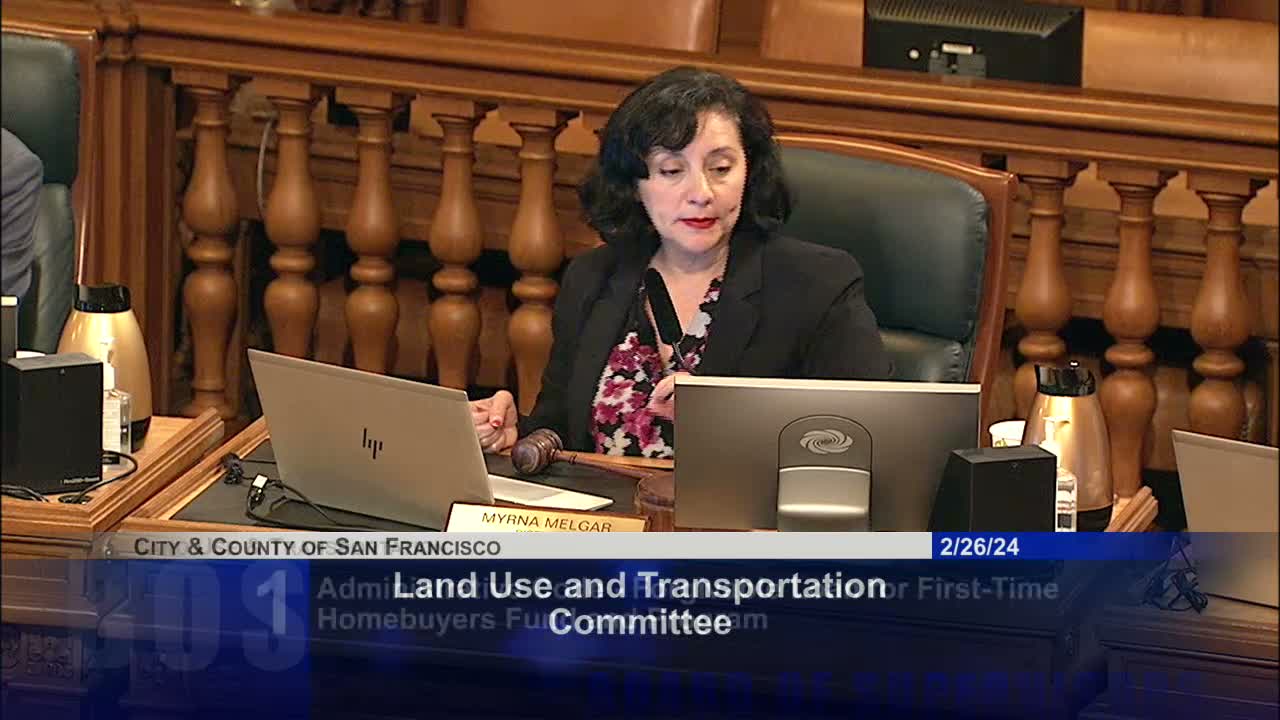
The San Francisco Board of Supervisors’ Land Use & Transportation Committee voted 2–1 on Feb. 26 to recommend to the full Board an ordinance to establish a forgivable‑loan program and fund for first‑time homebuyers and to charge the Human Rights Commission with administering and overseeing it.
Sponsor Supervisor Mirna Melgar told the committee the program is intended to provide down‑payment assistance to communities “harmed through targeted economic disruption, displacement, and manufactured barriers” and to help restore paths to intergenerational wealth. Melgar cited prior attempts to fund down‑payment assistance, including a $10 million innovation fund that did not achieve its goals, and said the new ordinance embodies values‑based oversight while leveraging technical expertise from the mayor’s housing office.
Director Cheryl Davis of the Human Rights Commission described the measure as a step informed by the Dreamkeeper Initiative and other outreach. Davis said the HRC plans to treat the effort as a pilot in practice, relying on the commission’s community engagement expertise while using work‑order arrangements with the Mayor’s Office of Housing and Community Development (MOHCD) for technical loan documents and operations.
Committee President Aaron Paskin pressed for details on funding and staffing. He and others questioned whether HRC currently has the capacity to prepare loan documents, secure loans by deed of trust, collect revenues, and monitor compliance. Davis said the commission does not expect to hire loan officers but would work with existing MOHCD staff and transfer funds or responsibilities as procedures are finalized.
The committee also discussed the program’s income eligibility. President Paskin noted the ordinance expands eligibility to households at up to 200% of area median income (AMI); Davis and the sponsor said higher AMI thresholds reflect San Francisco’s housing costs and evidence from Dreamkeeper that middle‑income workers (for example, some transit operators) can still be priced out of homeownership.
Public comment included both opposition (an attendee who argued the city should not expand government programs) and supporters who urged the committee to close racial‑wealth gaps and preserve families in the city.
Chair Melgar moved the ordinance to the full Board with a positive recommendation. Vice Chair Dean Preston joined Melgar in voting yes; Member Aaron Paskin recorded a dissenting no. The committee’s tally was two ayes and one no.
The ordinance will appear on the Board of Supervisors agenda for further consideration on March 5, unless otherwise changed.
Sponsor Supervisor Mirna Melgar told the committee the program is intended to provide down‑payment assistance to communities “harmed through targeted economic disruption, displacement, and manufactured barriers” and to help restore paths to intergenerational wealth. Melgar cited prior attempts to fund down‑payment assistance, including a $10 million innovation fund that did not achieve its goals, and said the new ordinance embodies values‑based oversight while leveraging technical expertise from the mayor’s housing office.
Director Cheryl Davis of the Human Rights Commission described the measure as a step informed by the Dreamkeeper Initiative and other outreach. Davis said the HRC plans to treat the effort as a pilot in practice, relying on the commission’s community engagement expertise while using work‑order arrangements with the Mayor’s Office of Housing and Community Development (MOHCD) for technical loan documents and operations.
Committee President Aaron Paskin pressed for details on funding and staffing. He and others questioned whether HRC currently has the capacity to prepare loan documents, secure loans by deed of trust, collect revenues, and monitor compliance. Davis said the commission does not expect to hire loan officers but would work with existing MOHCD staff and transfer funds or responsibilities as procedures are finalized.
The committee also discussed the program’s income eligibility. President Paskin noted the ordinance expands eligibility to households at up to 200% of area median income (AMI); Davis and the sponsor said higher AMI thresholds reflect San Francisco’s housing costs and evidence from Dreamkeeper that middle‑income workers (for example, some transit operators) can still be priced out of homeownership.
Public comment included both opposition (an attendee who argued the city should not expand government programs) and supporters who urged the committee to close racial‑wealth gaps and preserve families in the city.
Chair Melgar moved the ordinance to the full Board with a positive recommendation. Vice Chair Dean Preston joined Melgar in voting yes; Member Aaron Paskin recorded a dissenting no. The committee’s tally was two ayes and one no.
The ordinance will appear on the Board of Supervisors agenda for further consideration on March 5, unless otherwise changed.
View the Full Meeting & All Its Details
This article offers just a summary. Unlock complete video, transcripts, and insights as a Founder Member.
✓
Watch full, unedited meeting videos
✓
Search every word spoken in unlimited transcripts
✓
AI summaries & real-time alerts (all government levels)
✓
Permanent access to expanding government content
30-day money-back guarantee
