DPH outlines behavioral health system of care; supervisors press for clearer data, beds and staffing plans
October 27, 2023 | San Francisco County, California
This article was created by AI summarizing key points discussed. AI makes mistakes, so for full details and context, please refer to the video of the full meeting. Please report any errors so we can fix them. Report an error »
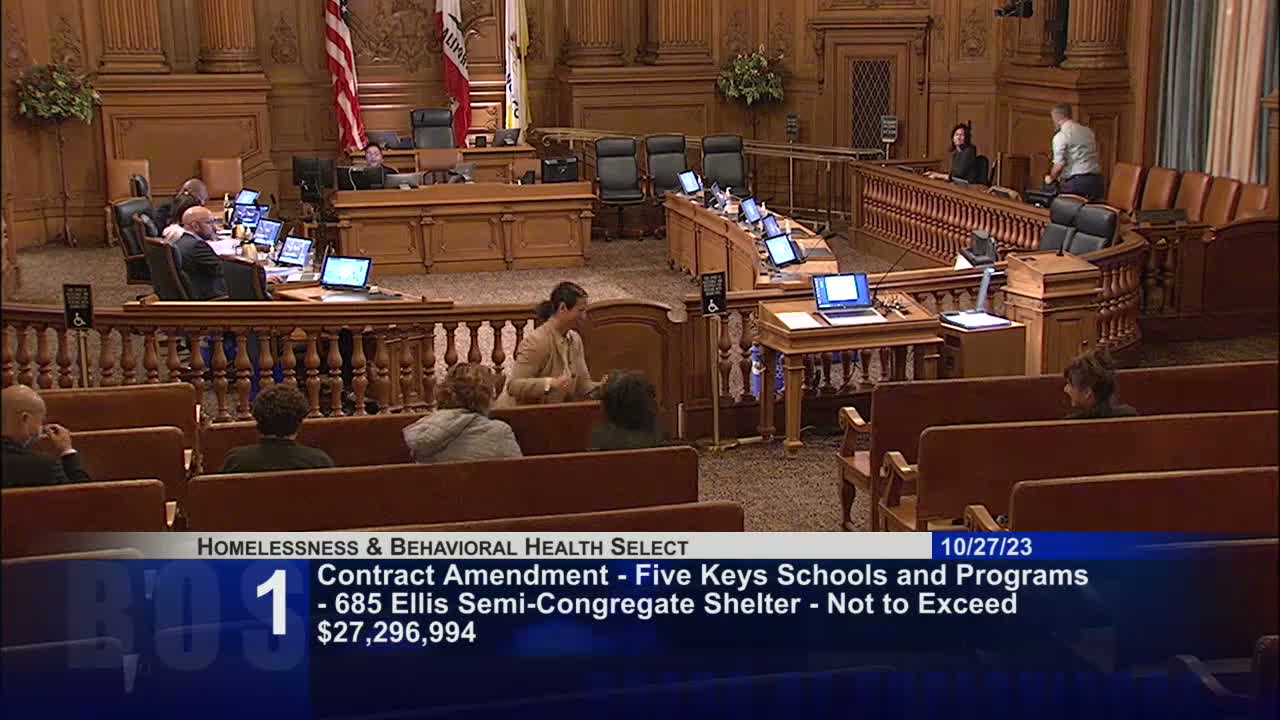
The Department of Public Health presented an overview of San Francisco's behavioral health system of care during a committee hearing Oct. 27, describing care pathways from street outreach to residential treatment and identifying workforce and data system gaps that supervisors said hamper policy decisions.
Dr. Hillary Conins, director of behavioral health for DPH, told the Homelessness and Behavioral Health Select Committee the system provides prevention, crisis response, outpatient and residential services and connects more than 100,000 "touchpoints" a year across city clinics, contracted partners and mobile teams. She said roughly 25,000 people receive behavioral health or substance use care through primary care settings, about 15,000 in specialized outpatient programs and the department manages approximately 2,500 residential treatment beds treating an estimated 5,000'7,000 people annually.
Conins described a multi-pronged approach to care coordination: the Behavioral Health Access Center, the Office of Coordinated Care (OCC), street crisis response teams (SCRT) and new neighborhood-based behavioral health teams designed to provide persistent, localized outreach. She said OCC manages care plans for people with complex needs, coordinating with jail health services, fire and other agencies, and that DPH is preparing to move to a unified electronic record (EPIC) to improve cross-system data sharing.
As an illustration, Conins presented a composite case she called "Gerald," a 57-year-old man with bipolar disorder and substance use who declined treatment at first but, over seven months of persistent outreach and coordinated case management, was placed in permanent supportive housing and re-engaged in medical and mental health care.
Supervisors used the hearing to press DPH for more quantifiable metrics. Chair Supervisor Hillary Ronan asked how many OCC staff manage care plans and whether 24-hour access at the Behavioral Health Access Center is feasible; Conins said OCC staff number about 50'55 and cited a vacancy rate in OCC of about 28 percent, adding that staffing constraints limit expansion of hours. Vice Chair Mandelmann focused on bed accounting, questioning whether the 400-bed figure cited in other discussions aligns with beds appropriate for conservatorship or long-term care; Conins said the 2,500+ beds DPH described include a mix of substance use treatment, transitional housing, board-and-care and locked subacute beds but exclude permanent supportive housing and beds managed outside DPH.
Hallie Hammer, director of ambulatory care for the San Francisco Health Network (which includes jail health services), told the committee jail behavioral health offers meaningful treatment and manages withdrawal and medications for opioid use disorder in large numbers. She said the city has effective programs but stressed resource limits; she cited Project Juno/OBIC results showing only about 25 percent of people who leave jail on buprenorphine reach the OBIC clinic for continuing care, though roughly half of those who do remain in treatment at six months.
Committee members and public commenters emphasized workforce shortages and data transparency. Conins and Hammer acknowledged recruitment and retention challenges across DPH and jail health, reporting vacancy estimates that ranged from roughly 28 percent in OCC to an estimated 35'40 percent in some jail behavioral health roles, and said city HR discussions are underway to explore hiring and retention options.
Public commenters urged faster staffing investments and greater oversight. Wesley Saver of HealthRite 360 asked the city to prioritize funding to fully staff the behavioral health continuum and cited a UCSF projection of a growing provider shortfall; Liza Morawski, a mental health advocate, demanded contract transparency, data on case management ratios and contract accountability.
The committee voted unanimously to declare the hearing heard and filed, and requested follow-up data and clarifications from DPH and partner agencies on staffing levels, bed accounting, OCC caseloads and Homekey-related housing prioritization.
Dr. Hillary Conins, director of behavioral health for DPH, told the Homelessness and Behavioral Health Select Committee the system provides prevention, crisis response, outpatient and residential services and connects more than 100,000 "touchpoints" a year across city clinics, contracted partners and mobile teams. She said roughly 25,000 people receive behavioral health or substance use care through primary care settings, about 15,000 in specialized outpatient programs and the department manages approximately 2,500 residential treatment beds treating an estimated 5,000'7,000 people annually.
Conins described a multi-pronged approach to care coordination: the Behavioral Health Access Center, the Office of Coordinated Care (OCC), street crisis response teams (SCRT) and new neighborhood-based behavioral health teams designed to provide persistent, localized outreach. She said OCC manages care plans for people with complex needs, coordinating with jail health services, fire and other agencies, and that DPH is preparing to move to a unified electronic record (EPIC) to improve cross-system data sharing.
As an illustration, Conins presented a composite case she called "Gerald," a 57-year-old man with bipolar disorder and substance use who declined treatment at first but, over seven months of persistent outreach and coordinated case management, was placed in permanent supportive housing and re-engaged in medical and mental health care.
Supervisors used the hearing to press DPH for more quantifiable metrics. Chair Supervisor Hillary Ronan asked how many OCC staff manage care plans and whether 24-hour access at the Behavioral Health Access Center is feasible; Conins said OCC staff number about 50'55 and cited a vacancy rate in OCC of about 28 percent, adding that staffing constraints limit expansion of hours. Vice Chair Mandelmann focused on bed accounting, questioning whether the 400-bed figure cited in other discussions aligns with beds appropriate for conservatorship or long-term care; Conins said the 2,500+ beds DPH described include a mix of substance use treatment, transitional housing, board-and-care and locked subacute beds but exclude permanent supportive housing and beds managed outside DPH.
Hallie Hammer, director of ambulatory care for the San Francisco Health Network (which includes jail health services), told the committee jail behavioral health offers meaningful treatment and manages withdrawal and medications for opioid use disorder in large numbers. She said the city has effective programs but stressed resource limits; she cited Project Juno/OBIC results showing only about 25 percent of people who leave jail on buprenorphine reach the OBIC clinic for continuing care, though roughly half of those who do remain in treatment at six months.
Committee members and public commenters emphasized workforce shortages and data transparency. Conins and Hammer acknowledged recruitment and retention challenges across DPH and jail health, reporting vacancy estimates that ranged from roughly 28 percent in OCC to an estimated 35'40 percent in some jail behavioral health roles, and said city HR discussions are underway to explore hiring and retention options.
Public commenters urged faster staffing investments and greater oversight. Wesley Saver of HealthRite 360 asked the city to prioritize funding to fully staff the behavioral health continuum and cited a UCSF projection of a growing provider shortfall; Liza Morawski, a mental health advocate, demanded contract transparency, data on case management ratios and contract accountability.
The committee voted unanimously to declare the hearing heard and filed, and requested follow-up data and clarifications from DPH and partner agencies on staffing levels, bed accounting, OCC caseloads and Homekey-related housing prioritization.
View the Full Meeting & All Its Details
This article offers just a summary. Unlock complete video, transcripts, and insights as a Founder Member.
✓
Watch full, unedited meeting videos
✓
Search every word spoken in unlimited transcripts
✓
AI summaries & real-time alerts (all government levels)
✓
Permanent access to expanding government content
30-day money-back guarantee
