Supervisor and providers clash with city over cancelled 730 Stanyan youth drop‑in plan
November 18, 2021 | San Francisco County, California
This article was created by AI summarizing key points discussed. AI makes mistakes, so for full details and context, please refer to the video of the full meeting. Please report any errors so we can fix them. Report an error »
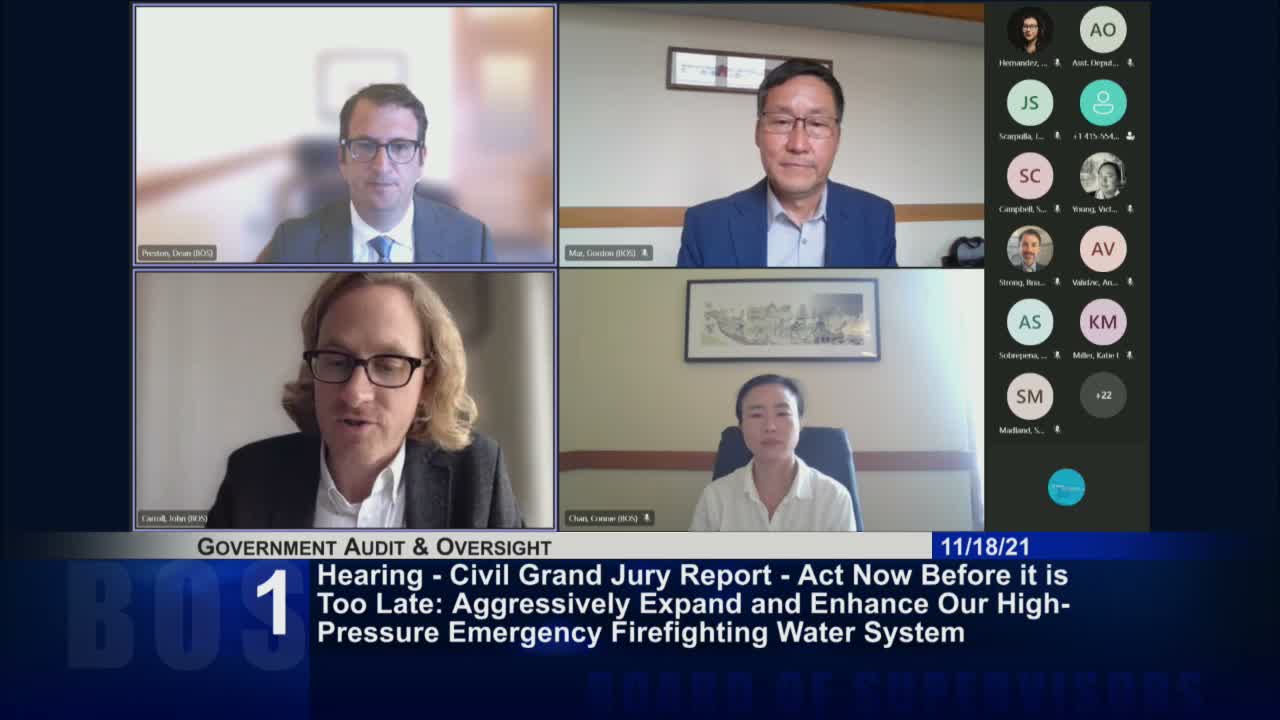
SAN FRANCISCO — The Homelessness and Supportive Housing Department (HSH) told the Board of Supervisors’ audit committee on Nov. 18 it did not proceed with a planned interim drop‑in center at 730 Stanyan because the add‑back funding provided by the Board and the city (roughly $90,000 first year and $130,000 second year) could not cover total operating costs, which HSH estimated at about $372,000 per year.
Supervisor Dean Preston, who requested the hearing, said residents and community groups had been repeatedly promised interim services — including bathrooms, showers and daytime drop‑in support for transitional‑age youth — after the safe‑sleep site on the lot was wound down. HSH Director Mick McSpadden said the department initially believed the add‑back and partner contributions would close the gap, but program design work in August–September showed higher operating costs for leasing bathrooms, supplies, security and insurance.
"Our Department estimates that it will cost a minimum of $372,000 annually to operate the program as a minimum standard to safely deliver these services," HSH staff told the committee. HSH said it solicited providers and received a sole submission; once project staffing and facilities costs were fully estimated, HSH leaders said they lacked the funding and staffing bandwidth to take on the project while simultaneously prioritizing acquisitions, housing placements and other pandemic recovery tasks.
Mary Howe, executive director of Homeless Youth Alliance, said her organization had relied on explicit city commitments when it wound down the safe‑sleep site and that it would have pursued private fundraising if given a clear, confirmed budget. "If we were given a clear budget of how much those items cost, we would be willing to try to secure additional funds," Howe said. She and other providers and about two dozen callers in public comment urged the city to restore hygiene access and a staffed interim site.
Supervisors pressed HSH and the Mayor’s Office of Housing and Community Development about the timing and notification. HSH acknowledged its internal review of costs evolved in August–September and said it contacted the Department of Public Works and others to seek options, but did not secure alternate funding; staff told the committee they notified the supervisor’s office, the selected provider and community stakeholders within hours of each other in late October when the decision was finalized.
Observers at the hearing accused the mayor’s office of political interference after the mayor met with neighborhood opponents; the city departments denied that neighborhood opposition was the primary reason for cancellation, and HSH said accountability concerns were not the deciding factor. The committee asked HSH to provide a detailed budget breakdown and agreed to continue the item to the call of the chair for further oversight.
What’s next: HSH committed to supply the program design budget breakdown and the committee continued the item for follow‑up oversight and possible funding remedies.
Supervisor Dean Preston, who requested the hearing, said residents and community groups had been repeatedly promised interim services — including bathrooms, showers and daytime drop‑in support for transitional‑age youth — after the safe‑sleep site on the lot was wound down. HSH Director Mick McSpadden said the department initially believed the add‑back and partner contributions would close the gap, but program design work in August–September showed higher operating costs for leasing bathrooms, supplies, security and insurance.
"Our Department estimates that it will cost a minimum of $372,000 annually to operate the program as a minimum standard to safely deliver these services," HSH staff told the committee. HSH said it solicited providers and received a sole submission; once project staffing and facilities costs were fully estimated, HSH leaders said they lacked the funding and staffing bandwidth to take on the project while simultaneously prioritizing acquisitions, housing placements and other pandemic recovery tasks.
Mary Howe, executive director of Homeless Youth Alliance, said her organization had relied on explicit city commitments when it wound down the safe‑sleep site and that it would have pursued private fundraising if given a clear, confirmed budget. "If we were given a clear budget of how much those items cost, we would be willing to try to secure additional funds," Howe said. She and other providers and about two dozen callers in public comment urged the city to restore hygiene access and a staffed interim site.
Supervisors pressed HSH and the Mayor’s Office of Housing and Community Development about the timing and notification. HSH acknowledged its internal review of costs evolved in August–September and said it contacted the Department of Public Works and others to seek options, but did not secure alternate funding; staff told the committee they notified the supervisor’s office, the selected provider and community stakeholders within hours of each other in late October when the decision was finalized.
Observers at the hearing accused the mayor’s office of political interference after the mayor met with neighborhood opponents; the city departments denied that neighborhood opposition was the primary reason for cancellation, and HSH said accountability concerns were not the deciding factor. The committee asked HSH to provide a detailed budget breakdown and agreed to continue the item to the call of the chair for further oversight.
What’s next: HSH committed to supply the program design budget breakdown and the committee continued the item for follow‑up oversight and possible funding remedies.
Don't Miss a Word: See the Full Meeting!
Go beyond summaries. Unlock every video, transcript, and key insight with a Founder Membership.
✓
Get instant access to full meeting videos
✓
Search and clip any phrase from complete transcripts
✓
Receive AI-powered summaries & custom alerts
✓
Enjoy lifetime, unrestricted access to government data
30-day money-back guarantee
