Supervisors hear department-by-department update on $60M-a-year Dream Keeper Initiative; community praises programs, asks for more transparency
April 21, 2022 | San Francisco County, California
This article was created by AI summarizing key points discussed. AI makes mistakes, so for full details and context, please refer to the video of the full meeting. Please report any errors so we can fix them. Report an error »
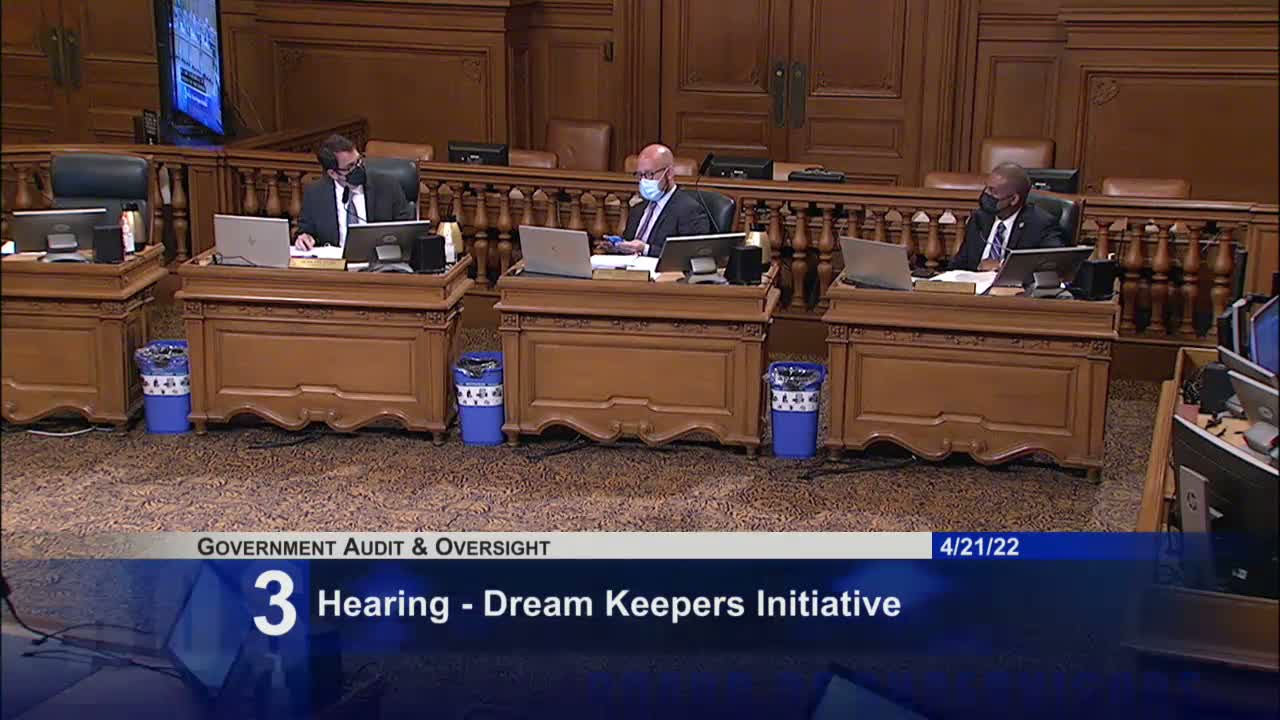
The Government Audit & Oversight Committee on April 21 held an extended hearing on the Dream Keeper Initiative, the city’s multi‑department program to invest in San Francisco’s Black communities. The hearing featured presentations from the Human Rights Commission (HRC) and staff overseeing the initiative, followed by departments that have received DKI funds and a lengthy public-comment period.
Dr. Cheryl Davis, director of the Human Rights Commission, said the initiative—launched in 2021—seeks to reinvest $60 million annually and to center community oversight, accountability and systems change. Dr. Saeeda Lea Atatufu Burch, the Dream Keeper director, said DKI had awarded funds to about 74 organizations through 140 awards, created 31 new city positions tied to DKI work, and emphasized community accountability committees and monthly convenings to align departmental investments.
Departments reported their early work and outcomes. Kate Sophos, executive director of the Office of Economic and Workforce Development, said OEWD deploys roughly $20.5 million a year of Dream Keeper funds across entrepreneurship, workforce training and direct payments; early results include 502 entrepreneurs and trainees enrolled, nearly $2.1 million in direct payments to trainees, and 92 new business registrations or job starts.
The Department of Public Health reported roughly $46 million annually of related investments across direct services (emergency financial support, bereavement funds, mental-health and food security programs) and staff to build partnership capacity. Chief of the Fire Department described City EMT, a four-month training-and-stipend pipeline that places graduates into internships on ambulances and into job candidates for permanent positions; the chief said cohorts have graduated into internships and some participants were hired.
The Mayor’s Office of Housing & Community Development described a Dreamkeeper Down Payment Assistance Loan program ($9.5 million allocated for deferred loans up to $500,000), a senior-home rehab program and developer capacity-building programs. The Department of Children, Youth & Their Families described $3.5 million in allocations prioritizing education, economic well-being and capacity building. The Arts Commission, Office of Early Care & Education and Department of Human Resources also presented program specifics.
Community comment lasted more than two hours. Scores of speakers—including nonprofit leaders, small-business participants, artists and program grantees—praised DKI, described direct benefits (stipends, technical assistance, grants) and urged sustained funding and streamlined contracting. Several commenters asked for better public transparency on subgrant recipients, clearer tracking of how funds flow through primary grantees to subgrantees, and faster turnaround on contracts so community organizations can begin work. Some callers raised concerns about the initiative’s scale compared with original expectations tied to police-reallocation conversations.
The committee voted to continue the Dream Keeper hearing to the call of the chair to receive further updates and follow up on community accountability and program tracking.
Why it matters: DKI represents a first‑in‑kind municipal racial-equity reinvestment at scale for San Francisco. The hearing highlighted early program successes and persistent implementation challenges—particularly contracting speed and subgrant transparency—that the city’s departments said they are actively addressing.
Dr. Cheryl Davis, director of the Human Rights Commission, said the initiative—launched in 2021—seeks to reinvest $60 million annually and to center community oversight, accountability and systems change. Dr. Saeeda Lea Atatufu Burch, the Dream Keeper director, said DKI had awarded funds to about 74 organizations through 140 awards, created 31 new city positions tied to DKI work, and emphasized community accountability committees and monthly convenings to align departmental investments.
Departments reported their early work and outcomes. Kate Sophos, executive director of the Office of Economic and Workforce Development, said OEWD deploys roughly $20.5 million a year of Dream Keeper funds across entrepreneurship, workforce training and direct payments; early results include 502 entrepreneurs and trainees enrolled, nearly $2.1 million in direct payments to trainees, and 92 new business registrations or job starts.
The Department of Public Health reported roughly $46 million annually of related investments across direct services (emergency financial support, bereavement funds, mental-health and food security programs) and staff to build partnership capacity. Chief of the Fire Department described City EMT, a four-month training-and-stipend pipeline that places graduates into internships on ambulances and into job candidates for permanent positions; the chief said cohorts have graduated into internships and some participants were hired.
The Mayor’s Office of Housing & Community Development described a Dreamkeeper Down Payment Assistance Loan program ($9.5 million allocated for deferred loans up to $500,000), a senior-home rehab program and developer capacity-building programs. The Department of Children, Youth & Their Families described $3.5 million in allocations prioritizing education, economic well-being and capacity building. The Arts Commission, Office of Early Care & Education and Department of Human Resources also presented program specifics.
Community comment lasted more than two hours. Scores of speakers—including nonprofit leaders, small-business participants, artists and program grantees—praised DKI, described direct benefits (stipends, technical assistance, grants) and urged sustained funding and streamlined contracting. Several commenters asked for better public transparency on subgrant recipients, clearer tracking of how funds flow through primary grantees to subgrantees, and faster turnaround on contracts so community organizations can begin work. Some callers raised concerns about the initiative’s scale compared with original expectations tied to police-reallocation conversations.
The committee voted to continue the Dream Keeper hearing to the call of the chair to receive further updates and follow up on community accountability and program tracking.
Why it matters: DKI represents a first‑in‑kind municipal racial-equity reinvestment at scale for San Francisco. The hearing highlighted early program successes and persistent implementation challenges—particularly contracting speed and subgrant transparency—that the city’s departments said they are actively addressing.
Don't Miss a Word: See the Full Meeting!
Go beyond summaries. Unlock every video, transcript, and key insight with a Founder Membership.
✓
Get instant access to full meeting videos
✓
Search and clip any phrase from complete transcripts
✓
Receive AI-powered summaries & custom alerts
✓
Enjoy lifetime, unrestricted access to government data
30-day money-back guarantee
