Supervisors hear detailed plan for CART pilot as advocates press for faster rollout
July 07, 2022 | San Francisco County, California
This article was created by AI summarizing key points discussed. AI makes mistakes, so for full details and context, please refer to the video of the full meeting. Please report any errors so we can fix them. Report an error »
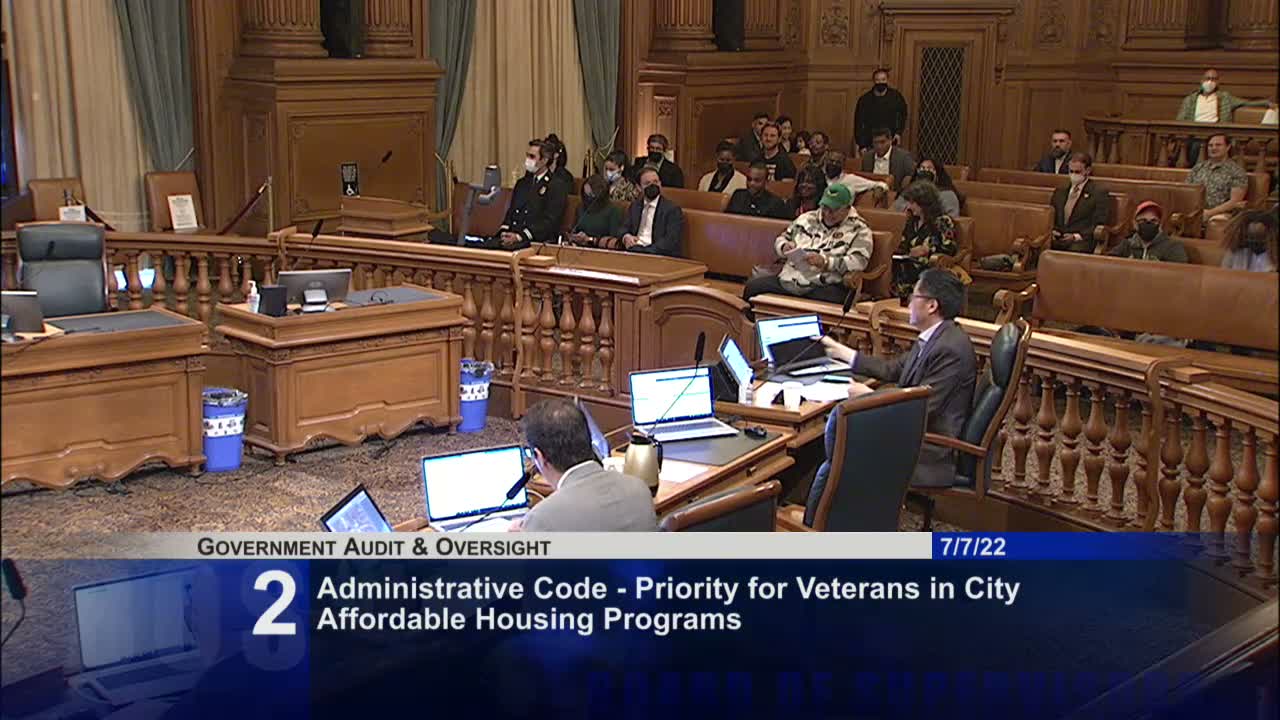
San Francisco supervisors on Thursday heard a detailed plan to launch a community-based Compassionate Alternative Response Team (CART) to handle low-priority, nonmedical calls involving people experiencing homelessness, and advocates pressed the Department of Emergency Management (DEM) to speed implementation.
DEM Deputy Director Mary Ellen Carroll said the pilot would respond to low‑priority, “C‑priority” calls that often do not require police or medical intervention — examples include blocked sidewalks, noncriminal trespass and encampment‑related issues. Carroll said DEM aims to release a request for proposals in September and that the pilot would be funded at about $3 million and cover roughly 12 months of operations. "The timeline is expected to be 8 to 12 months," Carroll told the committee, describing procurement, contracting, training and operational stand‑up.
Supervisor Myrna Melgar, who requested the hearing, framed CART as a citywide alternative to relying on uniformed officers for matters many residents and service providers say require social‑service and health expertise. "We are here to learn the challenges that need to be overcome and how we can implement this," Melgar said. Local providers and advocates — including Glide and United Council of Human Services — described CART as a community‑led response centered on peer workers and people with lived experience.
Speakers with experience running similar programs urged the Board to adopt core features of proven models. Tim Black, who helped found Cahoots in Eugene, Ore., said his program now handles more than 20,000 calls a year and operates as a voluntary, noncoercive mobile crisis team staffed by an EMT and a crisis worker. Black said Cahoots operates on a roughly $2.5 million budget and produces systemwide savings by reducing unnecessary emergency medical and police responses.
The meeting turned to technical questions about how CART would integrate with San Francisco’s 911 and 311 dispatch systems. DEM and dispatch staff said calls with a homelessness nexus currently arrive to both 311 and 911 and are triaged by the HSOC (Homelessness and Support Operations Center) supervisor; DEM staff estimated an upper bound of about 65,000 annual calls that have some homelessness component, and described the pilot target as a conservative 5,000–7,500 calls per year (roughly 100 per week) for the initial rollout.
Public comment was extensive and largely supportive. Providers, neighborhood business owners and dozens of callers urged the Board to implement CART according to the community‑designed model. Multiple callers demanded that the city avoid watering down the plan by hiring low‑paid contractors or removing community oversight.
Supervisors pressed DEM for performance metrics before awarding ongoing funding. Vice Chair Connie Chan asked what measures would show whether the pilot is successful; Carroll said DEM is finalizing operational and impact metrics tied to call resolution and outcomes and will include them in the scope of work. Supervisor Melgar moved that the committee continue CART oversight to the call of the chair so the committee can monitor pilot design and results; the committee approved the motion.
Next steps: DEM’s stated target is an RFP in September and a January start of operations, with DEM and the Board to refine pilot metrics and post‑award oversight during the demonstration year.
DEM Deputy Director Mary Ellen Carroll said the pilot would respond to low‑priority, “C‑priority” calls that often do not require police or medical intervention — examples include blocked sidewalks, noncriminal trespass and encampment‑related issues. Carroll said DEM aims to release a request for proposals in September and that the pilot would be funded at about $3 million and cover roughly 12 months of operations. "The timeline is expected to be 8 to 12 months," Carroll told the committee, describing procurement, contracting, training and operational stand‑up.
Supervisor Myrna Melgar, who requested the hearing, framed CART as a citywide alternative to relying on uniformed officers for matters many residents and service providers say require social‑service and health expertise. "We are here to learn the challenges that need to be overcome and how we can implement this," Melgar said. Local providers and advocates — including Glide and United Council of Human Services — described CART as a community‑led response centered on peer workers and people with lived experience.
Speakers with experience running similar programs urged the Board to adopt core features of proven models. Tim Black, who helped found Cahoots in Eugene, Ore., said his program now handles more than 20,000 calls a year and operates as a voluntary, noncoercive mobile crisis team staffed by an EMT and a crisis worker. Black said Cahoots operates on a roughly $2.5 million budget and produces systemwide savings by reducing unnecessary emergency medical and police responses.
The meeting turned to technical questions about how CART would integrate with San Francisco’s 911 and 311 dispatch systems. DEM and dispatch staff said calls with a homelessness nexus currently arrive to both 311 and 911 and are triaged by the HSOC (Homelessness and Support Operations Center) supervisor; DEM staff estimated an upper bound of about 65,000 annual calls that have some homelessness component, and described the pilot target as a conservative 5,000–7,500 calls per year (roughly 100 per week) for the initial rollout.
Public comment was extensive and largely supportive. Providers, neighborhood business owners and dozens of callers urged the Board to implement CART according to the community‑designed model. Multiple callers demanded that the city avoid watering down the plan by hiring low‑paid contractors or removing community oversight.
Supervisors pressed DEM for performance metrics before awarding ongoing funding. Vice Chair Connie Chan asked what measures would show whether the pilot is successful; Carroll said DEM is finalizing operational and impact metrics tied to call resolution and outcomes and will include them in the scope of work. Supervisor Melgar moved that the committee continue CART oversight to the call of the chair so the committee can monitor pilot design and results; the committee approved the motion.
Next steps: DEM’s stated target is an RFP in September and a January start of operations, with DEM and the Board to refine pilot metrics and post‑award oversight during the demonstration year.
View the Full Meeting & All Its Details
This article offers just a summary. Unlock complete video, transcripts, and insights as a Founder Member.
✓
Watch full, unedited meeting videos
✓
Search every word spoken in unlimited transcripts
✓
AI summaries & real-time alerts (all government levels)
✓
Permanent access to expanding government content
30-day money-back guarantee
