Supervisors press DPH as San Francisco confronts monkeypox vaccine shortages and access problems
July 21, 2022 | San Francisco County, California
This article was created by AI summarizing key points discussed. AI makes mistakes, so for full details and context, please refer to the video of the full meeting. Please report any errors so we can fix them. Report an error »
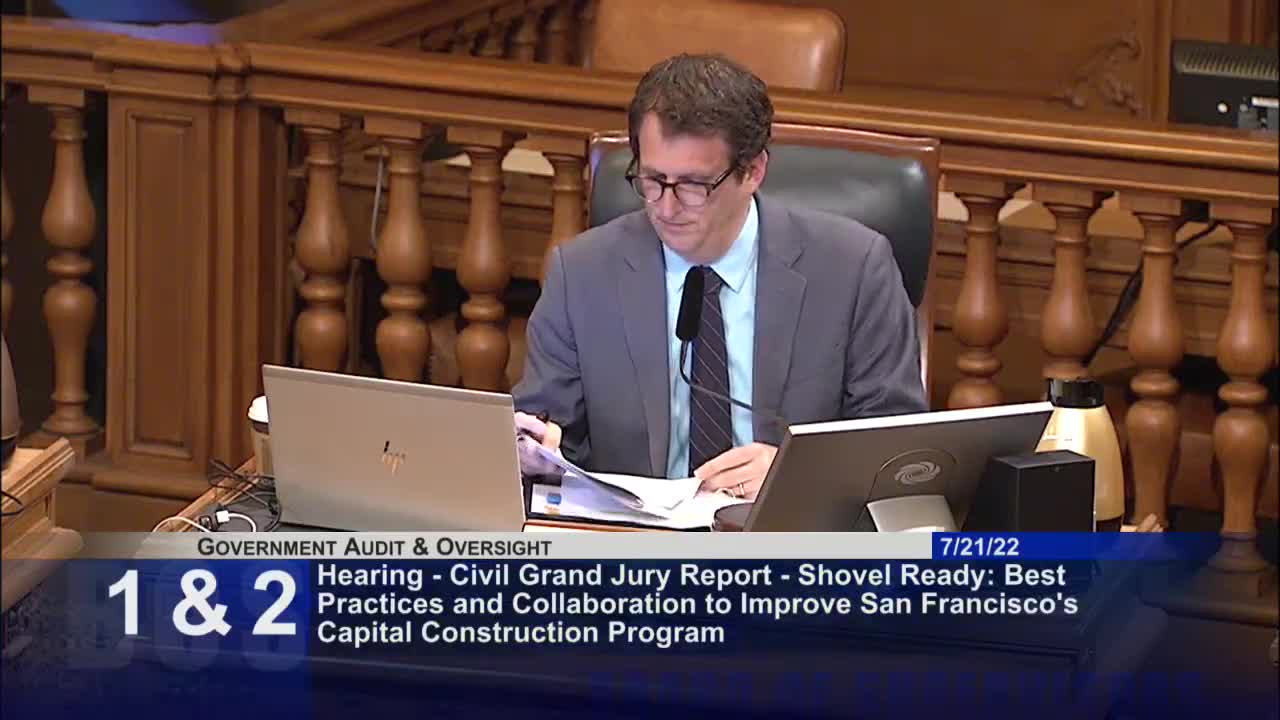
The Government Audit & Oversight Committee on July 21 held a hearing on the city's response to the 2022 monkeypox outbreak, pressing the Department of Public Health (DPH) and community providers about vaccine access, testing and communications.
Supervisor Rafael Mandelmann opened with stories of local residents who faced repeated lineups and unanswered calls when they tried to get vaccinated and said the federal response has been "abysmal." DPH medical director Stephanie Cohen said the federal allocation process funnels doses to states, which then allocate to counties; she said the national supply and manufacturing inspections in Europe have constrained deliveries. "The Department of Health and Human Services has distributed 144,000 doses so far," Cohen said, and noted that as of mid-July San Francisco had requested 35,000 doses but received roughly 7,743 doses and had put about 3,400 into arms as of July 20.
Cohen outlined the city's strategy: establishing a network of fixed and pop-up vaccination sites, prioritizing equity by partnering with community-based organizations (CBOs), opening appointment-based options through health systems such as Kaiser and deploying drop-in clinics where appropriate. She acknowledged communication challenges: call volumes overwhelmed staff and callers sometimes got voicemail responses rather than timely callbacks.
Representatives of community organizations described operational differences: the San Francisco AIDS Foundation reported an established wait list (5,300 eligible people as of the hearing), appointment scheduling, a hotline receiving one to two calls per minute, and recommendations for immediate allocations (requests for thousands of doses for community-run events). The AIDS Foundation urged the city to invest in appointment systems, daily capacity dashboards, and stronger partnerships to reach Spanish-speaking and other underserved communities.
Supervisors pressed for concrete data on who is being vaccinated; Cohen said DPH is building a data exchange with the California adult immunization registry to report demographics but needs an MOU and timeline to provide full external partner data. Committee members asked DPH for daily or near-real-time dashboards, expanded multilingual outreach, and clearer messaging about second-dose timing; Cohen said the state's current guidance prioritizes first doses and second doses may be delayed until supply increases.
No formal action was taken; Supervisor Mandelmann moved to continue follow-up hearings to the call of the chair so the committee can return as necessary.
Supervisor Rafael Mandelmann opened with stories of local residents who faced repeated lineups and unanswered calls when they tried to get vaccinated and said the federal response has been "abysmal." DPH medical director Stephanie Cohen said the federal allocation process funnels doses to states, which then allocate to counties; she said the national supply and manufacturing inspections in Europe have constrained deliveries. "The Department of Health and Human Services has distributed 144,000 doses so far," Cohen said, and noted that as of mid-July San Francisco had requested 35,000 doses but received roughly 7,743 doses and had put about 3,400 into arms as of July 20.
Cohen outlined the city's strategy: establishing a network of fixed and pop-up vaccination sites, prioritizing equity by partnering with community-based organizations (CBOs), opening appointment-based options through health systems such as Kaiser and deploying drop-in clinics where appropriate. She acknowledged communication challenges: call volumes overwhelmed staff and callers sometimes got voicemail responses rather than timely callbacks.
Representatives of community organizations described operational differences: the San Francisco AIDS Foundation reported an established wait list (5,300 eligible people as of the hearing), appointment scheduling, a hotline receiving one to two calls per minute, and recommendations for immediate allocations (requests for thousands of doses for community-run events). The AIDS Foundation urged the city to invest in appointment systems, daily capacity dashboards, and stronger partnerships to reach Spanish-speaking and other underserved communities.
Supervisors pressed for concrete data on who is being vaccinated; Cohen said DPH is building a data exchange with the California adult immunization registry to report demographics but needs an MOU and timeline to provide full external partner data. Committee members asked DPH for daily or near-real-time dashboards, expanded multilingual outreach, and clearer messaging about second-dose timing; Cohen said the state's current guidance prioritizes first doses and second doses may be delayed until supply increases.
No formal action was taken; Supervisor Mandelmann moved to continue follow-up hearings to the call of the chair so the committee can return as necessary.
View the Full Meeting & All Its Details
This article offers just a summary. Unlock complete video, transcripts, and insights as a Founder Member.
✓
Watch full, unedited meeting videos
✓
Search every word spoken in unlimited transcripts
✓
AI summaries & real-time alerts (all government levels)
✓
Permanent access to expanding government content
30-day money-back guarantee
