San Francisco lays out overdose-prevention plan: "wellness hubs," naloxone expansion and data targets
September 29, 2022 | San Francisco County, California
This article was created by AI summarizing key points discussed. AI makes mistakes, so for full details and context, please refer to the video of the full meeting. Please report any errors so we can fix them. Report an error »
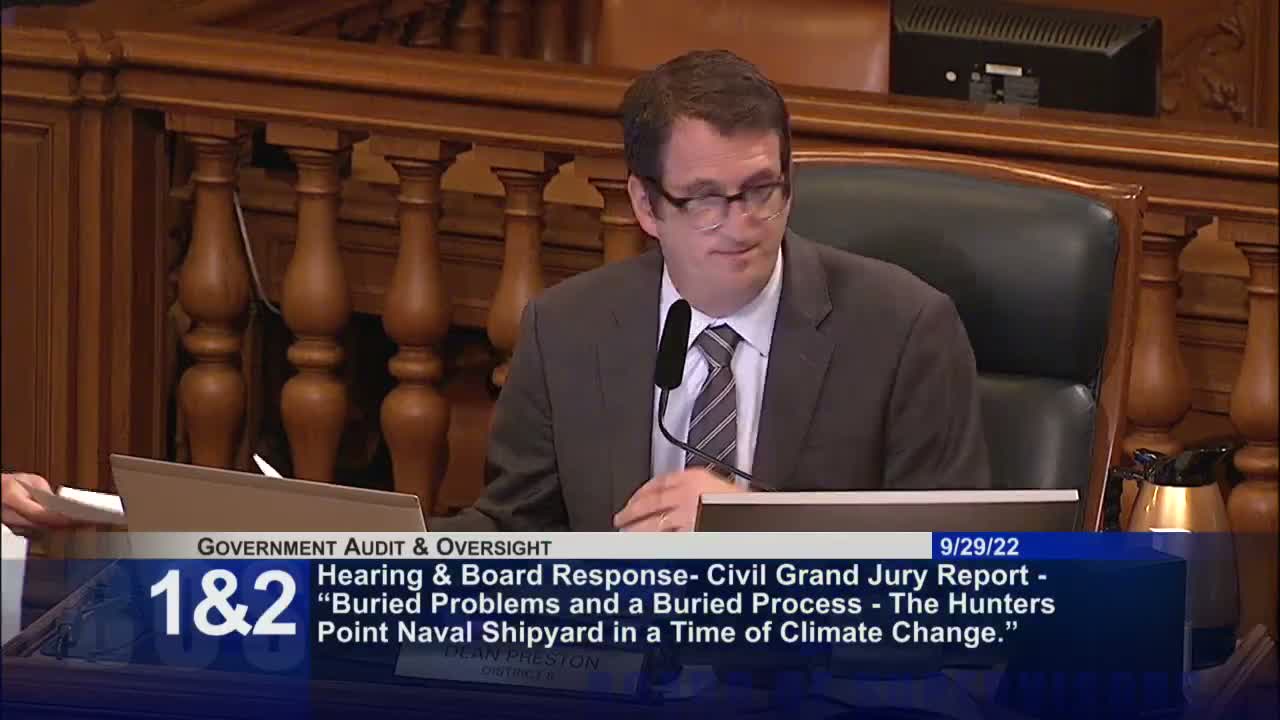
At a Sept.29 hearing, the San Francisco Department of Public Health presented a new citywide overdose-prevention plan that centers equity, expansion of low-barrier services and improved data collection.
Dr. Hilary Cunnins, director of Behavioral Health for the Department of Public Health, told the Government Audit and Oversight Committee the plan rests on four strategic pillars: expand the continuum of substance-use services (including "wellness hubs" offering overdose-prevention services), strengthen community engagement and social supports, implement a whole-city approach across city departments, and centralize drug-related data and metrics.
"Our overall goal in this plan is to continue to reduce overall overdose deaths in San Francisco, while also focusing on reducing disparities and overdose deaths among people experiencing homelessness and among Black/African American San Franciscans," Cunnins said. The plan sets targets that include a 15% reduction in fatal overdoses citywide by 2025, a 30% reduction in racial disparities among Black residents, and a 30% increase in people receiving medication treatment for opioid-use disorder by 2025. The plan also sets operational goals: at least two wellness hubs within 1'2 years, 70 additional residential step-down beds, and expanding naloxone distribution from 47,000 to 75,000 kits annually in the near term and 100,000 in 3'4 years.
Experts who testified agreed that supervised consumption and expanded harm-reduction services prevent deaths. "Safe consumption sites have existed around the world since the mid-1980s ... there's never been an overdose death at one of these sites," said Alex Kral of RTI International, citing international evaluations. Maurice Bird of the Harm Reduction Therapy Center urged decriminalization and expanded peer-based response. Jeanette Saniquatine of the Drug Policy Alliance urged policies to center racial equity and to avoid criminalized responses that drive people away from life-saving interventions.
Supervisors asked for quick timelines and assurances of no gap in services when the Tenderloin linkage center closes in December. Cunnins said the department aims to open the first wellness hub by the end of 2022 and additional 2'3 hubs in 2023 and to minimize service gaps through expanded drop-in and street-response efforts.
Public commenters overwhelmingly urged immediate implementation of supervised consumption/overdose-prevention centers, more peer responders and funding for Brave Button pilots (in-residence overdose alert buttons), and faster naloxone saturation and drug-checking services. DPH said it will track metrics, issue quarterly monitoring reports and revise the plan annually.
What's next: DPH will operationalize the Office of Overdose Prevention to lead implementation, track performance against the plan's targets and report quarterly to the Board; advocates pressed the Board to accelerate implementation and to fund supervised consumption centers where legally possible.
Dr. Hilary Cunnins, director of Behavioral Health for the Department of Public Health, told the Government Audit and Oversight Committee the plan rests on four strategic pillars: expand the continuum of substance-use services (including "wellness hubs" offering overdose-prevention services), strengthen community engagement and social supports, implement a whole-city approach across city departments, and centralize drug-related data and metrics.
"Our overall goal in this plan is to continue to reduce overall overdose deaths in San Francisco, while also focusing on reducing disparities and overdose deaths among people experiencing homelessness and among Black/African American San Franciscans," Cunnins said. The plan sets targets that include a 15% reduction in fatal overdoses citywide by 2025, a 30% reduction in racial disparities among Black residents, and a 30% increase in people receiving medication treatment for opioid-use disorder by 2025. The plan also sets operational goals: at least two wellness hubs within 1'2 years, 70 additional residential step-down beds, and expanding naloxone distribution from 47,000 to 75,000 kits annually in the near term and 100,000 in 3'4 years.
Experts who testified agreed that supervised consumption and expanded harm-reduction services prevent deaths. "Safe consumption sites have existed around the world since the mid-1980s ... there's never been an overdose death at one of these sites," said Alex Kral of RTI International, citing international evaluations. Maurice Bird of the Harm Reduction Therapy Center urged decriminalization and expanded peer-based response. Jeanette Saniquatine of the Drug Policy Alliance urged policies to center racial equity and to avoid criminalized responses that drive people away from life-saving interventions.
Supervisors asked for quick timelines and assurances of no gap in services when the Tenderloin linkage center closes in December. Cunnins said the department aims to open the first wellness hub by the end of 2022 and additional 2'3 hubs in 2023 and to minimize service gaps through expanded drop-in and street-response efforts.
Public commenters overwhelmingly urged immediate implementation of supervised consumption/overdose-prevention centers, more peer responders and funding for Brave Button pilots (in-residence overdose alert buttons), and faster naloxone saturation and drug-checking services. DPH said it will track metrics, issue quarterly monitoring reports and revise the plan annually.
What's next: DPH will operationalize the Office of Overdose Prevention to lead implementation, track performance against the plan's targets and report quarterly to the Board; advocates pressed the Board to accelerate implementation and to fund supervised consumption centers where legally possible.
Don't Miss a Word: See the Full Meeting!
Go beyond summaries. Unlock every video, transcript, and key insight with a Founder Membership.
✓
Get instant access to full meeting videos
✓
Search and clip any phrase from complete transcripts
✓
Receive AI-powered summaries & custom alerts
✓
Enjoy lifetime, unrestricted access to government data
30-day money-back guarantee
