Supervisors press MOHCD on pause to rent relief applications as agency works through 4,500‑application backlog
October 06, 2022 | San Francisco County, California
This article was created by AI summarizing key points discussed. AI makes mistakes, so for full details and context, please refer to the video of the full meeting. Please report any errors so we can fix them. Report an error »
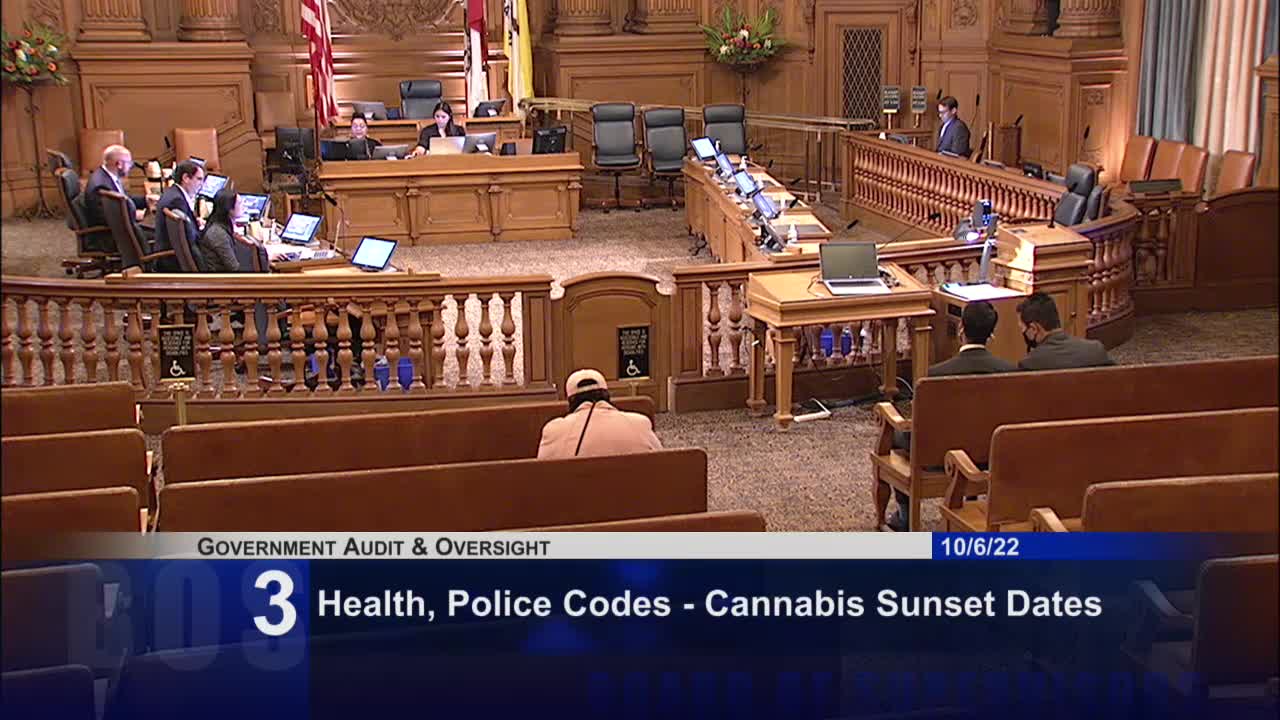
The Government Audit & Oversight Committee held an extended hearing Oct. 6 to question the mayor's office of housing and community development about its decision to pause new applications to the city's Emergency Rental Assistance Program.
Chair Supervisor Dean Preston reopened the committee file after MOHCD announced on Sept. 23 that it would temporarily stop accepting new applications so the office could clear a backlog and improve case‑management processes. Eric Shaw, director of MOHCD, told the committee the pause was intended to let staff and community partners process roughly 4,500 pending applications, address verification and case‑management bottlenecks, and redesign some operational steps so the program can provide a timely emergency response.
Hugo Ramirez of MOHCD said the local program has served nearly 5,000 households and distributed about $34 million to date, with approximately $43 million remaining in local funds from Prop I, Prop C and general fund allocations. Ramirez said most pending applications cover rent owed between April 1 and July 1, and that the eviction‑diversion component will prioritize those cases because they lack state protections. MOHCD said it recently added three staff to permitting and processing workstreams (Office of Cannabis reference) and has issued 31 equity permits in the cannabis context; for ERAP MOHCD described internal staffing and batch processing improvements for partners with existing case‑management relationships.
Supervisors pressed MOHCD on why the city paused intake when funds remain available, whether the pause could be narrowed to prioritize applications tied to immediate eviction risk, and how the city will notify applicants and outreach partners. MOHCD officials said the pause was driven by a need to improve timeliness and to avoid long delays between application and award; they promised follow‑up analysis and a report within weeks but did not give a firm date to resume applications.
Public commenters praised the program's outreach and case managers and urged the committee to ensure residents are not left behind while intake is paused. MOHCD listed its 10 community development partners involved in distribution, including the Eviction Defense Collaborative, Catholic Charities, and Mission Neighborhood Centers.
Chair Preston moved to continue the file to the call of the chair for MOHCD to return with additional details; the motion passed unanimously.
What happened next: MOHCD committed to provide an update within a few weeks with further data on backlog composition, a funding breakdown, and plans for resuming intake; the committee asked the administration to consider mechanisms to allow targeted intake for high‑risk cases while clearing the broader backlog.
Chair Supervisor Dean Preston reopened the committee file after MOHCD announced on Sept. 23 that it would temporarily stop accepting new applications so the office could clear a backlog and improve case‑management processes. Eric Shaw, director of MOHCD, told the committee the pause was intended to let staff and community partners process roughly 4,500 pending applications, address verification and case‑management bottlenecks, and redesign some operational steps so the program can provide a timely emergency response.
Hugo Ramirez of MOHCD said the local program has served nearly 5,000 households and distributed about $34 million to date, with approximately $43 million remaining in local funds from Prop I, Prop C and general fund allocations. Ramirez said most pending applications cover rent owed between April 1 and July 1, and that the eviction‑diversion component will prioritize those cases because they lack state protections. MOHCD said it recently added three staff to permitting and processing workstreams (Office of Cannabis reference) and has issued 31 equity permits in the cannabis context; for ERAP MOHCD described internal staffing and batch processing improvements for partners with existing case‑management relationships.
Supervisors pressed MOHCD on why the city paused intake when funds remain available, whether the pause could be narrowed to prioritize applications tied to immediate eviction risk, and how the city will notify applicants and outreach partners. MOHCD officials said the pause was driven by a need to improve timeliness and to avoid long delays between application and award; they promised follow‑up analysis and a report within weeks but did not give a firm date to resume applications.
Public commenters praised the program's outreach and case managers and urged the committee to ensure residents are not left behind while intake is paused. MOHCD listed its 10 community development partners involved in distribution, including the Eviction Defense Collaborative, Catholic Charities, and Mission Neighborhood Centers.
Chair Preston moved to continue the file to the call of the chair for MOHCD to return with additional details; the motion passed unanimously.
What happened next: MOHCD committed to provide an update within a few weeks with further data on backlog composition, a funding breakdown, and plans for resuming intake; the committee asked the administration to consider mechanisms to allow targeted intake for high‑risk cases while clearing the broader backlog.
Don't Miss a Word: See the Full Meeting!
Go beyond summaries. Unlock every video, transcript, and key insight with a Founder Membership.
✓
Get instant access to full meeting videos
✓
Search and clip any phrase from complete transcripts
✓
Receive AI-powered summaries & custom alerts
✓
Enjoy lifetime, unrestricted access to government data
30-day money-back guarantee
