BLA: San Francisco vacancy rate jumped to nearly 15% in 2021; for‑rent vacancies and 'other' vacant categories rose sharply
October 20, 2022 | San Francisco County, California
This article was created by AI summarizing key points discussed. AI makes mistakes, so for full details and context, please refer to the video of the full meeting. Please report any errors so we can fix them. Report an error »
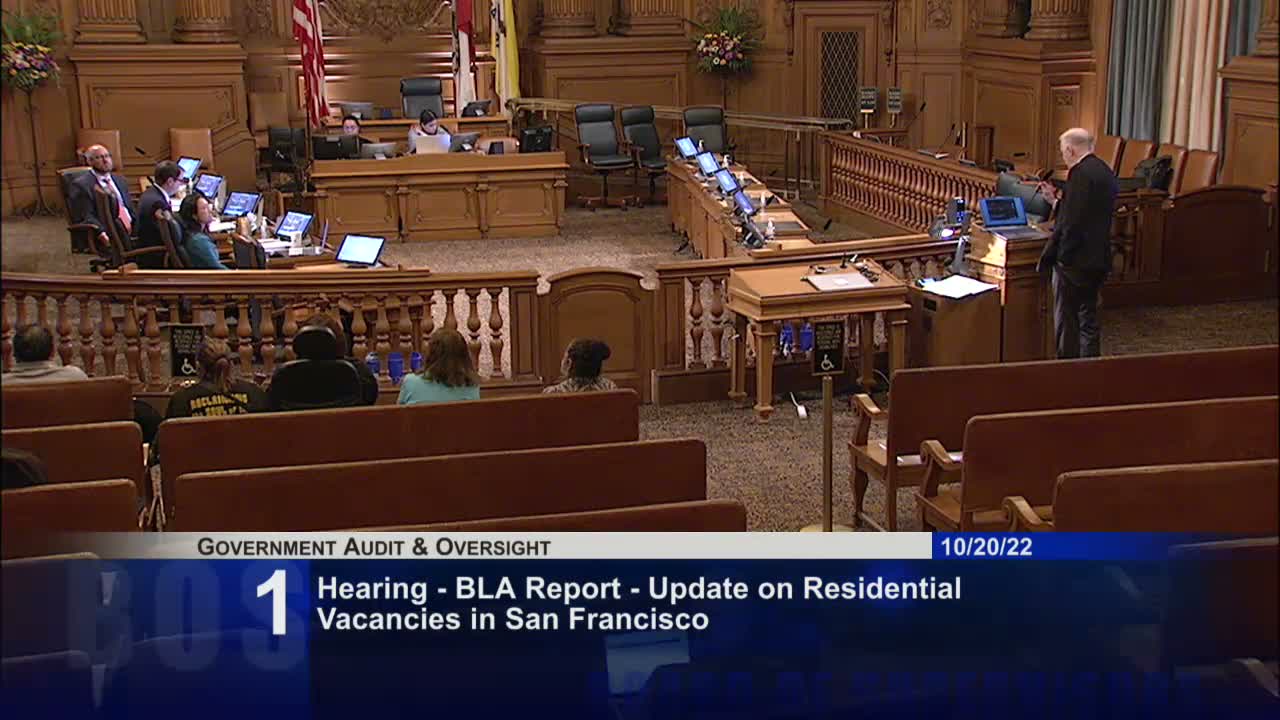
The Government Audit & Oversight Committee received a BLA update on Oct. 20 showing a large rise in reported vacant housing units in San Francisco between the 2019 and 2021 American Community Survey (ACS) counts.
Fred Brusseau of the Budget and Legislative Analyst's office said vacant units increased from 40,548 in 2019 to 61,473 in 2021 — an addition of 20,925 units (a 51.6% change). The largest category increases were for‑rent vacancies, which rose from 7,241 to 17,514 (a 142% jump), and the 'other vacant' category (which rose to 21,493 units), a heterogeneous group that can include units held for repair, medical absence, or financial reasons. Brusseau said seasonal/recreational or occasional use (second homes) also grew and that population loss during the pandemic (ACS shows a decline of roughly 66,348 people for the same period) helps explain part of the change.
Supervisors asked whether vacancy growth includes rent‑controlled units, whether the 'sold not occupied' category reflects speculation, and if short‑term rentals or corporate housing are driving the 'other vacant' category. Brusseau said the ACS categories are limited and do not identify rent‑controlled units; he noted that the new Rent Board housing registry and forthcoming Census maps (available in December) could help locate vacant units and cross‑reference registries.
Public commenters (advocacy groups, faith leaders, residents, a school official and small business owners) framed the findings as a moral and policy crisis, urging the city to pursue remedies including vacancy taxes and measures to place idle housing into use. The committee voted to continue the vacancy item to the call of the chair for additional analysis and follow‑up data.
Fred Brusseau of the Budget and Legislative Analyst's office said vacant units increased from 40,548 in 2019 to 61,473 in 2021 — an addition of 20,925 units (a 51.6% change). The largest category increases were for‑rent vacancies, which rose from 7,241 to 17,514 (a 142% jump), and the 'other vacant' category (which rose to 21,493 units), a heterogeneous group that can include units held for repair, medical absence, or financial reasons. Brusseau said seasonal/recreational or occasional use (second homes) also grew and that population loss during the pandemic (ACS shows a decline of roughly 66,348 people for the same period) helps explain part of the change.
Supervisors asked whether vacancy growth includes rent‑controlled units, whether the 'sold not occupied' category reflects speculation, and if short‑term rentals or corporate housing are driving the 'other vacant' category. Brusseau said the ACS categories are limited and do not identify rent‑controlled units; he noted that the new Rent Board housing registry and forthcoming Census maps (available in December) could help locate vacant units and cross‑reference registries.
Public commenters (advocacy groups, faith leaders, residents, a school official and small business owners) framed the findings as a moral and policy crisis, urging the city to pursue remedies including vacancy taxes and measures to place idle housing into use. The committee voted to continue the vacancy item to the call of the chair for additional analysis and follow‑up data.
View the Full Meeting & All Its Details
This article offers just a summary. Unlock complete video, transcripts, and insights as a Founder Member.
✓
Watch full, unedited meeting videos
✓
Search every word spoken in unlimited transcripts
✓
AI summaries & real-time alerts (all government levels)
✓
Permanent access to expanding government content
30-day money-back guarantee
