Kaiser says it meets state access standards; clinicians and patients tell supervisors delays for ongoing therapy remain months-long
October 21, 2021 | San Francisco County, California
This article was created by AI summarizing key points discussed. AI makes mistakes, so for full details and context, please refer to the video of the full meeting. Please report any errors so we can fix them. Report an error »
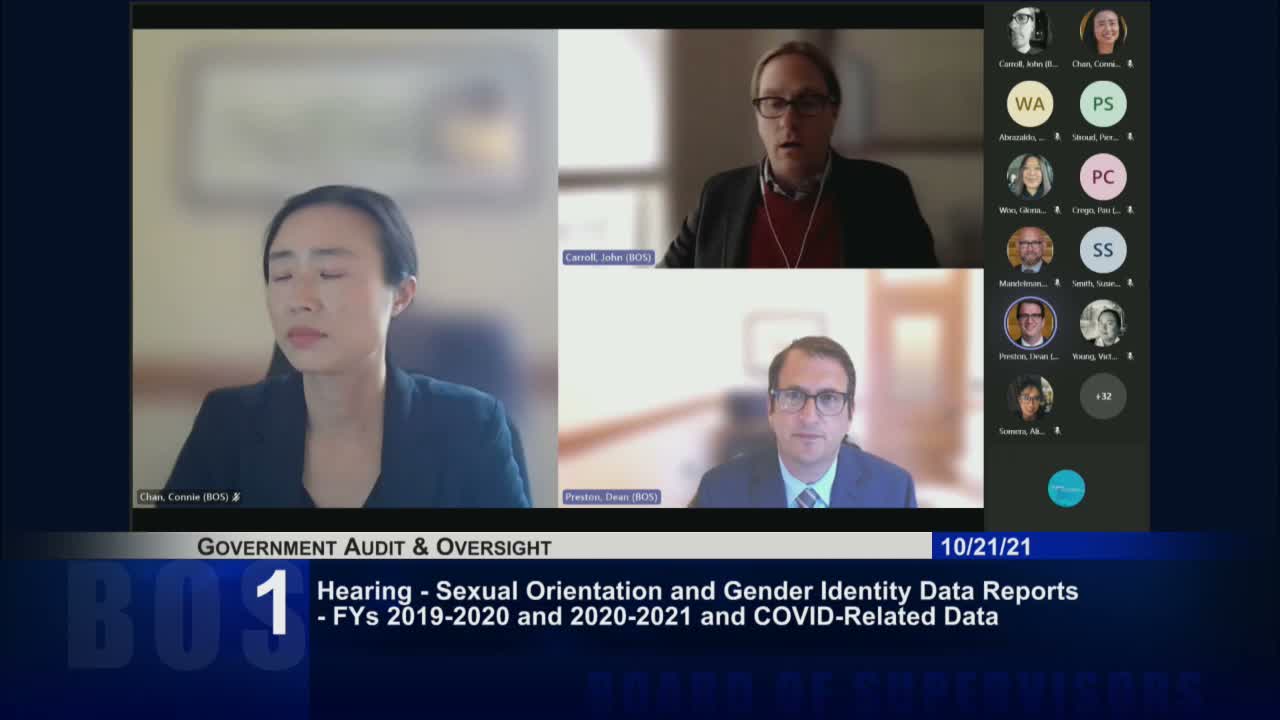
San Francisco supervisors pressed Kaiser Permanente and the city's health-plan purchaser on Oct. 21 over reports that patients face long waits for ongoing mental-health care despite plans meeting state standards for initial appointments.
Abby Yant, executive director of the San Francisco Health Service System, said purchasers lack standardized, member-specific metrics from plans: state and industry reporting is often "book of business" data that does not show access for the city's covered population. She said the city is working with its plans to define a measurement plan focused on member outcomes and access.
Kaiser executives told the committee they have invested aggressively in hiring and telehealth and reported compliance with DMHC timing standards for first appointments. Dr. Maria Koshy, chair of Northern California psychiatry chiefs, said Kaiser meets California's regulatory standard for initial appointments more than 90% of the time and described telehealth as an effective, sustained option after early-pandemic adjustments. Leanne Jones (director of quality) said Kaiser reported meeting DMHC-defined urgent (48-hour) and nonurgent (10 business day) first-appointment timeframes at 98.7% and 96.2% respectively.
But clinicians on the ground and a long-time Kaiser patient told a different story. Ilana Marcucci Morris, an intake therapist at Kaiser's Northern California call center, said the system has improved access to 30-minute initial assessments but the subsequent "secondary" intake and the ongoing treatment slots that patients actually need are often booked weeks or months out. "Months-long delays for the actual indicated treatment that is medically necessary after my initial assessment is typical for all non-emergency patients," she said, adding that this can make treatment "dangerously ineffective" for moderate-to-severe patients.
Jeffrey Chen Harding, a licensed clinical social worker who does triage and brief treatment, said he routinely found the first secondary intake appointment for serious patients two to three months away when checking availability in mid-October; he and Marcucci said the way return-access fields are recorded in electronic templates can understate true wait times. A patient, Cynthia Gomez, said she paid out of pocket for sustained individual therapy because she could not get ongoing care through Kaiser despite having a comprehensive employer-backed plan.
Committee members sought clarity on what the DMHC timing standards actually measure (they apply to first appointments) and whether plans track follow-up timing. Kaiser said it audits whether clinicians' recommended follow-up intervals are met and reported an internal statewide average of meeting return-appointment recommendations about 84% of the time; Kaiser executives acknowledged the lack of a consistent industry standard for measuring follow-up wait times and said they are preparing for new state reporting requirements in forthcoming legislation.
Supervisors pressed for more membership-level, plan-specific data on both initial access and follow-up treatment timing. They expressed concern that reliance on patients to call repeatedly to improve appointment times favors those with resources or connections and widens inequities.
The committee received public testimony from two callers and from clinicians and a patient. Vice Chair Connie Chan moved to continue the hearing to the call of the chair for additional follow-up; the motion passed on a 3-0 roll call (Chan, Mandelmann, Preston). The committee asked HSS and the health plans to return with more precise membership-level measures and with progress reports on implementing new data collection or reporting under state law.
Abby Yant, executive director of the San Francisco Health Service System, said purchasers lack standardized, member-specific metrics from plans: state and industry reporting is often "book of business" data that does not show access for the city's covered population. She said the city is working with its plans to define a measurement plan focused on member outcomes and access.
Kaiser executives told the committee they have invested aggressively in hiring and telehealth and reported compliance with DMHC timing standards for first appointments. Dr. Maria Koshy, chair of Northern California psychiatry chiefs, said Kaiser meets California's regulatory standard for initial appointments more than 90% of the time and described telehealth as an effective, sustained option after early-pandemic adjustments. Leanne Jones (director of quality) said Kaiser reported meeting DMHC-defined urgent (48-hour) and nonurgent (10 business day) first-appointment timeframes at 98.7% and 96.2% respectively.
But clinicians on the ground and a long-time Kaiser patient told a different story. Ilana Marcucci Morris, an intake therapist at Kaiser's Northern California call center, said the system has improved access to 30-minute initial assessments but the subsequent "secondary" intake and the ongoing treatment slots that patients actually need are often booked weeks or months out. "Months-long delays for the actual indicated treatment that is medically necessary after my initial assessment is typical for all non-emergency patients," she said, adding that this can make treatment "dangerously ineffective" for moderate-to-severe patients.
Jeffrey Chen Harding, a licensed clinical social worker who does triage and brief treatment, said he routinely found the first secondary intake appointment for serious patients two to three months away when checking availability in mid-October; he and Marcucci said the way return-access fields are recorded in electronic templates can understate true wait times. A patient, Cynthia Gomez, said she paid out of pocket for sustained individual therapy because she could not get ongoing care through Kaiser despite having a comprehensive employer-backed plan.
Committee members sought clarity on what the DMHC timing standards actually measure (they apply to first appointments) and whether plans track follow-up timing. Kaiser said it audits whether clinicians' recommended follow-up intervals are met and reported an internal statewide average of meeting return-appointment recommendations about 84% of the time; Kaiser executives acknowledged the lack of a consistent industry standard for measuring follow-up wait times and said they are preparing for new state reporting requirements in forthcoming legislation.
Supervisors pressed for more membership-level, plan-specific data on both initial access and follow-up treatment timing. They expressed concern that reliance on patients to call repeatedly to improve appointment times favors those with resources or connections and widens inequities.
The committee received public testimony from two callers and from clinicians and a patient. Vice Chair Connie Chan moved to continue the hearing to the call of the chair for additional follow-up; the motion passed on a 3-0 roll call (Chan, Mandelmann, Preston). The committee asked HSS and the health plans to return with more precise membership-level measures and with progress reports on implementing new data collection or reporting under state law.
View the Full Meeting & All Its Details
This article offers just a summary. Unlock complete video, transcripts, and insights as a Founder Member.
✓
Watch full, unedited meeting videos
✓
Search every word spoken in unlimited transcripts
✓
AI summaries & real-time alerts (all government levels)
✓
Permanent access to expanding government content
30-day money-back guarantee
