Committee sends three-year police MOU to full Board with recommendation despite chair’s concerns about data and cost
April 06, 2023 | San Francisco County, California
This article was created by AI summarizing key points discussed. AI makes mistakes, so for full details and context, please refer to the video of the full meeting. Please report any errors so we can fix them. Report an error »
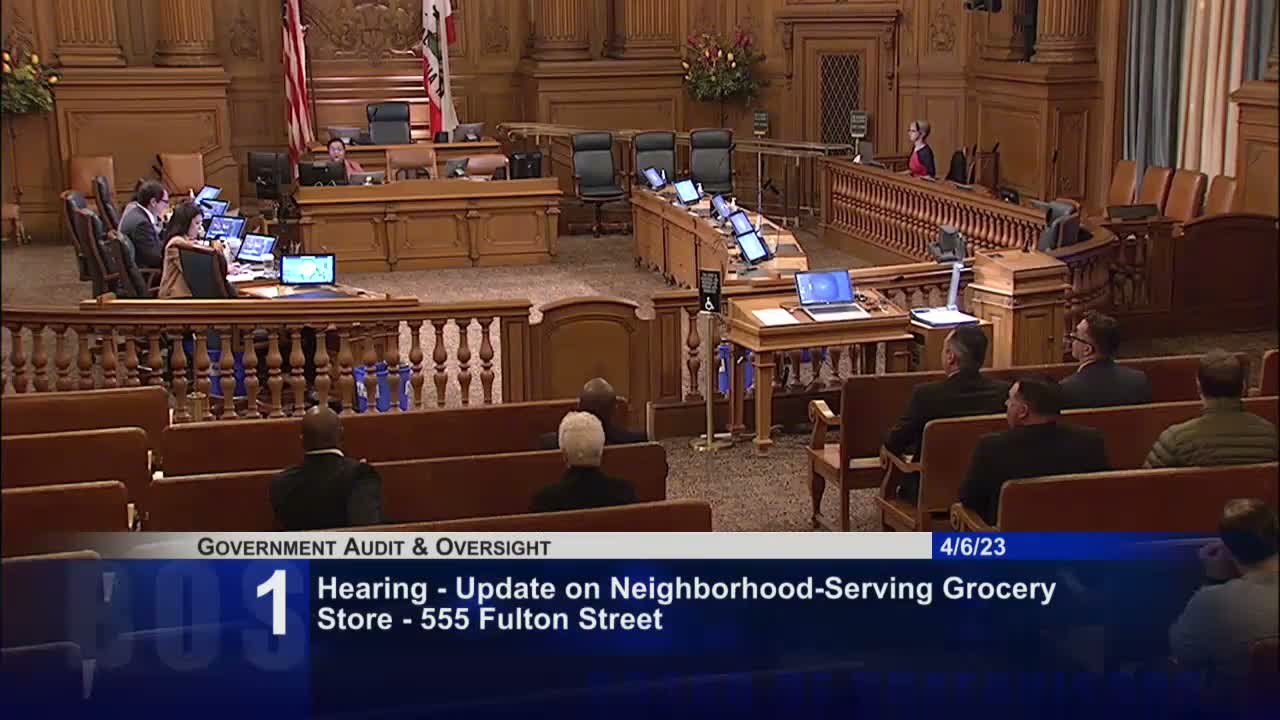
The Government Audit and Oversight Committee on April 6 voted 2–1 to recommend to the full Board of Supervisors a tentative three‑year memorandum of understanding (MOU) between the City and County of San Francisco and the San Francisco Police Officers Association covering July 1, 2023 through June 30, 2026.
Department of Human Resources presenters said the tentative agreement was negotiated with the POA and ratified by its membership. DHR employees explained bargaining factors and presented staffing and resignation data for the San Francisco Police Department: the department began 2022 with roughly 2,065 officers and finished the year with about 1,906, reflecting significant retirements and an unusual number of resignations concentrated at mid‑career years. To address mid‑career attrition, the MOU would enact a 10.75% base-wage increase over three years, introduce retention pay tied to five‑, seven‑ and eight‑year milestones, and raise entry-level pay to be the highest in the region. The contract text also includes delay language that could push wage increases back six to 12 months if a joint report shows a deficit of $300 million or more.
DHR presented estimated fiscal impacts that the committee parsed during questioning: the additional incremental city cost was described as about $25,000,000 in year 1, $56,000,000 in year 2 and $84,000,000 in year 3. DHR and compensation staff explained that the numbers are calculated on a year‑over‑year basis (the $84 million figure was described in the presentation as the incremental cost in year 3), producing a roughly $166,000,000 cumulative impact over the contract term when the three years are added together; the Controller’s office validated the costing, DHR said.
Committee members pressed DHR and compensation staff for evidence that the package would improve retention. Chair Supervisor Dean Preston said the three‑year, roughly $166 million investment appeared to rest on limited data and asked whether SFPD or DHR collect systematic exit-interview information showing where departing officers go and whether pay differences were the deciding factor. DHR and Director Eisen said some background-transfer information exists, that there is anecdotal evidence and that prior increases coincided with lower resignations, but they acknowledged limited, centralized exit‑interview data and committed to follow up with SFPD on what records they can provide.
Public commenters including the San Francisco Police Officers Association president Tracy McCray, business representatives and callers urged approval, saying competitive pay is needed to retain officers, preserve response capacity and support the local economy. Compensation director Steve Ponder told the committee SFPD overtime is high because of staffing shortages and that, in figures he ran, overtime and specialized 10(b) overtime amounts were substantial (he cited roughly $20,000 and $10,000 figures in his analysis).
Vice Chair Catherine Stephanie moved to forward the MOU to the full Board with a positive recommendation. The committee voted 2–1: Vice Chair Stephanie and Supervisor Connie Chan voted "aye"; Chair Preston voted "no." The motion passed and the MOU is expected to be calendared for the full Board’s consideration.
Chair Preston said he would prefer to send the item without a recommendation and to obtain additional data on officer exits, but the committee adopted the recommendation. DHR said it will provide any additional background-transfer or departure information the department can access to supervisors prior to the Board vote.
The MOU is an ordinance-level item that must be considered by the full Board on its calendar and could trigger impasse procedures if the Board votes it down and the parties are unable to resolve bargaining issues before required deadlines.
Department of Human Resources presenters said the tentative agreement was negotiated with the POA and ratified by its membership. DHR employees explained bargaining factors and presented staffing and resignation data for the San Francisco Police Department: the department began 2022 with roughly 2,065 officers and finished the year with about 1,906, reflecting significant retirements and an unusual number of resignations concentrated at mid‑career years. To address mid‑career attrition, the MOU would enact a 10.75% base-wage increase over three years, introduce retention pay tied to five‑, seven‑ and eight‑year milestones, and raise entry-level pay to be the highest in the region. The contract text also includes delay language that could push wage increases back six to 12 months if a joint report shows a deficit of $300 million or more.
DHR presented estimated fiscal impacts that the committee parsed during questioning: the additional incremental city cost was described as about $25,000,000 in year 1, $56,000,000 in year 2 and $84,000,000 in year 3. DHR and compensation staff explained that the numbers are calculated on a year‑over‑year basis (the $84 million figure was described in the presentation as the incremental cost in year 3), producing a roughly $166,000,000 cumulative impact over the contract term when the three years are added together; the Controller’s office validated the costing, DHR said.
Committee members pressed DHR and compensation staff for evidence that the package would improve retention. Chair Supervisor Dean Preston said the three‑year, roughly $166 million investment appeared to rest on limited data and asked whether SFPD or DHR collect systematic exit-interview information showing where departing officers go and whether pay differences were the deciding factor. DHR and Director Eisen said some background-transfer information exists, that there is anecdotal evidence and that prior increases coincided with lower resignations, but they acknowledged limited, centralized exit‑interview data and committed to follow up with SFPD on what records they can provide.
Public commenters including the San Francisco Police Officers Association president Tracy McCray, business representatives and callers urged approval, saying competitive pay is needed to retain officers, preserve response capacity and support the local economy. Compensation director Steve Ponder told the committee SFPD overtime is high because of staffing shortages and that, in figures he ran, overtime and specialized 10(b) overtime amounts were substantial (he cited roughly $20,000 and $10,000 figures in his analysis).
Vice Chair Catherine Stephanie moved to forward the MOU to the full Board with a positive recommendation. The committee voted 2–1: Vice Chair Stephanie and Supervisor Connie Chan voted "aye"; Chair Preston voted "no." The motion passed and the MOU is expected to be calendared for the full Board’s consideration.
Chair Preston said he would prefer to send the item without a recommendation and to obtain additional data on officer exits, but the committee adopted the recommendation. DHR said it will provide any additional background-transfer or departure information the department can access to supervisors prior to the Board vote.
The MOU is an ordinance-level item that must be considered by the full Board on its calendar and could trigger impasse procedures if the Board votes it down and the parties are unable to resolve bargaining issues before required deadlines.
Don't Miss a Word: See the Full Meeting!
Go beyond summaries. Unlock every video, transcript, and key insight with a Founder Membership.
✓
Get instant access to full meeting videos
✓
Search and clip any phrase from complete transcripts
✓
Receive AI-powered summaries & custom alerts
✓
Enjoy lifetime, unrestricted access to government data
30-day money-back guarantee
