Supervisors hold citywide hearing on Community Ambassadors, call for coordination and dashboards
June 01, 2023 | San Francisco County, California
This article was created by AI summarizing key points discussed. AI makes mistakes, so for full details and context, please refer to the video of the full meeting. Please report any errors so we can fix them. Report an error »
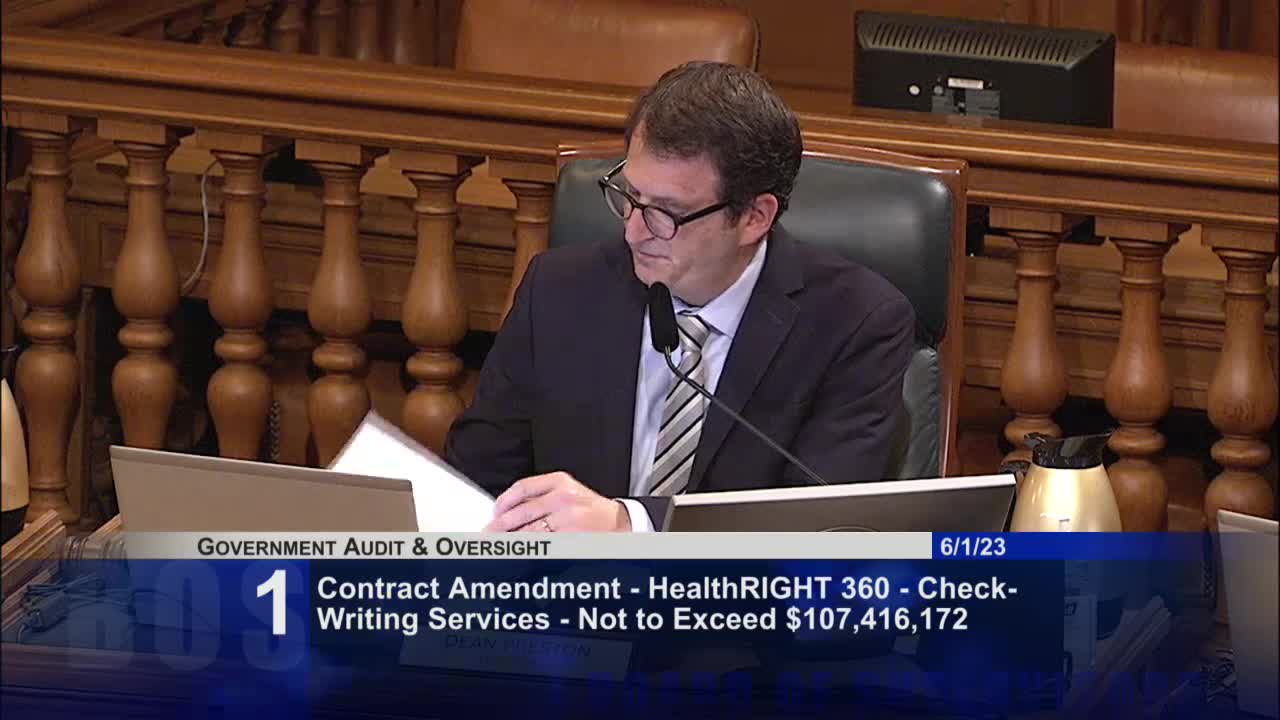
The Government Audit & Oversight Committee on June 1 held a multi‑department hearing to inventory and assess Community Ambassador programs operating across San Francisco, including those run by city agencies, community benefit districts and nonprofit grantees.
Chair Supervisor Dean Preston said the goal is to identify what the programs do, where they operate, how they are funded and what standards are needed to improve transparency and accountability. "It is my hope that this hearing will provide clarity on the roles and responsibilities of the various ambassador programs," he said.
Andre Torrey, newly hired Street Ambassador Coordinator at the Department of Emergency Management, presented a working definition of ambassadorship and categorized programs into safety, cleaning, hospitality and wellness. Torrey said DEM’s inventory identified 34 programs citywide, 19 public‑agency or grant‑funded and 15 run by community benefit districts, and described DEM’s plan to coordinate these efforts using data and community input.
Kat Daniel of the Office of Economic and Workforce Development said OEWD funds six ambassador programs through grants and noted charts shown to the committee reflected only city contributions; private and CBD funds exist in addition to the city’s share. Jorge Rivas of the Office of Civic Engagement described his agency’s Community Ambassador Program (CAP), which employs city residents, provides trauma‑informed training and logs interactions; David McKinley reported CAP’s fiscal‑year‑to‑date total of more than 211,000 ambassador interactions, including nearly 28,000 in languages other than English.
Supervisors pressed departments on who currently decides deployment hours and geography; DEM’s Sam Dodge said many decisions are program‑specific but that DEM’s new coordination role will seek to rationalize deployment based on 311 data, community needs and interagency collaboration. Committee members urged creation of a public dashboard and quarterly needs assessments so supervisors and residents can see coverage, outcomes and whether programs are meeting expectations.
Speakers from nonprofits, community benefit districts and service providers gave examples of ambassador work — crowd management at testing and food distribution sites, school escorts, merchant outreach and referrals to social services — and urged stable, multi‑year funding and standardized training and reporting. After discussion the committee moved to continue the hearing to the call of the chair so DEM can return with further coordination work.
Chair Supervisor Dean Preston said the goal is to identify what the programs do, where they operate, how they are funded and what standards are needed to improve transparency and accountability. "It is my hope that this hearing will provide clarity on the roles and responsibilities of the various ambassador programs," he said.
Andre Torrey, newly hired Street Ambassador Coordinator at the Department of Emergency Management, presented a working definition of ambassadorship and categorized programs into safety, cleaning, hospitality and wellness. Torrey said DEM’s inventory identified 34 programs citywide, 19 public‑agency or grant‑funded and 15 run by community benefit districts, and described DEM’s plan to coordinate these efforts using data and community input.
Kat Daniel of the Office of Economic and Workforce Development said OEWD funds six ambassador programs through grants and noted charts shown to the committee reflected only city contributions; private and CBD funds exist in addition to the city’s share. Jorge Rivas of the Office of Civic Engagement described his agency’s Community Ambassador Program (CAP), which employs city residents, provides trauma‑informed training and logs interactions; David McKinley reported CAP’s fiscal‑year‑to‑date total of more than 211,000 ambassador interactions, including nearly 28,000 in languages other than English.
Supervisors pressed departments on who currently decides deployment hours and geography; DEM’s Sam Dodge said many decisions are program‑specific but that DEM’s new coordination role will seek to rationalize deployment based on 311 data, community needs and interagency collaboration. Committee members urged creation of a public dashboard and quarterly needs assessments so supervisors and residents can see coverage, outcomes and whether programs are meeting expectations.
Speakers from nonprofits, community benefit districts and service providers gave examples of ambassador work — crowd management at testing and food distribution sites, school escorts, merchant outreach and referrals to social services — and urged stable, multi‑year funding and standardized training and reporting. After discussion the committee moved to continue the hearing to the call of the chair so DEM can return with further coordination work.
Don't Miss a Word: See the Full Meeting!
Go beyond summaries. Unlock every video, transcript, and key insight with a Founder Membership.
✓
Get instant access to full meeting videos
✓
Search and clip any phrase from complete transcripts
✓
Receive AI-powered summaries & custom alerts
✓
Enjoy lifetime, unrestricted access to government data
30-day money-back guarantee
