Board committee advances city apology resolution to African Americans; public urges concrete reparations
February 15, 2024 | San Francisco County, California
This article was created by AI summarizing key points discussed. AI makes mistakes, so for full details and context, please refer to the video of the full meeting. Please report any errors so we can fix them. Report an error »
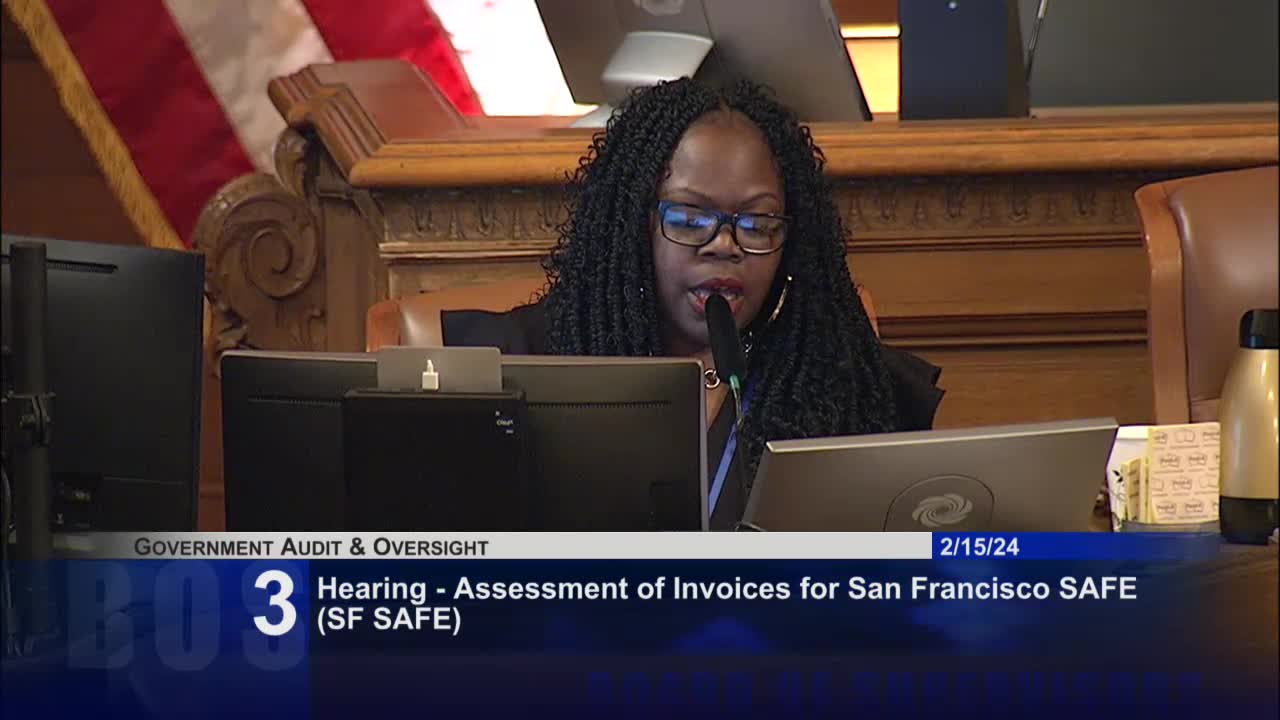
The Government Audit & Oversight Committee voted to send to the full Board of Supervisors a resolution apologizing on behalf of the City and County of San Francisco to African Americans and their descendants for systemic and structural discrimination and committing to steps toward redress and non-repetition.
Supervisor Shamann Walton, sponsor of the resolution, and witnesses from the Human Rights Commission and the African American Reparations Advisory Committee presented the apology as one element of a broader reparations plan that includes over a hundred recommendations for monetary, policy and programmatic remedies.
Dr. Cheryl Davis, director of the Human Rights Commission, said the apology is necessary but not sufficient and urged implementation of committee recommendations. Committee members and advisory‑committee leaders repeatedly emphasized that apology must be followed by concrete action: housing set‑asides, direct compensation for qualifying descendants, funding for an Office of Reparations and policy changes to prevent future harms.
Public testimony filled the chamber. Dozens of speakers — including community organizations, task forces, faith leaders, advocates and residents — urged passage but overwhelmingly demanded that the apology be accompanied by concrete steps: cash payments to qualifying descendants, land and housing commitments in historically displaced neighborhoods such as the Fillmore, targeted program funding and guarantees of non‑repetition. Speakers also called for departmental apologies and for the Board to make budget and policy commitments that give the resolution “teeth.”
Supervisor Walton proposed an amendment urging each city department to reflect on its role in structural discrimination and to consider issuing department‑level apologies; the committee adopted that amendment and voted to recommend the resolution, as amended, to the full Board.
Next steps: the resolution will go to the full Board with a positive recommendation and the committee signaled intent to press for budget and legislative steps to implement reparations recommendations over time.
Supervisor Shamann Walton, sponsor of the resolution, and witnesses from the Human Rights Commission and the African American Reparations Advisory Committee presented the apology as one element of a broader reparations plan that includes over a hundred recommendations for monetary, policy and programmatic remedies.
Dr. Cheryl Davis, director of the Human Rights Commission, said the apology is necessary but not sufficient and urged implementation of committee recommendations. Committee members and advisory‑committee leaders repeatedly emphasized that apology must be followed by concrete action: housing set‑asides, direct compensation for qualifying descendants, funding for an Office of Reparations and policy changes to prevent future harms.
Public testimony filled the chamber. Dozens of speakers — including community organizations, task forces, faith leaders, advocates and residents — urged passage but overwhelmingly demanded that the apology be accompanied by concrete steps: cash payments to qualifying descendants, land and housing commitments in historically displaced neighborhoods such as the Fillmore, targeted program funding and guarantees of non‑repetition. Speakers also called for departmental apologies and for the Board to make budget and policy commitments that give the resolution “teeth.”
Supervisor Walton proposed an amendment urging each city department to reflect on its role in structural discrimination and to consider issuing department‑level apologies; the committee adopted that amendment and voted to recommend the resolution, as amended, to the full Board.
Next steps: the resolution will go to the full Board with a positive recommendation and the committee signaled intent to press for budget and legislative steps to implement reparations recommendations over time.
View the Full Meeting & All Its Details
This article offers just a summary. Unlock complete video, transcripts, and insights as a Founder Member.
✓
Watch full, unedited meeting videos
✓
Search every word spoken in unlimited transcripts
✓
AI summaries & real-time alerts (all government levels)
✓
Permanent access to expanding government content
30-day money-back guarantee
