Supervisors hear three years of results and wide public support for Dream Keeper initiative
April 18, 2024 | San Francisco County, California
This article was created by AI summarizing key points discussed. AI makes mistakes, so for full details and context, please refer to the video of the full meeting. Please report any errors so we can fix them. Report an error »
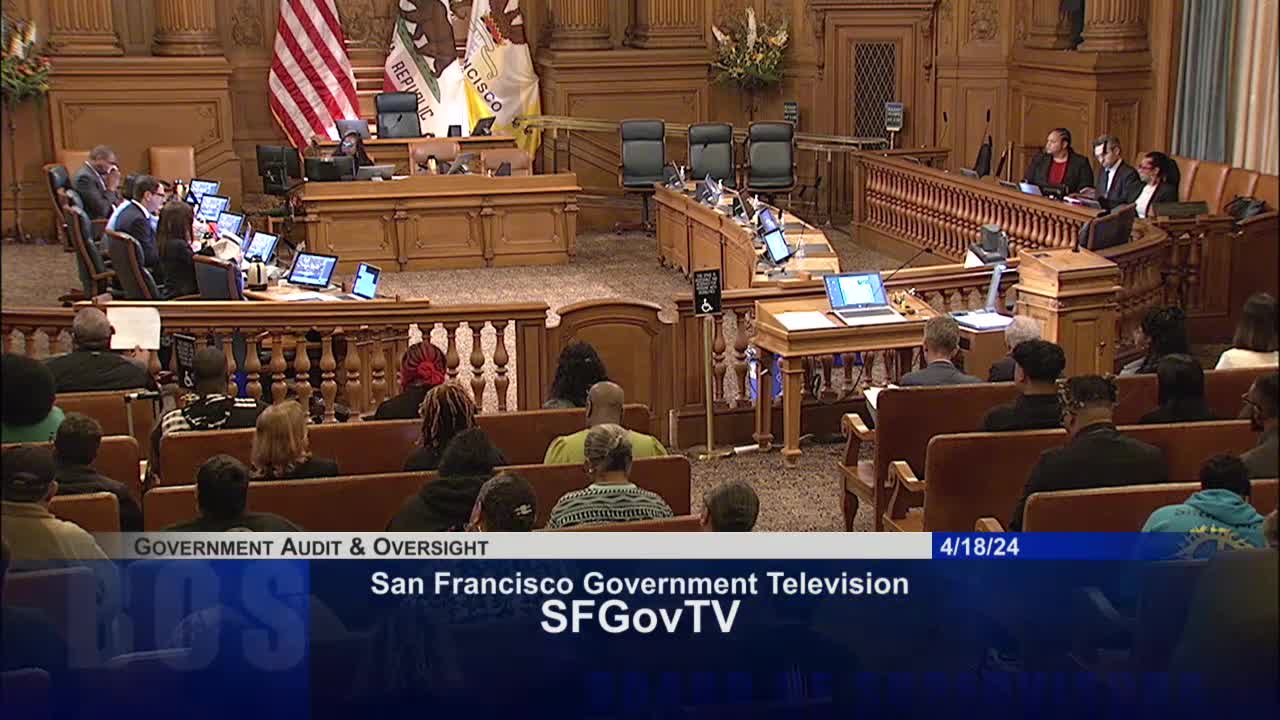
San Francisco supervisors and city officials on April 18 heard detailed reports on the Dream Keeper initiativethe Human Rights Commission-led effort to invest in programs for Black San Franciscansand dozens of community leaders described the program's impacts.
Supervisor Shamone Walton opened the hearing by framing Dream Keeper as a community-led reinvestment intended to address racial disparities. '2021 marked the program's launch, and the initiative now directs grantmaking across youth development, housing, arts, workforce and culturally tailored health services,
Walton said.
Dr. Cheryl Evans Davis, executive director of the Human Rights Commission, told the committee the initiative emphasizes transparency and local leadership. She said the commission has a public data dashboard, monthly interdepartmental coordination and external evaluation work begun in 2023 to document outcomes.
Samuel Thomas, the commission's chief financial officer, provided a fiscal summary: the city appropriated $60 million per year beginning in FY22, totaling roughly $180 million across three years; HRC reported more than $107 million expended and another $33 million encumbered, leaving approximately $24 million available for current budget discussions. Thomas described major categories of spending: homeowner assistance, grants for basic needs, mini-grants and entrepreneurial supports.
Dan Adams, director of the Mayor's Office of Housing & Community Development, highlighted Dream Keeper-supported homeownership work. He said DKI-funded down-payment assistance helped 52 families purchase homes and that hundreds more were engaged in homebuying counseling.
Community presenters gave specific examples of local impact. Rashad Best of Curry Senior Center showed a book project capturing seniors' life stories; HOPESF youth leaders described youth stipends, funded internships and small grants; the Samoan Community Development Center and other grantees recounted summer youth programs, mental-health and cultural initiatives.
Dozens of public commenters from neighborhood-based organizations, arts groups, workforce programs and faith leaders urged supervisors to maintain or increase Dream Keeper funding. Speakers credited the initiative with creating capacity-building, launching small nonprofits into city contracting and providing direct aid that participants called life-changing.
Several supervisors thanked presenters and members of the public. The committee moved to continue the item to the call of the chair for any follow-up; supervisors said they expected additional financial and accountability information ahead of budget negotiations.
What happens next: Supervisors asked HRC and partner departments to provide follow-up data and to be ready to show how remaining funds would be prioritized as the city prepares its proposed budget.
Supervisor Shamone Walton opened the hearing by framing Dream Keeper as a community-led reinvestment intended to address racial disparities. '2021 marked the program's launch, and the initiative now directs grantmaking across youth development, housing, arts, workforce and culturally tailored health services,
Walton said.
Dr. Cheryl Evans Davis, executive director of the Human Rights Commission, told the committee the initiative emphasizes transparency and local leadership. She said the commission has a public data dashboard, monthly interdepartmental coordination and external evaluation work begun in 2023 to document outcomes.
Samuel Thomas, the commission's chief financial officer, provided a fiscal summary: the city appropriated $60 million per year beginning in FY22, totaling roughly $180 million across three years; HRC reported more than $107 million expended and another $33 million encumbered, leaving approximately $24 million available for current budget discussions. Thomas described major categories of spending: homeowner assistance, grants for basic needs, mini-grants and entrepreneurial supports.
Dan Adams, director of the Mayor's Office of Housing & Community Development, highlighted Dream Keeper-supported homeownership work. He said DKI-funded down-payment assistance helped 52 families purchase homes and that hundreds more were engaged in homebuying counseling.
Community presenters gave specific examples of local impact. Rashad Best of Curry Senior Center showed a book project capturing seniors' life stories; HOPESF youth leaders described youth stipends, funded internships and small grants; the Samoan Community Development Center and other grantees recounted summer youth programs, mental-health and cultural initiatives.
Dozens of public commenters from neighborhood-based organizations, arts groups, workforce programs and faith leaders urged supervisors to maintain or increase Dream Keeper funding. Speakers credited the initiative with creating capacity-building, launching small nonprofits into city contracting and providing direct aid that participants called life-changing.
Several supervisors thanked presenters and members of the public. The committee moved to continue the item to the call of the chair for any follow-up; supervisors said they expected additional financial and accountability information ahead of budget negotiations.
What happens next: Supervisors asked HRC and partner departments to provide follow-up data and to be ready to show how remaining funds would be prioritized as the city prepares its proposed budget.
View the Full Meeting & All Its Details
This article offers just a summary. Unlock complete video, transcripts, and insights as a Founder Member.
✓
Watch full, unedited meeting videos
✓
Search every word spoken in unlimited transcripts
✓
AI summaries & real-time alerts (all government levels)
✓
Permanent access to expanding government content
30-day money-back guarantee
