Housing Authority outlines why HUD-required outsourcing led to contractor dispute; supervisors seek procurement review
April 18, 2024 | San Francisco County, California
This article was created by AI summarizing key points discussed. AI makes mistakes, so for full details and context, please refer to the video of the full meeting. Please report any errors so we can fix them. Report an error »
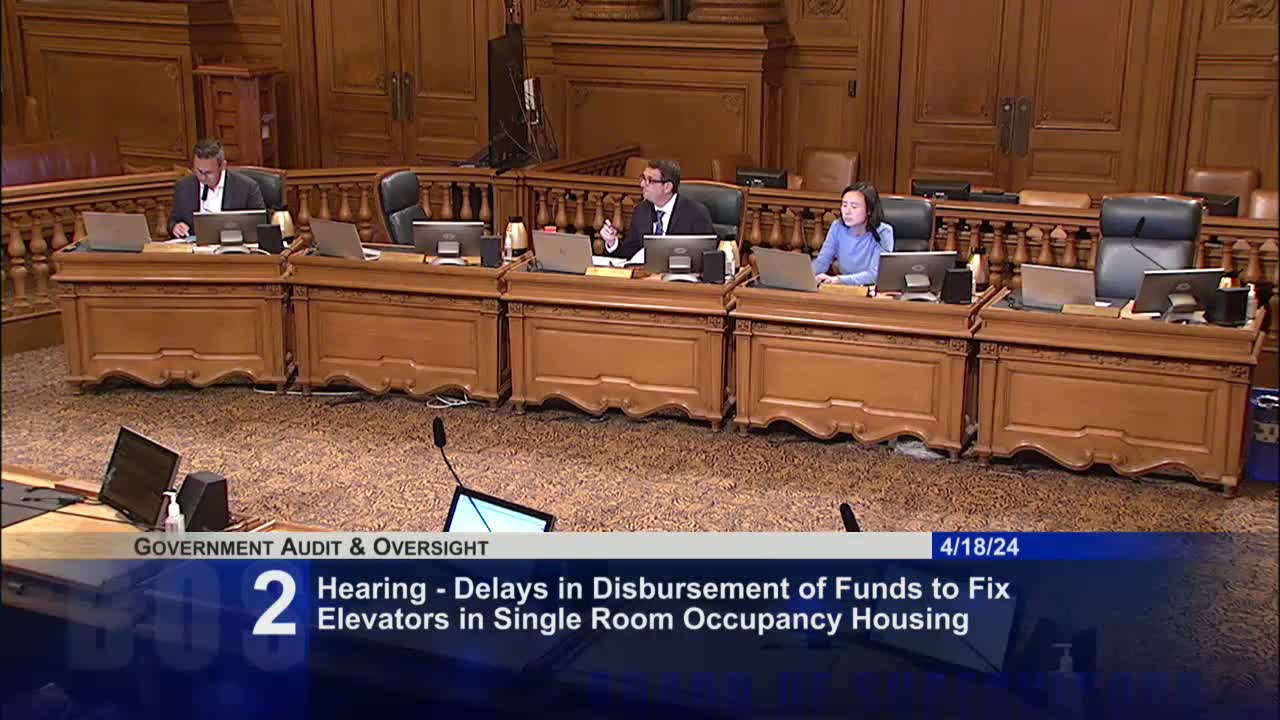
San Francisco's Housing Authority told supervisors on April 18 that a HUD mandate forced the agency to outsource administration of its Housing Choice Voucher (HCV) program after officials identified a multi-million-dollar shortfall and accounting deficiencies in 2019.
Director Tanya Ledoux described the sequence that led to the outsourcing directive: HUD found incomplete and inaccurate HCV accounting and required corrective oversight; the agency agreed to a structured arrangement, secured city oversight, and issued a competitive RFP that resulted in a contract with a vendor. Ledoux said the authority later identified contractor performance issues and filed litigation seeking damages; she declined to discuss details of the pending case in public.
Under new arrangements, the authority has split the HCV work into two contracts (tenant-based and project-based voucher administration) to reduce single-contractor concentration and improve continuity. Ledoux said the authority rewrote contracts to be metric-based and strengthened accounting controls; she asserted the authority has kept subsidy payments current and used reserves where necessary to protect housing payments.
Supervisors probed the vendor-selection process and whether procurement rules allowed the agency to vet a prospective vendor's track record with other housing authorities. Ledoux said procurement panels evaluate proposals based on submitted documentation and that HUD procurement offices were involved in the process; she agreed to follow up with more detail about vetting steps and contract-review procedures.
Public commenters from tenant groups thanked the Authority for stabilizing operations but urged clearer, easier lines of service for residents who need direct help. The committee continued the matter to receive supplemental procurement information and to monitor HCV administration as the Authority expands voucher placements.
Why it matters: The HCV program serves thousands of households, and administrative failures can translate into lost subsidy dollars or interrupted payments for vulnerable tenants. Supervisors requested additional procurement transparency to reduce the risk of future contractor failures.
Director Tanya Ledoux described the sequence that led to the outsourcing directive: HUD found incomplete and inaccurate HCV accounting and required corrective oversight; the agency agreed to a structured arrangement, secured city oversight, and issued a competitive RFP that resulted in a contract with a vendor. Ledoux said the authority later identified contractor performance issues and filed litigation seeking damages; she declined to discuss details of the pending case in public.
Under new arrangements, the authority has split the HCV work into two contracts (tenant-based and project-based voucher administration) to reduce single-contractor concentration and improve continuity. Ledoux said the authority rewrote contracts to be metric-based and strengthened accounting controls; she asserted the authority has kept subsidy payments current and used reserves where necessary to protect housing payments.
Supervisors probed the vendor-selection process and whether procurement rules allowed the agency to vet a prospective vendor's track record with other housing authorities. Ledoux said procurement panels evaluate proposals based on submitted documentation and that HUD procurement offices were involved in the process; she agreed to follow up with more detail about vetting steps and contract-review procedures.
Public commenters from tenant groups thanked the Authority for stabilizing operations but urged clearer, easier lines of service for residents who need direct help. The committee continued the matter to receive supplemental procurement information and to monitor HCV administration as the Authority expands voucher placements.
Why it matters: The HCV program serves thousands of households, and administrative failures can translate into lost subsidy dollars or interrupted payments for vulnerable tenants. Supervisors requested additional procurement transparency to reduce the risk of future contractor failures.
Don't Miss a Word: See the Full Meeting!
Go beyond summaries. Unlock every video, transcript, and key insight with a Founder Membership.
✓
Get instant access to full meeting videos
✓
Search and clip any phrase from complete transcripts
✓
Receive AI-powered summaries & custom alerts
✓
Enjoy lifetime, unrestricted access to government data
30-day money-back guarantee
