Committee approves annual reports for Noe Valley, Castro and Discover Polk CBDs; OEWD finds mostly compliant practices
April 04, 2024 | San Francisco County, California
This article was created by AI summarizing key points discussed. AI makes mistakes, so for full details and context, please refer to the video of the full meeting. Please report any errors so we can fix them. Report an error »
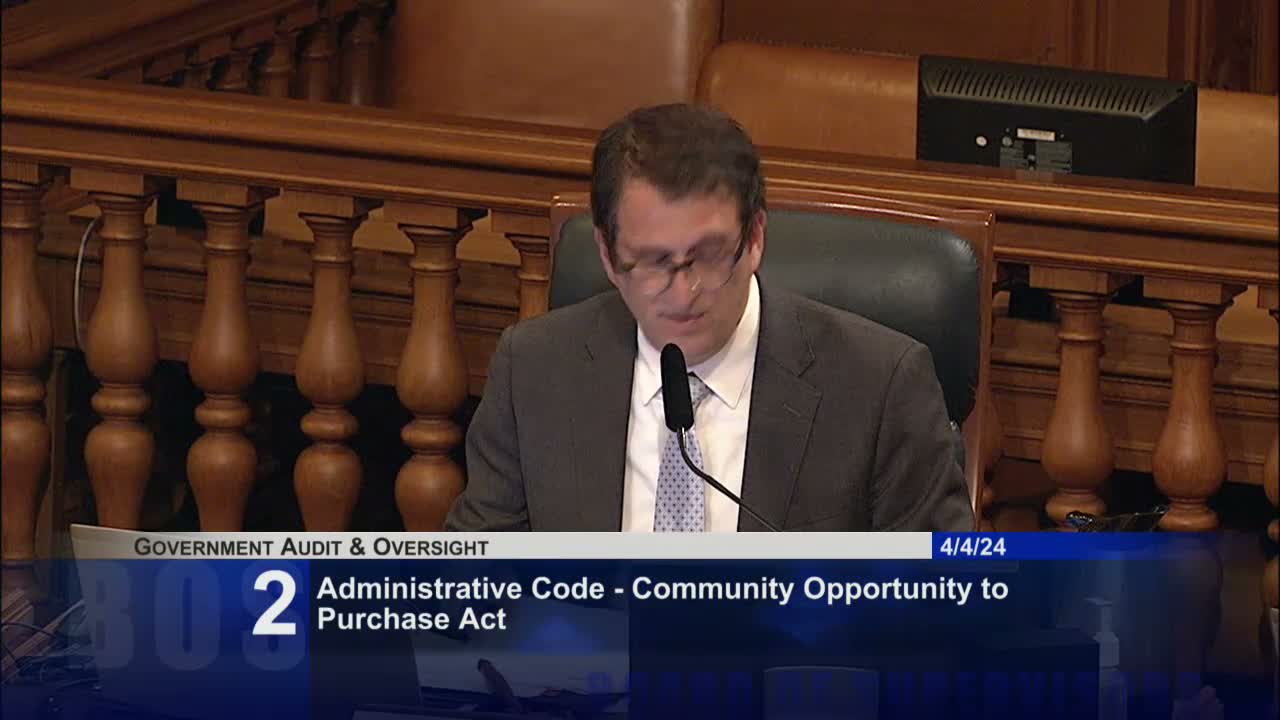
San Francisco — The Government Audit & Oversight Committee on April 4 reviewed and forwarded annual reports for three Community Benefit Districts (CBDs): Noe Valley, Castro and Discover Polk, covering fiscal year 2021–22.
Jackie Hazelwood of the Office of Economic and Workforce Development (OEWD) summarized OEWD's benchmarking analysis. OEWD uses four budget and reporting benchmarks: (1) current budget compared with the management-plan budget; (2) confirmation of non‑assessment revenue obligations; (3) comparison of current-year budget to actuals; and (4) whether carry-forward (designated) projects are documented in the annual report.
OEWD reported Noe Valley met benchmarks 1–3 but did not include its carry-forward designation in the FY21–22 report (the carry-forward amount was later included in FY22–23). Deborah Neiman, executive director of the Noe Valley Association, described the CBD's cleaning, parklet and grant activities and confirmed the carry-forward exists and was reported in the subsequent annual report.
The Castro CBD met all four benchmarks, Hazelwood said. Andrea Aiello, Castro's executive director, described zoning-based assessment rates, the Castro Cares ambassador outreach program and beautification and vacancy‑reduction initiatives; she reported the district removed 109,260 pounds of trash and recorded 11,845 incidents of human feces cleaned during the reporting period.
Discover Polk met benchmarks 1, 2 and 4 and missed benchmark 3, overbudgeting by about 3.17% in one administrative category. Ben Blyman, co‑executive director, said the board intentionally held spending early in the fiscal year during COVID uncertainty and has since spent down reserves and resumed programming (including a local music festival).
The committee asked clarifying questions about dispatch procedures and the benchmarks; OEWD and the CBD directors answered. Chair Preston moved to forward the three items to the full Board with positive recommendation; the motion passed unanimously (3–0).
Jackie Hazelwood of the Office of Economic and Workforce Development (OEWD) summarized OEWD's benchmarking analysis. OEWD uses four budget and reporting benchmarks: (1) current budget compared with the management-plan budget; (2) confirmation of non‑assessment revenue obligations; (3) comparison of current-year budget to actuals; and (4) whether carry-forward (designated) projects are documented in the annual report.
OEWD reported Noe Valley met benchmarks 1–3 but did not include its carry-forward designation in the FY21–22 report (the carry-forward amount was later included in FY22–23). Deborah Neiman, executive director of the Noe Valley Association, described the CBD's cleaning, parklet and grant activities and confirmed the carry-forward exists and was reported in the subsequent annual report.
The Castro CBD met all four benchmarks, Hazelwood said. Andrea Aiello, Castro's executive director, described zoning-based assessment rates, the Castro Cares ambassador outreach program and beautification and vacancy‑reduction initiatives; she reported the district removed 109,260 pounds of trash and recorded 11,845 incidents of human feces cleaned during the reporting period.
Discover Polk met benchmarks 1, 2 and 4 and missed benchmark 3, overbudgeting by about 3.17% in one administrative category. Ben Blyman, co‑executive director, said the board intentionally held spending early in the fiscal year during COVID uncertainty and has since spent down reserves and resumed programming (including a local music festival).
The committee asked clarifying questions about dispatch procedures and the benchmarks; OEWD and the CBD directors answered. Chair Preston moved to forward the three items to the full Board with positive recommendation; the motion passed unanimously (3–0).
View the Full Meeting & All Its Details
This article offers just a summary. Unlock complete video, transcripts, and insights as a Founder Member.
✓
Watch full, unedited meeting videos
✓
Search every word spoken in unlimited transcripts
✓
AI summaries & real-time alerts (all government levels)
✓
Permanent access to expanding government content
30-day money-back guarantee
