Supervisors press DPH on chronic shortfalls at San Francisco General as nurses testify to unsafe conditions
March 23, 2022 | San Francisco County, California
This article was created by AI summarizing key points discussed. AI makes mistakes, so for full details and context, please refer to the video of the full meeting. Please report any errors so we can fix them. Report an error »
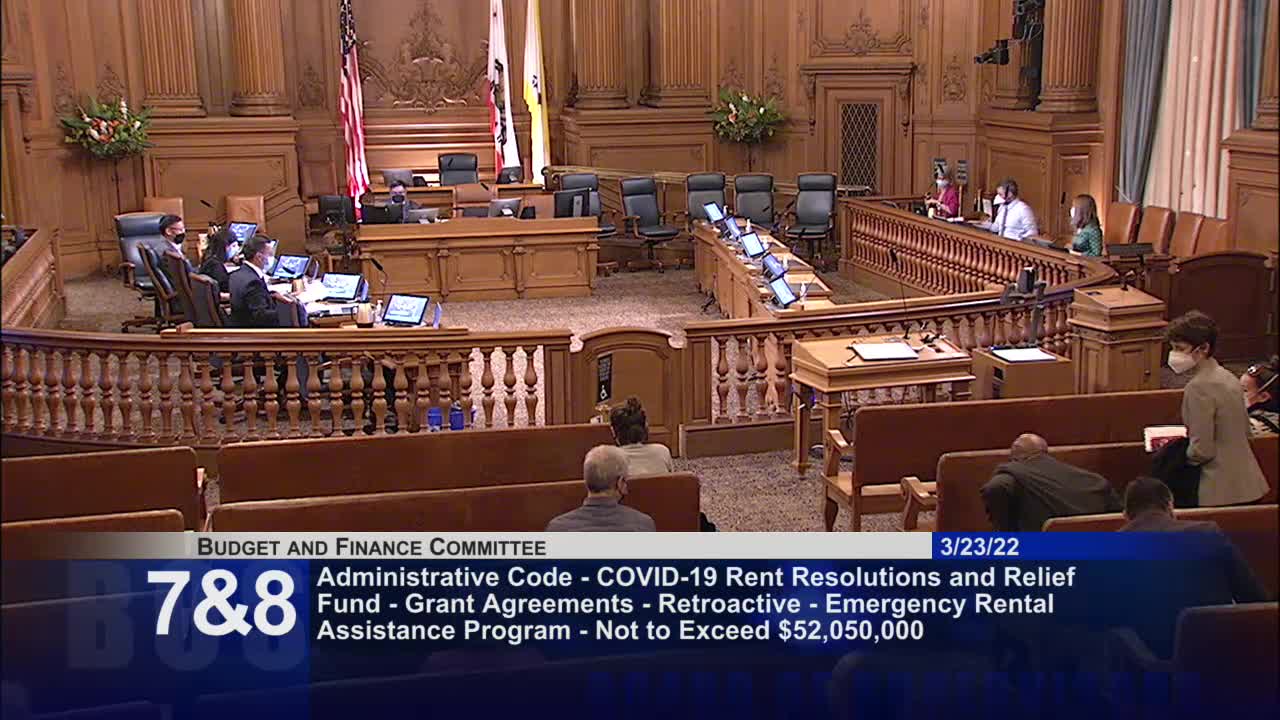
The Budget & Finance Committee on March 23 held an extended hearing on staffing shortages at Zuckerberg San Francisco General Hospital (SFGH), hearing testimony from hospital leadership, SEIU 1021 and scores of frontline nurses describing persistent understaffing, increased reliance on per‑diem and registry nurses, long hiring times and workplace safety concerns.
DPH and SFGH leadership (CEO Dr. Susan Ehrlich and HR staff) said the hospital has about 984.1 RN position authorities with roughly a 8.2% vacancy rate, but noted that leaves and sick time (reported in testimony as much higher than pre‑pandemic norms) can raise effective shortfalls substantially. DPH described hiring reforms—regular onboarding events, periodic recruitment notices to per‑diems, and training programs to convert new hires into specialty roles—while acknowledging recent pandemic pressures that reduced training throughput.
Union and nurse testimony challenged the underlying staffing assumptions. SEIU and chapter leaders said budgeted position authority understates real need: inpatient units, ICU and the emergency department routinely operate above the staffing levels the department budgets for, forcing reliance on high‑cost temp staff and per‑diems (the union cited per‑diem spending growth citywide). Nurses described repeated shifts with no breaks, patients boarded in the ED because inpatient units are closed for lack of staff, frequent assaults on staff, and the emotional toll of repeated unsafe shifts. The union asked supervisors to act on three fronts: fix the hiring and onboarding pipeline, convert temporary/registry staff into permanent civil‑service positions at scale, and re‑budget services to reflect actual patient volumes.
DPH and HR staff (Karen Hill) said the department has sent multiple notices to per‑diem and traveler RNs inviting permanent conversion; the most recent outreach generated hundreds of expressions of interest with dozens of formal applications under vetting. DPH said it builds nonproductive time assumptions (~22%) into staffing models but that pandemic-era sick leave and other absences have exceeded those assumptions. DPH committed to supplying written follow‑up to committee questions, including detailed vacancy and hiring timelines, and the committee voted to continue the hearing to the call of the chair for follow‑up during the budget process.
What happens next: Supervisors flagged the hospitals’ upcoming budget as a forum to prioritize permanent hiring and to shift spending away from temporary registry/per‑diem and overtime toward stable civil service positions. DPH agreed to provide documented vacancy and budgeted‑position assumptions and to work with unions on conversion strategies.
DPH and SFGH leadership (CEO Dr. Susan Ehrlich and HR staff) said the hospital has about 984.1 RN position authorities with roughly a 8.2% vacancy rate, but noted that leaves and sick time (reported in testimony as much higher than pre‑pandemic norms) can raise effective shortfalls substantially. DPH described hiring reforms—regular onboarding events, periodic recruitment notices to per‑diems, and training programs to convert new hires into specialty roles—while acknowledging recent pandemic pressures that reduced training throughput.
Union and nurse testimony challenged the underlying staffing assumptions. SEIU and chapter leaders said budgeted position authority understates real need: inpatient units, ICU and the emergency department routinely operate above the staffing levels the department budgets for, forcing reliance on high‑cost temp staff and per‑diems (the union cited per‑diem spending growth citywide). Nurses described repeated shifts with no breaks, patients boarded in the ED because inpatient units are closed for lack of staff, frequent assaults on staff, and the emotional toll of repeated unsafe shifts. The union asked supervisors to act on three fronts: fix the hiring and onboarding pipeline, convert temporary/registry staff into permanent civil‑service positions at scale, and re‑budget services to reflect actual patient volumes.
DPH and HR staff (Karen Hill) said the department has sent multiple notices to per‑diem and traveler RNs inviting permanent conversion; the most recent outreach generated hundreds of expressions of interest with dozens of formal applications under vetting. DPH said it builds nonproductive time assumptions (~22%) into staffing models but that pandemic-era sick leave and other absences have exceeded those assumptions. DPH committed to supplying written follow‑up to committee questions, including detailed vacancy and hiring timelines, and the committee voted to continue the hearing to the call of the chair for follow‑up during the budget process.
What happens next: Supervisors flagged the hospitals’ upcoming budget as a forum to prioritize permanent hiring and to shift spending away from temporary registry/per‑diem and overtime toward stable civil service positions. DPH agreed to provide documented vacancy and budgeted‑position assumptions and to work with unions on conversion strategies.
Don't Miss a Word: See the Full Meeting!
Go beyond summaries. Unlock every video, transcript, and key insight with a Founder Membership.
✓
Get instant access to full meeting videos
✓
Search and clip any phrase from complete transcripts
✓
Receive AI-powered summaries & custom alerts
✓
Enjoy lifetime, unrestricted access to government data
30-day money-back guarantee
