Supervisors hear workers’ accounts of intimidation at Felton Institute; management reads statement but declines to take questions
October 26, 2022 | San Francisco County, California
This article was created by AI summarizing key points discussed. AI makes mistakes, so for full details and context, please refer to the video of the full meeting. Please report any errors so we can fix them. Report an error »
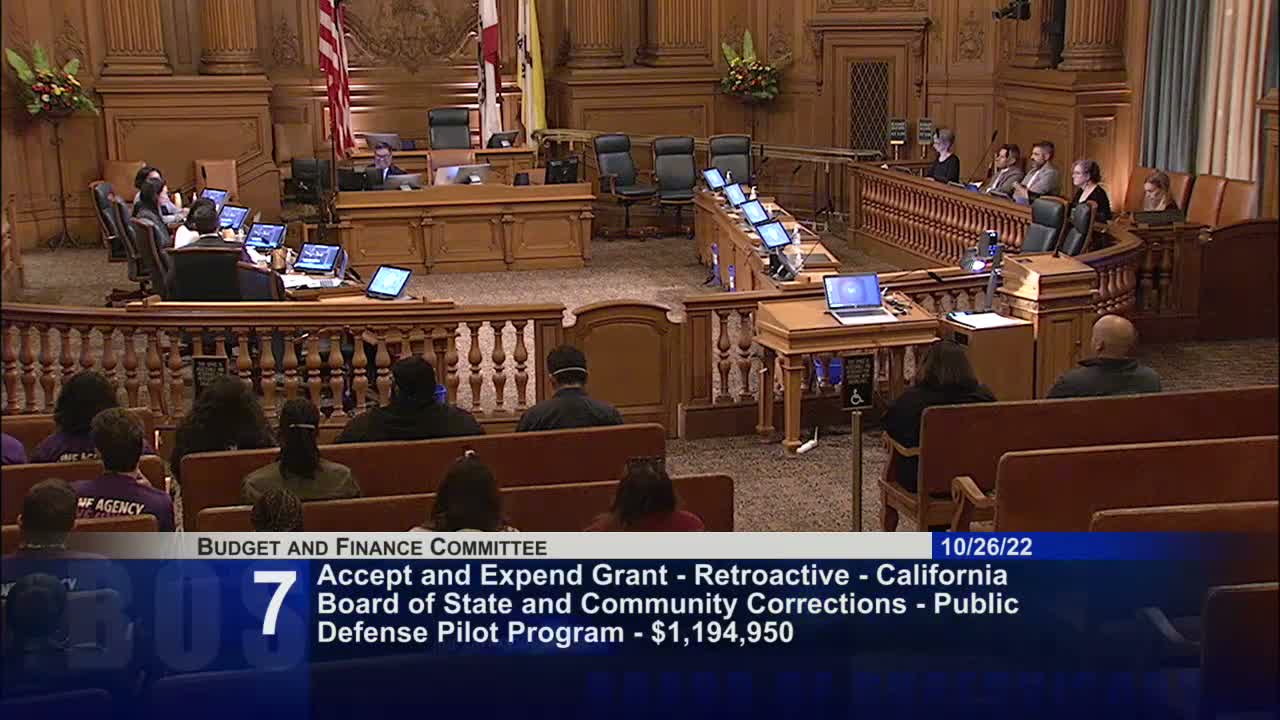
Supervisors of the San Francisco Board of Supervisors’ Budget & Finance Committee spent the bulk of their Oct. 26, 2022 meeting hearing testimony about labor disputes at the Felton Institute, a nonprofit that provides early care, mental health and social services and receives the majority of its funding from public sources.
SEIU Local 1021 organizers and more than a dozen current and former Felton employees testified that management engaged in anti‑union tactics, including surveilling organizers, calling police on peaceful rallies, disciplining or threatening employees who supported unionization and withholding voter‑approved Prop C wage increases from unionized staff. “They have been met with bullying, harassment, and unfair labor practices,” SEIU organizer Brandon Dawkins told the committee. Hector Jimenez Cardenas, the union’s field representative at Felton’s Bryant Street site, said the employer implemented Prop C increases for non‑union staff but refused to apply the same increases to union members under the same organizational umbrella.
Felton’s director of communications, Sarah Richardson Baker, read a prepared statement to the committee and asserted the organization has been pro‑union for decades and has not engaged in the alleged misconduct. “We have not interrogated, coerced, questioned, surveilled, pressured, disciplined, terminated, or threatened to discipline any employee engaged in union organizing activities,” the statement said. When asked whether she would answer questions from supervisors, Baker said Felton would not answer questions at the hearing and instead would provide a longer packet to each supervisor afterward.
Workers and union representatives pressed supervisors for more immediate remedies because Felton receives substantial public funding. Supervisor Matt Haney? asked why management would decline to answer questions at a hearing where funding decisions are discussed. (Note: the transcript used first‑name references for some supervisors; the chair was Supervisor Hilary Ronan.) Supervisor Matt Haney? and Supervisor Matt Melgar said they were disappointed by the management decision not to engage in Q&A and that it undercut the committee’s ability to get to the facts.
Many current Felton staff, speaking during the public comment period, described specific incidents: a teacher said a manager asked her to remove a union shirt and followed her in a building; others said management had called police on union activities; several said Prop C increases were applied to non‑union staff while union members reported being denied the same pay. One staffer asked the supervisors to require Felton to pay retroactive Prop C wages to affected workers.
Union representatives said they had filed multiple unfair labor practice charges with the National Labor Relations Board and urged supervisors to investigate whether public funds were being used to support anti‑union activities. SEIU political director James Chong told the committee he believed the union had the numbers to win a representation vote, and that Felton’s actions were blocking that process.
Felton management said it has increased wages agency‑wide over the past five years and that retroactive adjustments for union staff would follow once negotiations conclude. Baker also said the organization would prepare a more detailed packet for supervisors.
After extended testimony from union organizers, multiple current and former employees, labor leaders and community supporters, Supervisor Chan moved to continue the hearing to the call of the chair so the committee could gather additional materials, including the unfair labor practice filings and a review of contracts and funding. The motion passed unanimously. Committee members directed staff to request documentation from the city attorney and controller about Felton’s contracts and whether any public funds are tied to neutrality or other labor‑harmony obligations.
The committee’s continuation means the supervisors will receive additional written materials and may schedule follow‑up hearings or require contract or funding conditions before future disbursements.
SEIU Local 1021 organizers and more than a dozen current and former Felton employees testified that management engaged in anti‑union tactics, including surveilling organizers, calling police on peaceful rallies, disciplining or threatening employees who supported unionization and withholding voter‑approved Prop C wage increases from unionized staff. “They have been met with bullying, harassment, and unfair labor practices,” SEIU organizer Brandon Dawkins told the committee. Hector Jimenez Cardenas, the union’s field representative at Felton’s Bryant Street site, said the employer implemented Prop C increases for non‑union staff but refused to apply the same increases to union members under the same organizational umbrella.
Felton’s director of communications, Sarah Richardson Baker, read a prepared statement to the committee and asserted the organization has been pro‑union for decades and has not engaged in the alleged misconduct. “We have not interrogated, coerced, questioned, surveilled, pressured, disciplined, terminated, or threatened to discipline any employee engaged in union organizing activities,” the statement said. When asked whether she would answer questions from supervisors, Baker said Felton would not answer questions at the hearing and instead would provide a longer packet to each supervisor afterward.
Workers and union representatives pressed supervisors for more immediate remedies because Felton receives substantial public funding. Supervisor Matt Haney? asked why management would decline to answer questions at a hearing where funding decisions are discussed. (Note: the transcript used first‑name references for some supervisors; the chair was Supervisor Hilary Ronan.) Supervisor Matt Haney? and Supervisor Matt Melgar said they were disappointed by the management decision not to engage in Q&A and that it undercut the committee’s ability to get to the facts.
Many current Felton staff, speaking during the public comment period, described specific incidents: a teacher said a manager asked her to remove a union shirt and followed her in a building; others said management had called police on union activities; several said Prop C increases were applied to non‑union staff while union members reported being denied the same pay. One staffer asked the supervisors to require Felton to pay retroactive Prop C wages to affected workers.
Union representatives said they had filed multiple unfair labor practice charges with the National Labor Relations Board and urged supervisors to investigate whether public funds were being used to support anti‑union activities. SEIU political director James Chong told the committee he believed the union had the numbers to win a representation vote, and that Felton’s actions were blocking that process.
Felton management said it has increased wages agency‑wide over the past five years and that retroactive adjustments for union staff would follow once negotiations conclude. Baker also said the organization would prepare a more detailed packet for supervisors.
After extended testimony from union organizers, multiple current and former employees, labor leaders and community supporters, Supervisor Chan moved to continue the hearing to the call of the chair so the committee could gather additional materials, including the unfair labor practice filings and a review of contracts and funding. The motion passed unanimously. Committee members directed staff to request documentation from the city attorney and controller about Felton’s contracts and whether any public funds are tied to neutrality or other labor‑harmony obligations.
The committee’s continuation means the supervisors will receive additional written materials and may schedule follow‑up hearings or require contract or funding conditions before future disbursements.
View the Full Meeting & All Its Details
This article offers just a summary. Unlock complete video, transcripts, and insights as a Founder Member.
✓
Watch full, unedited meeting videos
✓
Search every word spoken in unlimited transcripts
✓
AI summaries & real-time alerts (all government levels)
✓
Permanent access to expanding government content
30-day money-back guarantee
