Frontline nonprofit workers urge higher pay as supervisors weigh budget moves
June 08, 2022 | San Francisco County, California
This article was created by AI summarizing key points discussed. AI makes mistakes, so for full details and context, please refer to the video of the full meeting. Please report any errors so we can fix them. Report an error »
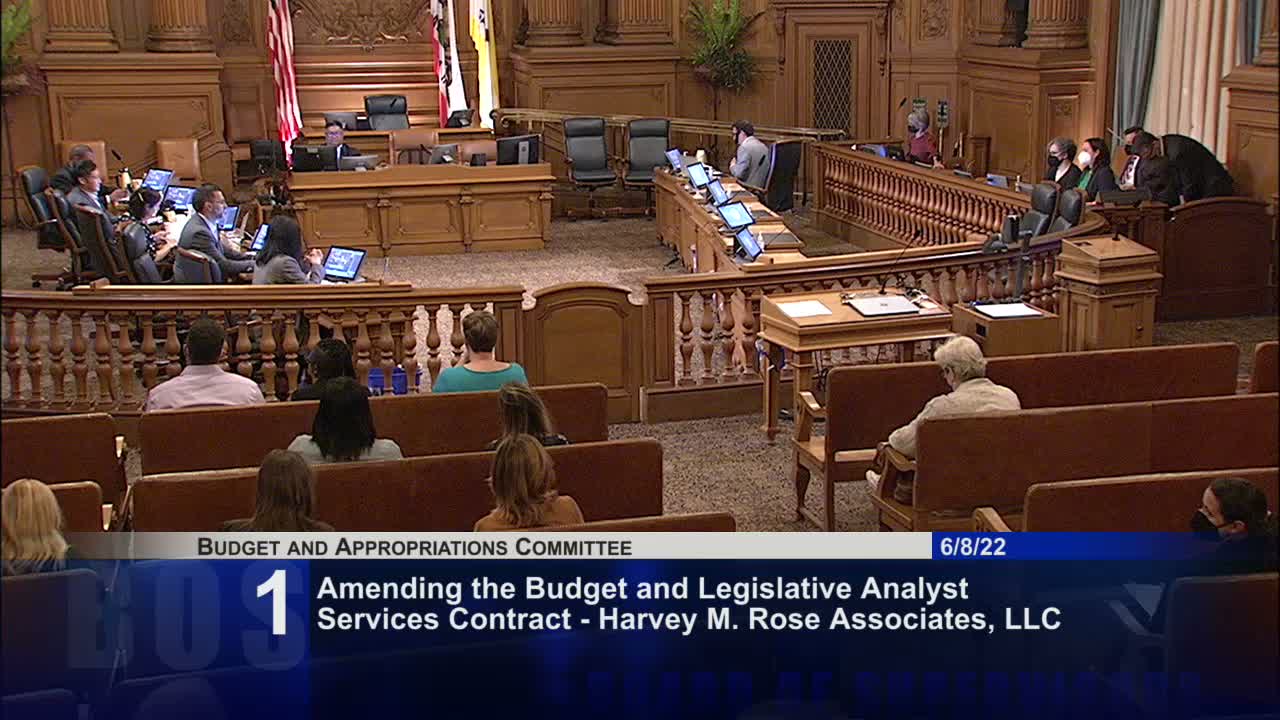
San Francisco supervisors heard stark accounts on Wednesday from nonprofit workers, service providers and city analysts about how low pay is destabilizing organizations that deliver homelessness, behavioral‑health and other social services.
Chair Hillary Ronan said nonprofits were “at the breaking point” and called for a public discussion before the budget process. The controller’s office, led by Laura Marshall, reported that the city contracts with nonprofits for roughly $1.2 billion in services and that funding and wage data in the sector are incomplete. Marshall urged a multi‑year, multi‑tiered strategy — including cost‑of‑doing‑business (CODB) increases above standard adjustments, targeted budget allocations for key service areas and improved multi‑year contracts — to address sustained wage pressure across a range of roles.
Department officials described operational constraints and possible approaches. Dr. Hillary Conins of the Department of Public Health said DPH contracts primarily on a fee‑for‑service basis and has renegotiated rates for some intensive services; she said CalAIM (Medi‑Cal reform) may change regional reimbursement and inform rate setting. Emily Cohen of the Department of Homelessness and Supportive Housing (HSH) said HSH funds about $300 million to roughly 65 nonprofit organizations and supports mayoral proposals that would set a $28‑per‑hour floor for certain permanent‑supportive‑housing case managers and provide separate funding for frontline property management staff.
Provider coalitions and nonprofit executives told the committee the sector needs both immediate and structural investments: a reliable CODB, wage floors for desk clerks, janitors and maintenance staff, and funding that applies across all contract sources. Coalition leaders described frontline job openings, long commutes, double and triple shifts, and the emotional toll of trauma exposure for workers who often are themselves low‑income or formerly unhoused.
Scores of workers gave two‑minute public comments alleging vacancies across organizations, chronic understaffing and safety concerns. Speakers urged a living‑wage approach that covers janitors, desk clerks, case managers and property managers rather than targeted, one‑time bonuses.
Supervisors pressed departments for concrete scenarios they could act on during the budget cycle. Departments said they would provide wage‑floor scenarios and noted operational constraints that can delay implementation of CODB funds; multiple speakers warned that late allocations mean nonprofits may not receive wage adjustments in time to hire for July starts.
The committee voted to file the hearing record and signaled it would continue the issue during upcoming budget deliberations; no final funding decisions were made at the hearing.
Chair Hillary Ronan said nonprofits were “at the breaking point” and called for a public discussion before the budget process. The controller’s office, led by Laura Marshall, reported that the city contracts with nonprofits for roughly $1.2 billion in services and that funding and wage data in the sector are incomplete. Marshall urged a multi‑year, multi‑tiered strategy — including cost‑of‑doing‑business (CODB) increases above standard adjustments, targeted budget allocations for key service areas and improved multi‑year contracts — to address sustained wage pressure across a range of roles.
Department officials described operational constraints and possible approaches. Dr. Hillary Conins of the Department of Public Health said DPH contracts primarily on a fee‑for‑service basis and has renegotiated rates for some intensive services; she said CalAIM (Medi‑Cal reform) may change regional reimbursement and inform rate setting. Emily Cohen of the Department of Homelessness and Supportive Housing (HSH) said HSH funds about $300 million to roughly 65 nonprofit organizations and supports mayoral proposals that would set a $28‑per‑hour floor for certain permanent‑supportive‑housing case managers and provide separate funding for frontline property management staff.
Provider coalitions and nonprofit executives told the committee the sector needs both immediate and structural investments: a reliable CODB, wage floors for desk clerks, janitors and maintenance staff, and funding that applies across all contract sources. Coalition leaders described frontline job openings, long commutes, double and triple shifts, and the emotional toll of trauma exposure for workers who often are themselves low‑income or formerly unhoused.
Scores of workers gave two‑minute public comments alleging vacancies across organizations, chronic understaffing and safety concerns. Speakers urged a living‑wage approach that covers janitors, desk clerks, case managers and property managers rather than targeted, one‑time bonuses.
Supervisors pressed departments for concrete scenarios they could act on during the budget cycle. Departments said they would provide wage‑floor scenarios and noted operational constraints that can delay implementation of CODB funds; multiple speakers warned that late allocations mean nonprofits may not receive wage adjustments in time to hire for July starts.
The committee voted to file the hearing record and signaled it would continue the issue during upcoming budget deliberations; no final funding decisions were made at the hearing.
View the Full Meeting & All Its Details
This article offers just a summary. Unlock complete video, transcripts, and insights as a Founder Member.
✓
Watch full, unedited meeting videos
✓
Search every word spoken in unlimited transcripts
✓
AI summaries & real-time alerts (all government levels)
✓
Permanent access to expanding government content
30-day money-back guarantee
