San Francisco supervisors press SFPD over staffing, response times and a $50M budget rise
June 17, 2022 | San Francisco County, California
This article was created by AI summarizing key points discussed. AI makes mistakes, so for full details and context, please refer to the video of the full meeting. Please report any errors so we can fix them. Report an error »
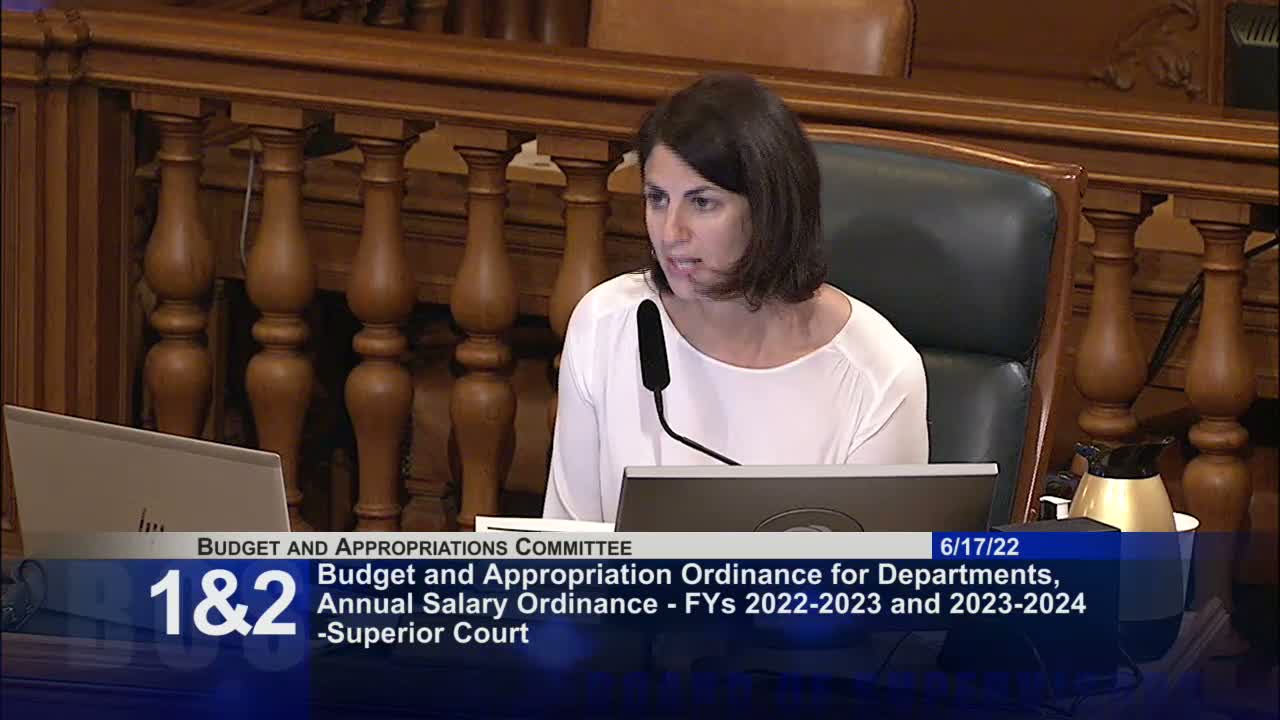
Chief Scott asked the Board of Supervisors’ Budget and Appropriations Committee on June 17 to preserve and restore police staffing, saying the department is operating well below the level recommended by its staffing analysis and is reliant on overtime to cover shifts.
The chief told supervisors the department is short roughly 486 sworn positions and that response times have worsened, with priority‑A calls exceeding the 8‑minute target and now averaging about nine minutes. He said the department plans smaller, more frequent academy classes and a larger recruitment push — including a request for a recruitment firm and technology to track applicants — to reduce the long run attrition and a statewide “washout” rate that he said runs near 25 percent.
Supervisors pressed the chief on several fronts: whether the city actually needs more officers per capita compared with other large California cities, how officers are being deployed across neighborhoods such as the Tenderloin and Bayview, and why some units such as airport‑assigned officers appear abundant. President Walton and other supervisors said violent crime and overdoses in concentrated areas demand more targeted resources; others pointed to data showing relatively flat or declining violent‑crime trends over the last decade and urged a stronger focus on deployment and alternative responses.
Budget staff and SFPD officials said the proposed increase is driven mostly by personnel costs tied to labor agreements and deferred raises. Police presented a plan that would add professional staff, increase academy throughput and fund technology and overtime changes; the Budget Office said it adjusted overtime assumptions in the mayor’s proposal to reflect recent spending and the department’s hired targets.
Supervisors also raised questions about transparency and accountability: the need to process records under state laws such as SB 1421 and to show measurable progress on racial disparities in stops and use of force before baseline police funding is expanded. Several supervisors urged holding portions of new funding in reserve until the department could demonstrate measurable progress on those reforms.
The committee exchanged detailed budget math with police officials, including a discussion of academy costs, the department’s proposal to run smaller classes of roughly 30 recruits (with an assumed graduation of about 25), and whether larger, less frequent classes might save money. Police leaders said labor market conditions mean recruits do not wait months for a single large class; smaller, timely classes reduce the risk that candidates accept other offers.
The hearing ended without a committee vote on SFPD’s full request; supervisors signaled continued scrutiny and asked for follow‑up data on deployments, vacant positions by station and proposals to civilianize non‑core functions.
The chief told supervisors the department is short roughly 486 sworn positions and that response times have worsened, with priority‑A calls exceeding the 8‑minute target and now averaging about nine minutes. He said the department plans smaller, more frequent academy classes and a larger recruitment push — including a request for a recruitment firm and technology to track applicants — to reduce the long run attrition and a statewide “washout” rate that he said runs near 25 percent.
Supervisors pressed the chief on several fronts: whether the city actually needs more officers per capita compared with other large California cities, how officers are being deployed across neighborhoods such as the Tenderloin and Bayview, and why some units such as airport‑assigned officers appear abundant. President Walton and other supervisors said violent crime and overdoses in concentrated areas demand more targeted resources; others pointed to data showing relatively flat or declining violent‑crime trends over the last decade and urged a stronger focus on deployment and alternative responses.
Budget staff and SFPD officials said the proposed increase is driven mostly by personnel costs tied to labor agreements and deferred raises. Police presented a plan that would add professional staff, increase academy throughput and fund technology and overtime changes; the Budget Office said it adjusted overtime assumptions in the mayor’s proposal to reflect recent spending and the department’s hired targets.
Supervisors also raised questions about transparency and accountability: the need to process records under state laws such as SB 1421 and to show measurable progress on racial disparities in stops and use of force before baseline police funding is expanded. Several supervisors urged holding portions of new funding in reserve until the department could demonstrate measurable progress on those reforms.
The committee exchanged detailed budget math with police officials, including a discussion of academy costs, the department’s proposal to run smaller classes of roughly 30 recruits (with an assumed graduation of about 25), and whether larger, less frequent classes might save money. Police leaders said labor market conditions mean recruits do not wait months for a single large class; smaller, timely classes reduce the risk that candidates accept other offers.
The hearing ended without a committee vote on SFPD’s full request; supervisors signaled continued scrutiny and asked for follow‑up data on deployments, vacant positions by station and proposals to civilianize non‑core functions.
Don't Miss a Word: See the Full Meeting!
Go beyond summaries. Unlock every video, transcript, and key insight with a Founder Membership.
✓
Get instant access to full meeting videos
✓
Search and clip any phrase from complete transcripts
✓
Receive AI-powered summaries & custom alerts
✓
Enjoy lifetime, unrestricted access to government data
30-day money-back guarantee
