Juvenile Probation officials warn of new state DJJ obligations and staffing shortfalls
June 17, 2022 | San Francisco County, California
This article was created by AI summarizing key points discussed. AI makes mistakes, so for full details and context, please refer to the video of the full meeting. Please report any errors so we can fix them. Report an error »
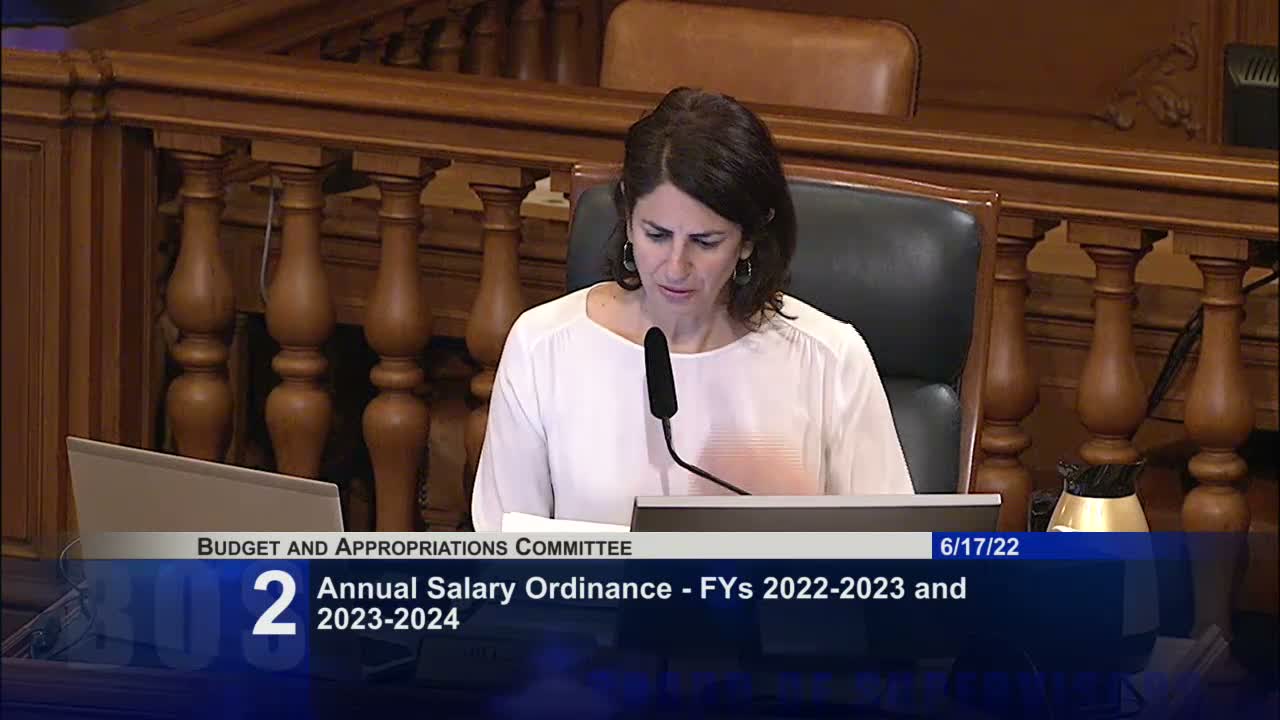
Juvenile Probation Director Katie Miller told the committee on June 17 that her department is still right‑sizing after years of FTE reductions and faces new duties tied to the state’s closure of the Division of Juvenile Justice (DJJ).
Miller said the department had 30 vacancies as of May and has eliminated 37 full‑time equivalents since fiscal 2018–19; she proposed an additional five eliminations in the coming year while converting several positions to better align with youth‑justice transformation needs. She described juvenile‑hall overtime as driven less by population and more by the number of units open at any time, medical stays that require continuous counselor coverage, and staff absences during training.
On DJJ realignment, Miller said legislation signed at the state level shifted responsibility for long‑term secure commitments to counties, which requires counties to develop secure‑youth‑treatment facilities or host commitments for other counties. For San Francisco, she said that has created a new obligation to staff and program long‑term secure custody and to plan an alternative facility; the JPD included a $500,000 capital design request to support facility planning.
Supervisors asked detailed follow‑ups: President Walton and others pressed on which budget lines drove year‑to‑year spikes (Miller cited $2.2M that flows to DCYF as a pass‑through), the timing of RFPs for justice‑reinvestment community programming, and whether positions proposed for conversion would require additional ongoing funding. Miller replied that much of the DJJ‑related money passes through the probation budget to DCYF for community programs and that the department will be consulting closely with the Budget & Legislative Analyst on potential alternatives and attrition savings.
The committee did not take a final vote on JPD budgets on June 17; supervisors asked staff for clarifying figures and the BLA’s recommendations ahead of upcoming hearings.
Miller said the department had 30 vacancies as of May and has eliminated 37 full‑time equivalents since fiscal 2018–19; she proposed an additional five eliminations in the coming year while converting several positions to better align with youth‑justice transformation needs. She described juvenile‑hall overtime as driven less by population and more by the number of units open at any time, medical stays that require continuous counselor coverage, and staff absences during training.
On DJJ realignment, Miller said legislation signed at the state level shifted responsibility for long‑term secure commitments to counties, which requires counties to develop secure‑youth‑treatment facilities or host commitments for other counties. For San Francisco, she said that has created a new obligation to staff and program long‑term secure custody and to plan an alternative facility; the JPD included a $500,000 capital design request to support facility planning.
Supervisors asked detailed follow‑ups: President Walton and others pressed on which budget lines drove year‑to‑year spikes (Miller cited $2.2M that flows to DCYF as a pass‑through), the timing of RFPs for justice‑reinvestment community programming, and whether positions proposed for conversion would require additional ongoing funding. Miller replied that much of the DJJ‑related money passes through the probation budget to DCYF for community programs and that the department will be consulting closely with the Budget & Legislative Analyst on potential alternatives and attrition savings.
The committee did not take a final vote on JPD budgets on June 17; supervisors asked staff for clarifying figures and the BLA’s recommendations ahead of upcoming hearings.
Don't Miss a Word: See the Full Meeting!
Go beyond summaries. Unlock every video, transcript, and key insight with a Founder Membership.
✓
Get instant access to full meeting videos
✓
Search and clip any phrase from complete transcripts
✓
Receive AI-powered summaries & custom alerts
✓
Enjoy lifetime, unrestricted access to government data
30-day money-back guarantee
