Intense public outcry as committee debates mayoral plan to reallocate Prop C funds to food and shelter
June 15, 2023 | San Francisco County, California
This article was created by AI summarizing key points discussed. AI makes mistakes, so for full details and context, please refer to the video of the full meeting. Please report any errors so we can fix them. Report an error »
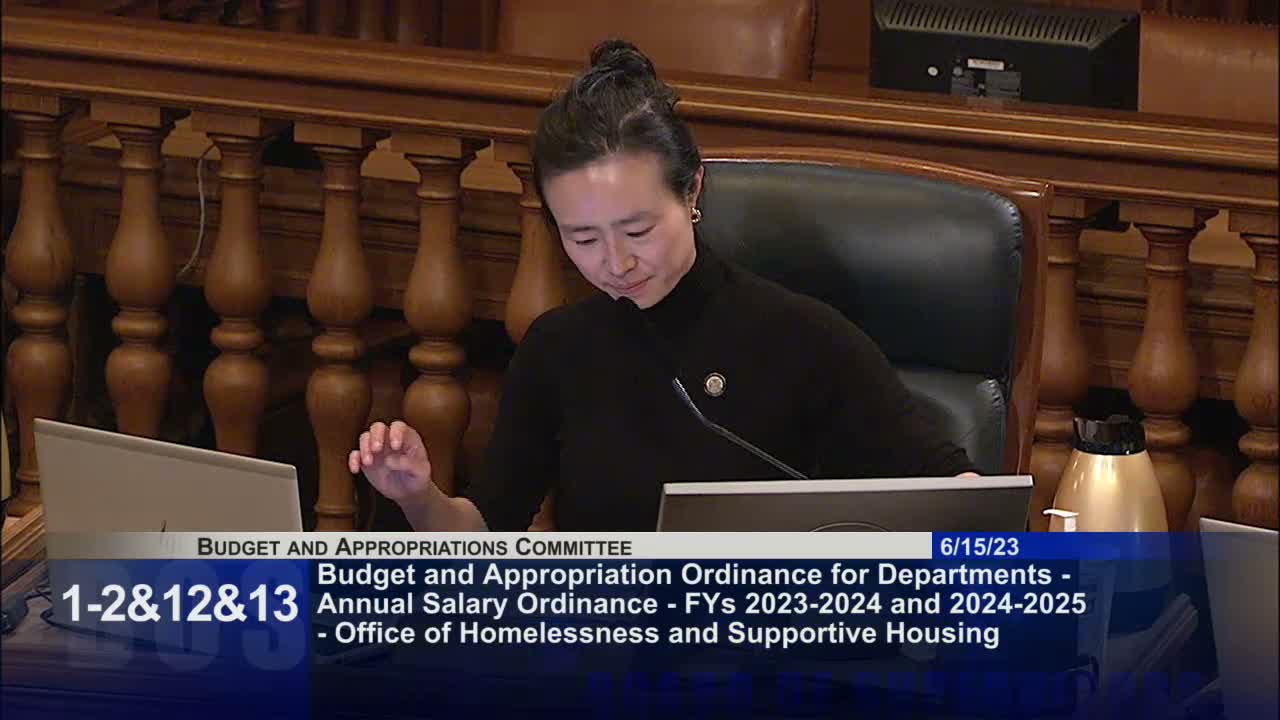
San Francisco’s Budget and Appropriations Committee spent much of its June 15 meeting on a contentious proposal to use unspent revenues from the city’s homelessness gross‑receipts tax — funds tied to recent ballot measures for children, youth and families — to pay for immediate food‑security and shelter needs.
The Department of Homelessness and Supportive Housing (HSH) told the committee it faces urgent shelter and housing demands and is proposing a two‑year reallocation of OCO/Baby Prop C balances to expand prevention, shelter and housing subsidies while state funding for youth and families moves through other channels. Executive Director Shereen McSpadden described the department’s $690 million budget and said the proposal would allow the city to add prevention slots and shelter beds immediately while continuing to build housing. “We can program one‑time fund balances to add prevention slots, expand shelter and move people faster into housing,” McSpadden said.
Child‑care advocates, providers and families turned up in force to oppose the plan. Dozens of speakers — many from family childcare and early‑education organizations — told supervisors Baby Prop C money was intended by San Francisco voters to seed a long‑term early‑childhood system. “This money belongs to children and families,” said Debbie Lerman of the Human Services Network. Jennifer Perlman of Safe & Sound said the measure represents a voter commitment and should not be repurposed through the budget process.
The Budget Legislative Analyst and controller’s economists also briefed the committee on the city’s fiscal picture and earlier debate over a related tax change for commercial subleases. Supervisors pressed HSH and mayoral staff for details about the size and timing of the unspent balances, how much could safely be repurposed without undermining the longer‑term childcare buildout, and how any reallocation would be tracked and restored if city revenues recover.
Committee members asked for more analysis before deciding whether to approve the reallocation; the HSH items were continued to the committee’s next meeting so staff can provide additional breakdowns of unspent OCO funds, potential impacts on youth/family housing pipeline projects, and alternatives for meeting urgent food and shelter needs without eroding voter‑directed childcare investments.
What’s next: The committee continued HSH’s ordinance to allow use of unspent OCO funds and requested detailed follow‑up materials and a schedule showing how any shifts would affect projects already planned for transitional‑age youth and family housing.
The Department of Homelessness and Supportive Housing (HSH) told the committee it faces urgent shelter and housing demands and is proposing a two‑year reallocation of OCO/Baby Prop C balances to expand prevention, shelter and housing subsidies while state funding for youth and families moves through other channels. Executive Director Shereen McSpadden described the department’s $690 million budget and said the proposal would allow the city to add prevention slots and shelter beds immediately while continuing to build housing. “We can program one‑time fund balances to add prevention slots, expand shelter and move people faster into housing,” McSpadden said.
Child‑care advocates, providers and families turned up in force to oppose the plan. Dozens of speakers — many from family childcare and early‑education organizations — told supervisors Baby Prop C money was intended by San Francisco voters to seed a long‑term early‑childhood system. “This money belongs to children and families,” said Debbie Lerman of the Human Services Network. Jennifer Perlman of Safe & Sound said the measure represents a voter commitment and should not be repurposed through the budget process.
The Budget Legislative Analyst and controller’s economists also briefed the committee on the city’s fiscal picture and earlier debate over a related tax change for commercial subleases. Supervisors pressed HSH and mayoral staff for details about the size and timing of the unspent balances, how much could safely be repurposed without undermining the longer‑term childcare buildout, and how any reallocation would be tracked and restored if city revenues recover.
Committee members asked for more analysis before deciding whether to approve the reallocation; the HSH items were continued to the committee’s next meeting so staff can provide additional breakdowns of unspent OCO funds, potential impacts on youth/family housing pipeline projects, and alternatives for meeting urgent food and shelter needs without eroding voter‑directed childcare investments.
What’s next: The committee continued HSH’s ordinance to allow use of unspent OCO funds and requested detailed follow‑up materials and a schedule showing how any shifts would affect projects already planned for transitional‑age youth and family housing.
View the Full Meeting & All Its Details
This article offers just a summary. Unlock complete video, transcripts, and insights as a Founder Member.
✓
Watch full, unedited meeting videos
✓
Search every word spoken in unlimited transcripts
✓
AI summaries & real-time alerts (all government levels)
✓
Permanent access to expanding government content
30-day money-back guarantee
