Board of Appeals upholds Public Health denial of tobacco‑sales permit transfer for Haight Street shop
May 18, 2022 | San Francisco City, San Francisco County, California
This article was created by AI summarizing key points discussed. AI makes mistakes, so for full details and context, please refer to the video of the full meeting. Please report any errors so we can fix them. Report an error »
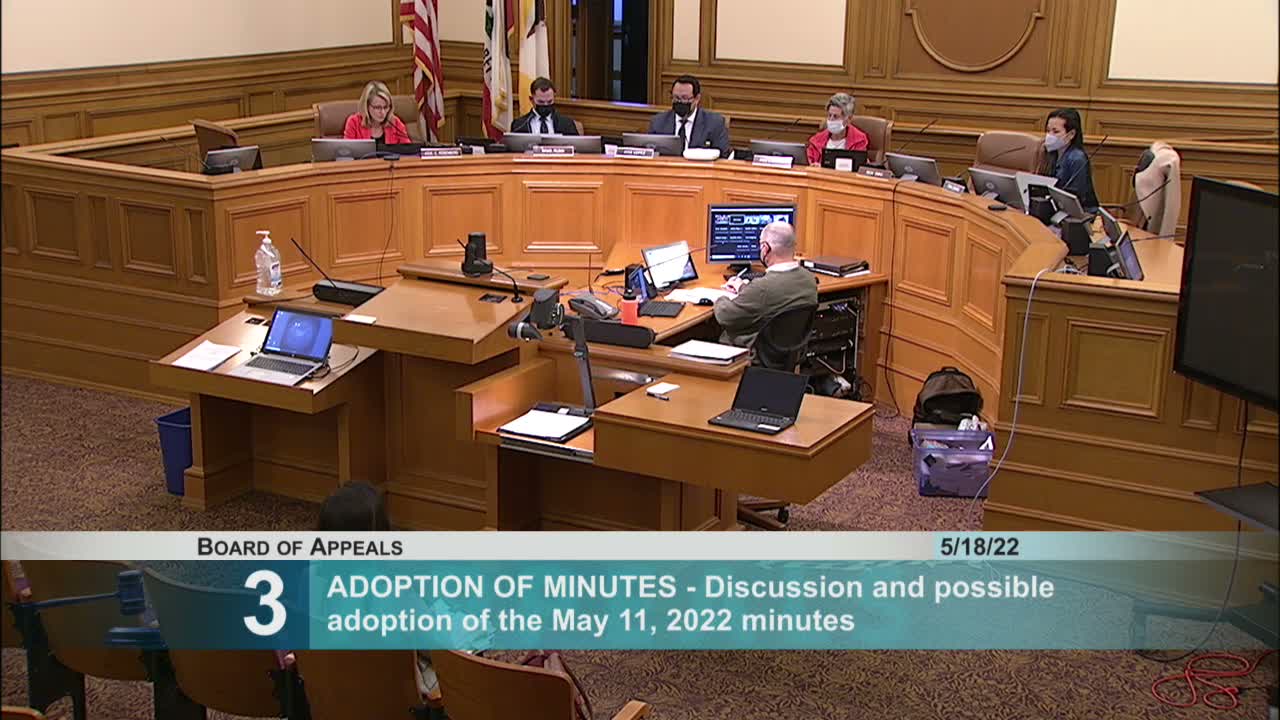
San Francisco — The Board of Appeals on May 18 denied an appeal by Liquid Experience Inc. seeking to transfer its retail tobacco‑sales permit for 1589 Haight Street, ruling the Department of Public Health properly applied city health‑code limits when it refused the new permit.
Farris Zawada, who said his family has owned Liquid Experience since 1989, told the board the owners want to transfer the tobacco license because his parents’ health has declined and the family is selling the business. "We respectfully request your approval for our appeal for the transfer of our tobacco license to the buyers of our establishment," Zawada said during his seven‑minute presentation.
The department told the board it had three independent grounds to deny the permit: District 5 already exceeds the 45‑establishment density cap in Article 19H; the proposed location is within 500 feet of two existing tobacco retailers and a school; and the application involved a change of corporate ownership that triggers a new‑applicant review. Deputy City Attorney Henry Lipton said the findings meant "the department did not have the discretion to grant the permit application." He asked the board to uphold DPH’s determination.
Several commissioners expressed sympathy for Zawada’s family situation but agreed they were constrained by the code. President Rick Swig and Commissioner Jose Lopez asked whether any exception or alternative structural arrangement could preserve the license; Lipton and DPH specialists pointed to a statutory exception for certain child successors and to the option of amending corporate ownership — an approach Zawada said could take years and was not feasible given his parents’ health.
The board voted 4–0 to deny the appeal and uphold the department’s decision. Commissioner Tina Chang moved to deny the appeal; Commissioners Lopez, Vice President Anne Lazarus and President Swig voted Aye.
The decision leaves open administrative paths Zawada mentioned — such as an ownership amendment that could preserve a permit for a successor under narrow statutory exceptions — but the board concluded it could not override code limits in Article 19H.
Farris Zawada, who said his family has owned Liquid Experience since 1989, told the board the owners want to transfer the tobacco license because his parents’ health has declined and the family is selling the business. "We respectfully request your approval for our appeal for the transfer of our tobacco license to the buyers of our establishment," Zawada said during his seven‑minute presentation.
The department told the board it had three independent grounds to deny the permit: District 5 already exceeds the 45‑establishment density cap in Article 19H; the proposed location is within 500 feet of two existing tobacco retailers and a school; and the application involved a change of corporate ownership that triggers a new‑applicant review. Deputy City Attorney Henry Lipton said the findings meant "the department did not have the discretion to grant the permit application." He asked the board to uphold DPH’s determination.
Several commissioners expressed sympathy for Zawada’s family situation but agreed they were constrained by the code. President Rick Swig and Commissioner Jose Lopez asked whether any exception or alternative structural arrangement could preserve the license; Lipton and DPH specialists pointed to a statutory exception for certain child successors and to the option of amending corporate ownership — an approach Zawada said could take years and was not feasible given his parents’ health.
The board voted 4–0 to deny the appeal and uphold the department’s decision. Commissioner Tina Chang moved to deny the appeal; Commissioners Lopez, Vice President Anne Lazarus and President Swig voted Aye.
The decision leaves open administrative paths Zawada mentioned — such as an ownership amendment that could preserve a permit for a successor under narrow statutory exceptions — but the board concluded it could not override code limits in Article 19H.
View the Full Meeting & All Its Details
This article offers just a summary. Unlock complete video, transcripts, and insights as a Founder Member.
✓
Watch full, unedited meeting videos
✓
Search every word spoken in unlimited transcripts
✓
AI summaries & real-time alerts (all government levels)
✓
Permanent access to expanding government content
30-day money-back guarantee
