Board of Appeals denies appeal, upholds permit to remove unpermitted deck at 51 Pixley Street
October 12, 2022 | San Francisco City, San Francisco County, California
This article was created by AI summarizing key points discussed. AI makes mistakes, so for full details and context, please refer to the video of the full meeting. Please report any errors so we can fix them. Report an error »
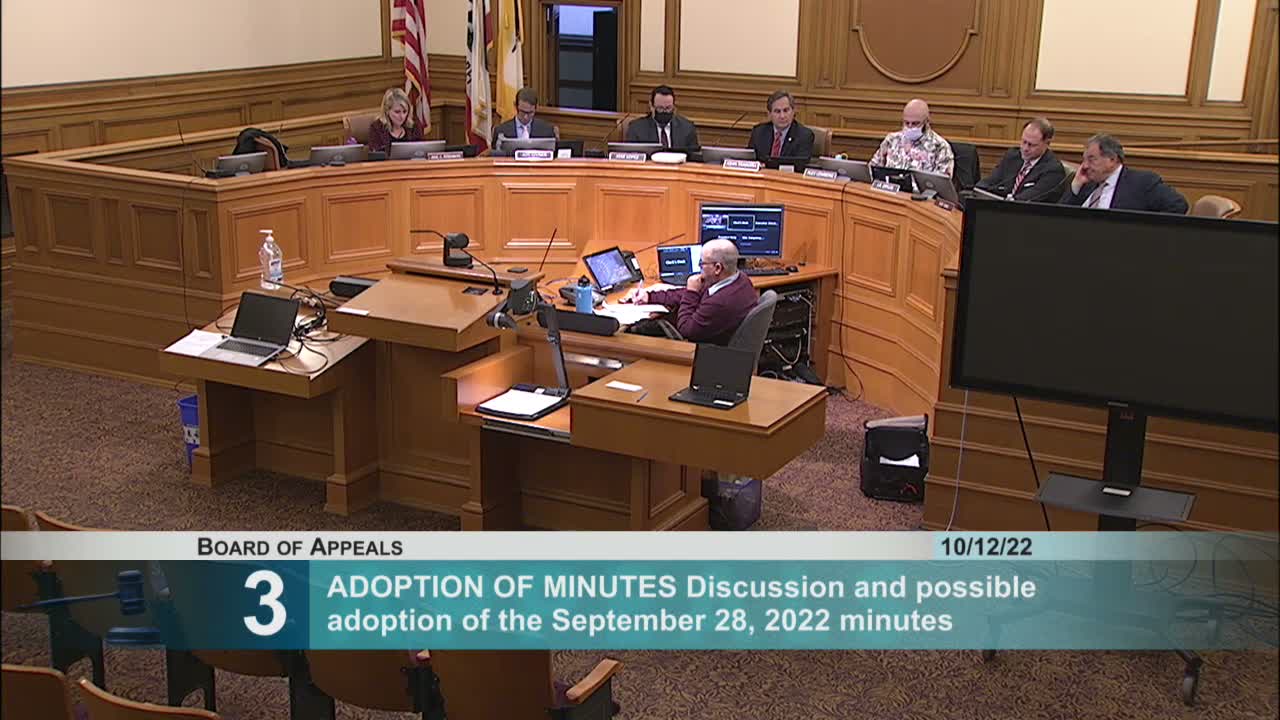
The San Francisco Board of Appeals on Oct. 12 denied an appeal by the new owners of 51 Pixley Street and upheld a building permit to remove an unpermitted rear deck and stairs. President Rick Swig made the motion to deny, and the board voted 5-0 to uphold the permit.
Corey Teague, the Planning Department's zoning administrator, told the board the site traces to a 1983 variance that created two substandard lots and included a condition requiring a minimum 30-foot separation between rear walls (a 15-foot minimum rear yard on each lot). Teague said a rear deck and stair were built without a permit after the home was constructed in 1986. In 2021 the prior owner sought a variance to replace and legalize the deck; after neighbor opposition that variance application was withdrawn and the owner instead filed a building permit to remove the unauthorized deck. That building permit was issued July 19, 2022, Teague said.
Teague told the commissioners that, absent a new variance, the existing deck cannot be legalized; the only lawful path to legalize the structure now would be a variance, which he described as “technically possible” but difficult to obtain given the original condition of approval. Matthew Green, representing the Department of Building Inspection, said the permit was reviewed and issued properly and that DBI had no record of a complaint about the deck in the last 30 years.
The appellants said they are first‑time homeowners who inherited the deck, that it is sturdy and has not generated neighbor complaints, and that they preferred to retain it if possible. During rebuttal one appellant said a legal assistant advised them not to withdraw the permit because canceling it could limit their options.
Commissioners pressed staff on several points: whether the city had previously been notified (planning said the department first became aware during the 2021 variance application), whether the condition was recorded on title (Teague said the conditions were recorded as a notice of special restrictions), and what enforcement steps would follow if the permit were revoked. Planning and DBI said keeping the issued permit provides a practical fallback — for example, if a variance ultimately failed, the permit would allow the owner to remove the structure without filing a new permit. DBI also said a standing building permit is typically valid for 360 days with one automatic 360‑day extension available depending on the permit’s value and extension rules.
President Swig moved to deny the appeal on the basis that the permit was properly issued; the board voted aye — Vice President Jose Lopez, Commissioner John Trezvina, Commissioner Alex Lumbergh and Commissioner Epler all recorded ayes, and the motion carried 5-0. The appeal was denied and the permit to remove the deck remains in effect.
What happens next: the owners retain three primary paths — implement the removal permit, pursue a new variance petition to legalize the deck (a difficult and discretionary process), or cancel the permit (which DBI said is possible but could limit rights and leave the structure subject to future enforcement if a complaint is filed). The board and Planning staff noted that if a variance is pursued and denied, the parties may return to the Board of Appeals on the merits of that variance decision.
The board’s ruling preserves the existing building permit as the more straightforward administrative option for the owners while leaving open the longer and uncertain variance route.
Outcome: Motion to deny appeal and uphold permit carried 5-0.
Corey Teague, the Planning Department's zoning administrator, told the board the site traces to a 1983 variance that created two substandard lots and included a condition requiring a minimum 30-foot separation between rear walls (a 15-foot minimum rear yard on each lot). Teague said a rear deck and stair were built without a permit after the home was constructed in 1986. In 2021 the prior owner sought a variance to replace and legalize the deck; after neighbor opposition that variance application was withdrawn and the owner instead filed a building permit to remove the unauthorized deck. That building permit was issued July 19, 2022, Teague said.
Teague told the commissioners that, absent a new variance, the existing deck cannot be legalized; the only lawful path to legalize the structure now would be a variance, which he described as “technically possible” but difficult to obtain given the original condition of approval. Matthew Green, representing the Department of Building Inspection, said the permit was reviewed and issued properly and that DBI had no record of a complaint about the deck in the last 30 years.
The appellants said they are first‑time homeowners who inherited the deck, that it is sturdy and has not generated neighbor complaints, and that they preferred to retain it if possible. During rebuttal one appellant said a legal assistant advised them not to withdraw the permit because canceling it could limit their options.
Commissioners pressed staff on several points: whether the city had previously been notified (planning said the department first became aware during the 2021 variance application), whether the condition was recorded on title (Teague said the conditions were recorded as a notice of special restrictions), and what enforcement steps would follow if the permit were revoked. Planning and DBI said keeping the issued permit provides a practical fallback — for example, if a variance ultimately failed, the permit would allow the owner to remove the structure without filing a new permit. DBI also said a standing building permit is typically valid for 360 days with one automatic 360‑day extension available depending on the permit’s value and extension rules.
President Swig moved to deny the appeal on the basis that the permit was properly issued; the board voted aye — Vice President Jose Lopez, Commissioner John Trezvina, Commissioner Alex Lumbergh and Commissioner Epler all recorded ayes, and the motion carried 5-0. The appeal was denied and the permit to remove the deck remains in effect.
What happens next: the owners retain three primary paths — implement the removal permit, pursue a new variance petition to legalize the deck (a difficult and discretionary process), or cancel the permit (which DBI said is possible but could limit rights and leave the structure subject to future enforcement if a complaint is filed). The board and Planning staff noted that if a variance is pursued and denied, the parties may return to the Board of Appeals on the merits of that variance decision.
The board’s ruling preserves the existing building permit as the more straightforward administrative option for the owners while leaving open the longer and uncertain variance route.
Outcome: Motion to deny appeal and uphold permit carried 5-0.
Don't Miss a Word: See the Full Meeting!
Go beyond summaries. Unlock every video, transcript, and key insight with a Founder Membership.
✓
Get instant access to full meeting videos
✓
Search and clip any phrase from complete transcripts
✓
Receive AI-powered summaries & custom alerts
✓
Enjoy lifetime, unrestricted access to government data
30-day money-back guarantee
