Public Works outlines tree‑removal process, replacement rules and new penalties
December 07, 2022 | San Francisco City, San Francisco County, California
This article was created by AI summarizing key points discussed. AI makes mistakes, so for full details and context, please refer to the video of the full meeting. Please report any errors so we can fix them. Report an error »
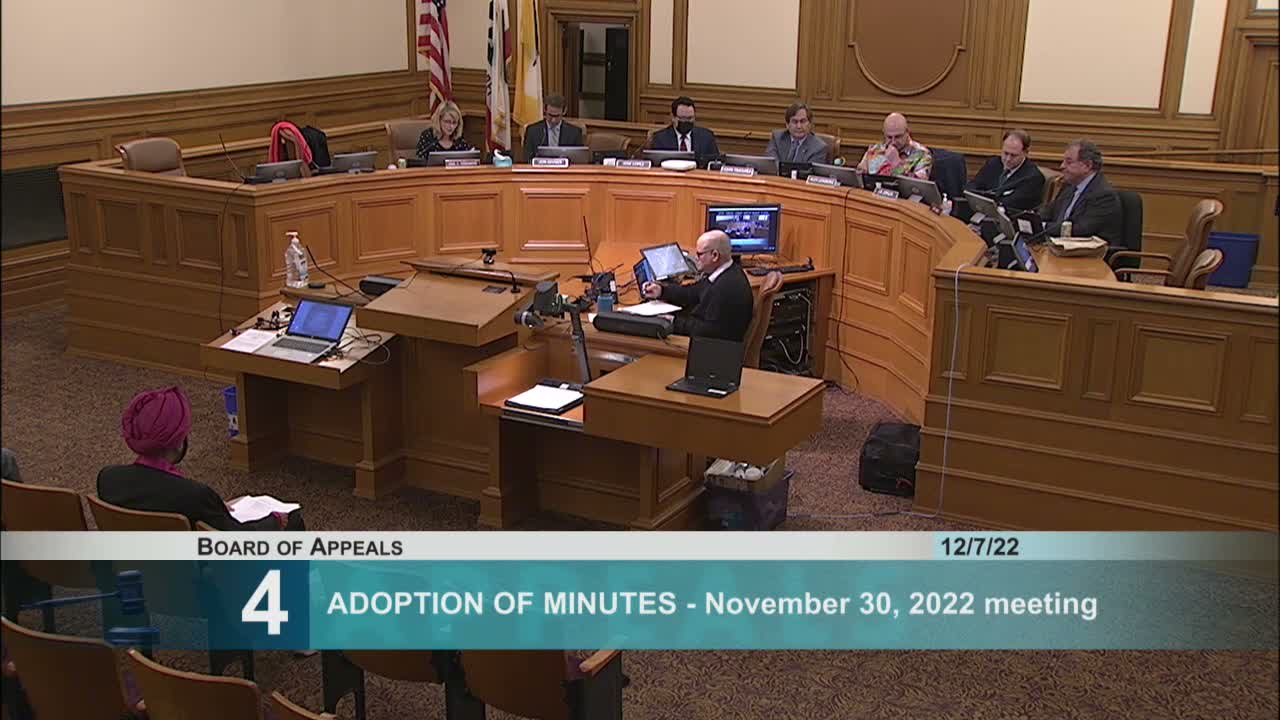
Chris Buck, urban forester for San Francisco Public Works’ Bureau of Urban Forestry, told the Board of Appeals on Dec. 7 that multiple changes to the city’s tree rules and practices aim to increase transparency and speed replacement planting.
Buck said the bureau currently maintains about 125,000 street trees in the public right of way and is aiming for roughly 155,000 sites over the next two decades. He described routine grounds for removal—scheduled Street Tree SF maintenance, emergency or storm response, construction impacts and individual requests through 311 or inspector reports—and said the city posts notices on the affected trees and on utility poles at least 30 days before removal hearings.
“We post all these notices on our website every Monday,” Buck said, describing a pandemic‑era change intended to make notices accessible to people who cannot travel to see a paper posting. The online posting is intended to synchronize the public’s 30‑day notice period citywide and to make it easier for residents to file protests or appeals.
Buck described recent ordinance amendments adopted earlier in the year that shortened the required replacement window for removed trees from six months to 120 days where feasible and that require the department to plant a replacement tree in the closest available location. He also said the code now requires a delayed‑replacement report that tracks trees that still need to be planted, and that the bureau is still catching up on this inventory and planting work.
On enforcement, Buck said penalties for removal without a permit have been increased substantially: “When I started in 2005 the fine was only $560 per tree. Fortunately…that minimum fine is now $10,000 per tree for removal without replacement.” He said the code measures replacement requirements by trunk diameter (measured 6 inches above grade) and that the requirement to provide equivalent diameter can be very challenging in practice for some non‑development removals.
In a question‑and‑answer period, commissioners pressed the bureau for clarifications about definitions used in the ordinance—what the code means by a “street tree” versus a “significant tree,” whether palms and other large woody plants count as trees, and whether replacement obligations differ for development‑related removals. Buck said a street tree is any tree within the public right of way, while a “significant tree” generally refers to a private‑property tree within 10 feet of the right of way and that the bureau would produce a short list of the most commonly used definitions and acronyms for commissioners.
Buck also said the bureau has been understaffed—about four inspectors rather than six for several months—and that the department provides some outreach materials in other languages and has a public information officer dedicated to Street Tree SF, but that multilingual outreach could be expanded. He said the bureau prefers to keep its “arborist hat” on when making technical recommendations and to participate early in planning review so removal is discussed with neighbors and project sponsors before construction begins.
The Board did not take formal action on the presentation. The bureau’s website and the city’s Urban Forestry ordinance (Article 16 of the Public Works Code) provide the official procedural text and are the source of the rules Buck described.
Buck said the bureau currently maintains about 125,000 street trees in the public right of way and is aiming for roughly 155,000 sites over the next two decades. He described routine grounds for removal—scheduled Street Tree SF maintenance, emergency or storm response, construction impacts and individual requests through 311 or inspector reports—and said the city posts notices on the affected trees and on utility poles at least 30 days before removal hearings.
“We post all these notices on our website every Monday,” Buck said, describing a pandemic‑era change intended to make notices accessible to people who cannot travel to see a paper posting. The online posting is intended to synchronize the public’s 30‑day notice period citywide and to make it easier for residents to file protests or appeals.
Buck described recent ordinance amendments adopted earlier in the year that shortened the required replacement window for removed trees from six months to 120 days where feasible and that require the department to plant a replacement tree in the closest available location. He also said the code now requires a delayed‑replacement report that tracks trees that still need to be planted, and that the bureau is still catching up on this inventory and planting work.
On enforcement, Buck said penalties for removal without a permit have been increased substantially: “When I started in 2005 the fine was only $560 per tree. Fortunately…that minimum fine is now $10,000 per tree for removal without replacement.” He said the code measures replacement requirements by trunk diameter (measured 6 inches above grade) and that the requirement to provide equivalent diameter can be very challenging in practice for some non‑development removals.
In a question‑and‑answer period, commissioners pressed the bureau for clarifications about definitions used in the ordinance—what the code means by a “street tree” versus a “significant tree,” whether palms and other large woody plants count as trees, and whether replacement obligations differ for development‑related removals. Buck said a street tree is any tree within the public right of way, while a “significant tree” generally refers to a private‑property tree within 10 feet of the right of way and that the bureau would produce a short list of the most commonly used definitions and acronyms for commissioners.
Buck also said the bureau has been understaffed—about four inspectors rather than six for several months—and that the department provides some outreach materials in other languages and has a public information officer dedicated to Street Tree SF, but that multilingual outreach could be expanded. He said the bureau prefers to keep its “arborist hat” on when making technical recommendations and to participate early in planning review so removal is discussed with neighbors and project sponsors before construction begins.
The Board did not take formal action on the presentation. The bureau’s website and the city’s Urban Forestry ordinance (Article 16 of the Public Works Code) provide the official procedural text and are the source of the rules Buck described.
View the Full Meeting & All Its Details
This article offers just a summary. Unlock complete video, transcripts, and insights as a Founder Member.
✓
Watch full, unedited meeting videos
✓
Search every word spoken in unlimited transcripts
✓
AI summaries & real-time alerts (all government levels)
✓
Permanent access to expanding government content
30-day money-back guarantee
